PAGE_HEADER
Baryancistrus demantoides Werneke, Sabaj Pérez, Lujan & Armbruster, 2005
Image Showcase
Photographs, diagnostic angles and morphological variants
Community & Keeper Tally
Member interactions, breeding records and forum mentions
Aquarium Care & Husbandry
Dietary requirements, tank setup, compatibility and breeding
Feeding & Diet
Should be fed a mainly vegetarian diet, with plenty of fibre in the diet. Algae wafers as well as fresh vegetables such as courgette (zucchini) and tubers such as potato and sweet potato are good foods. [View Member Food Stats]
Aquarium Furniture & Decor
In nature they are found on granite rocks, so a tank decorated with smooth rocks would be suitable.
Compatibility & Suggested Tankmates
Peaceful, but can be mildly territorial.
Tankmates: Suitable with most small to medium sized peaceful fish.
Breeding Notes
Unreported in the aquarium.
Habitat & Water Parameters
Natural distribution, biotope water conditions and temperature ranges
Geographic Distribution
South America: upper Rio Orinoco drainage in Venezuela.
Orinoco, Upper Orinoco, Ventuari, Guapuchi (click on these areas to find other species found there)
Orinoco (click on these areas to find other species found there)
Orinoco, Upper Orinoco, Ventuari (click on these areas to find other species found there)
Login to view the map.
Species Description & Identification
Morphology, diagnostic traits and sexual dimorphism
Identification
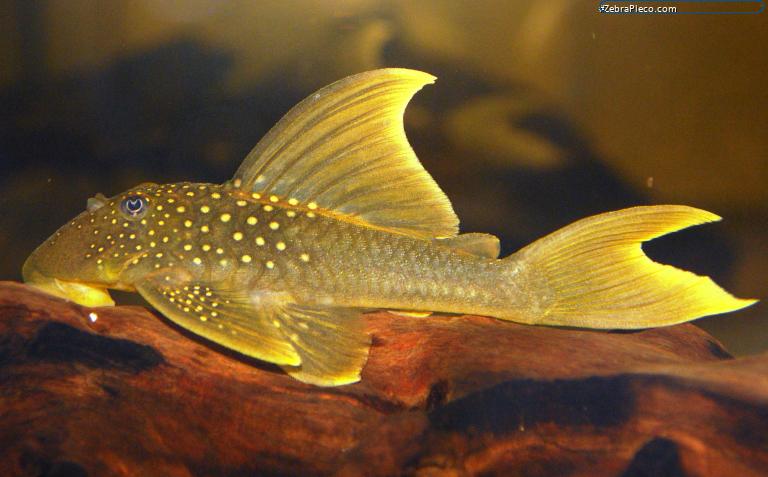
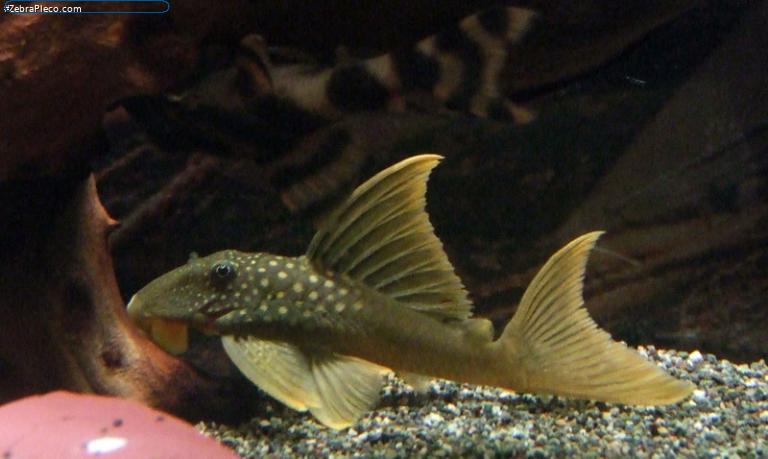
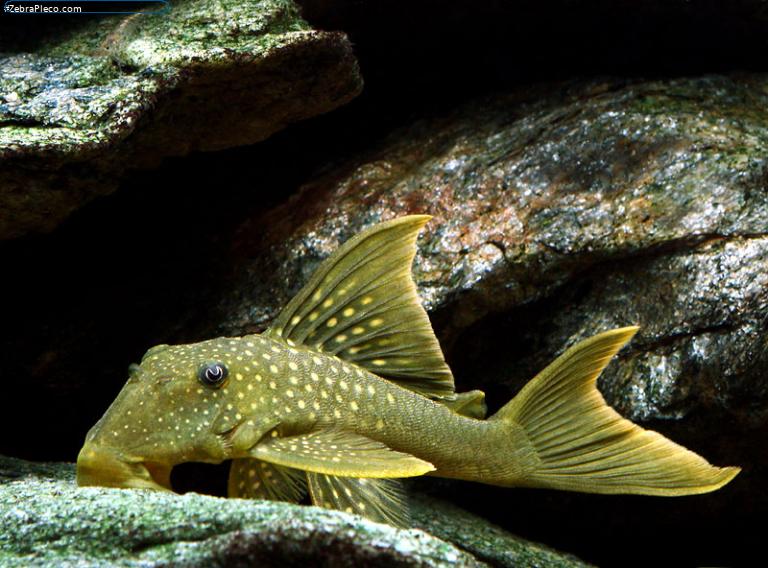
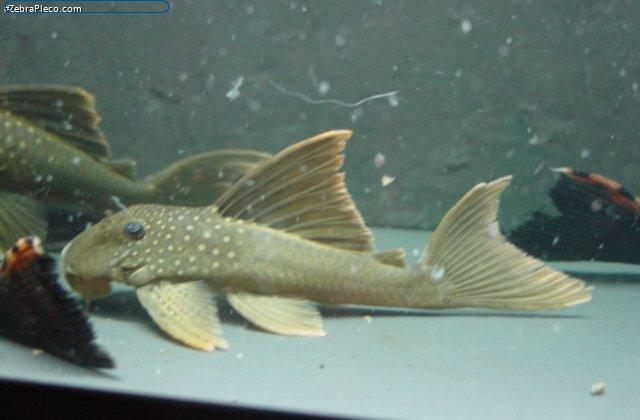
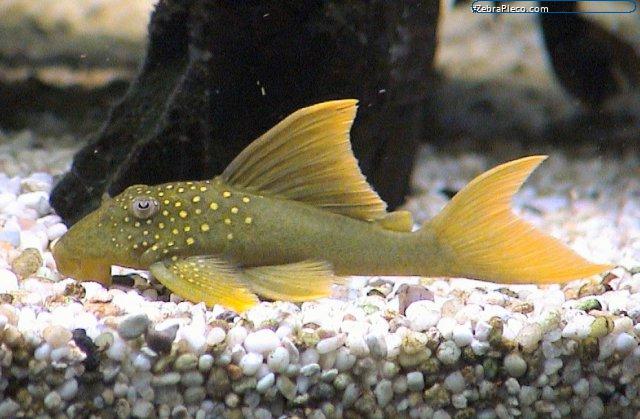
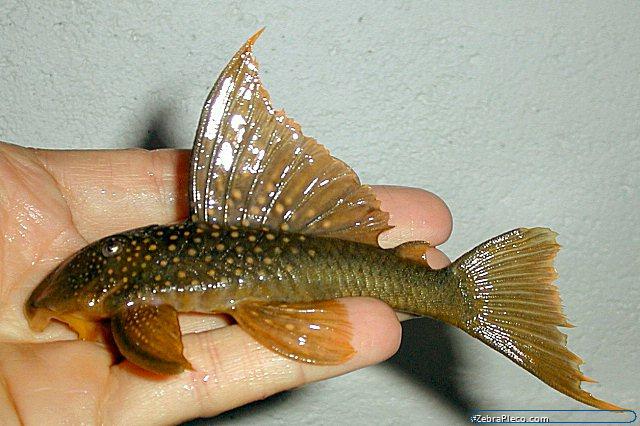
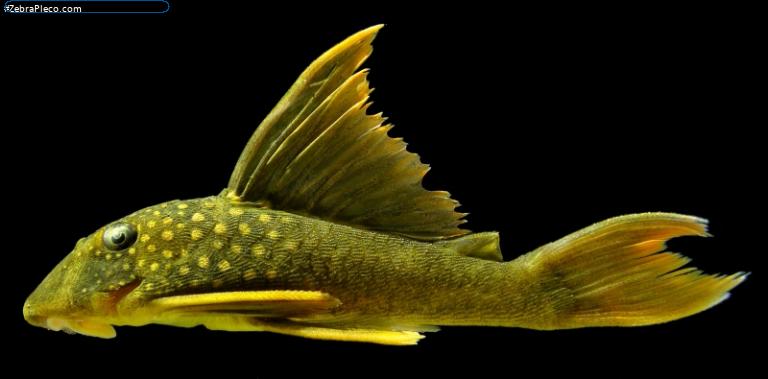
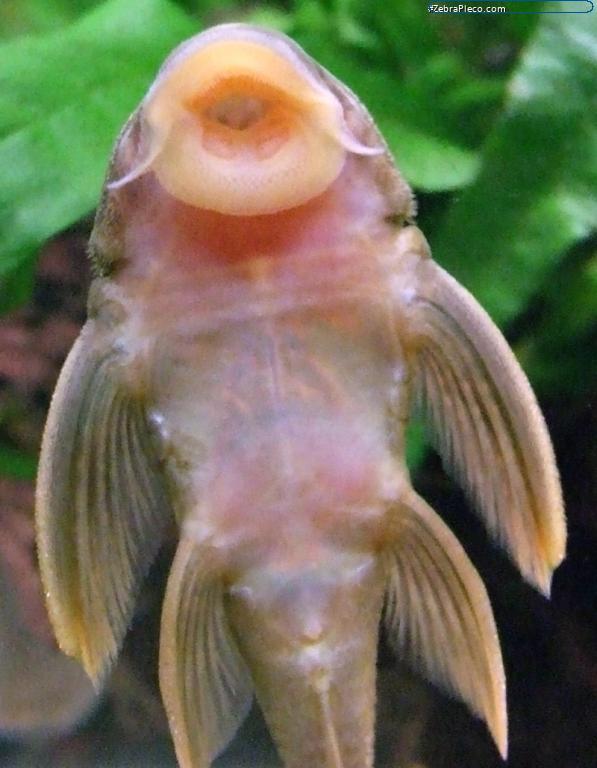
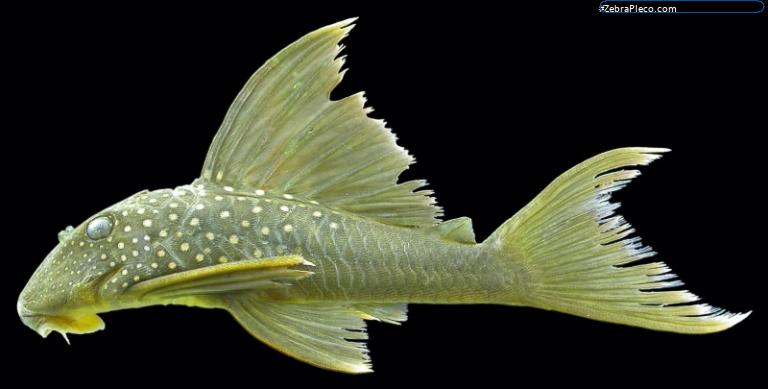
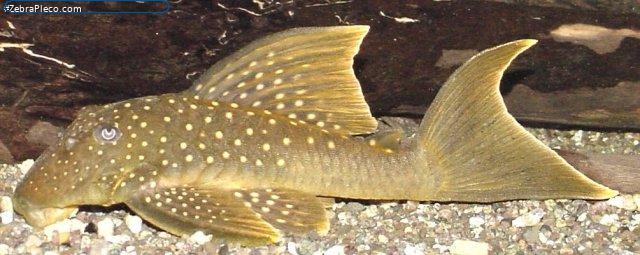
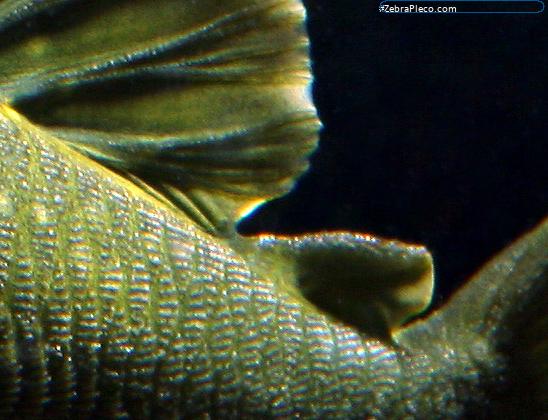
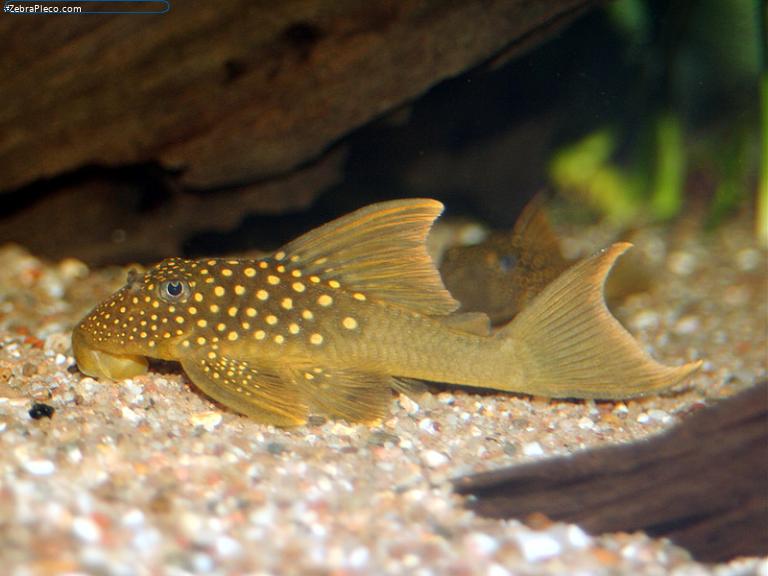
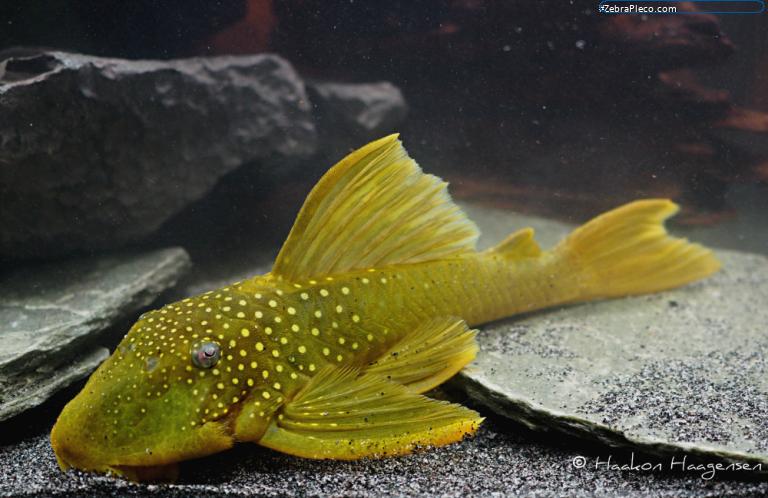
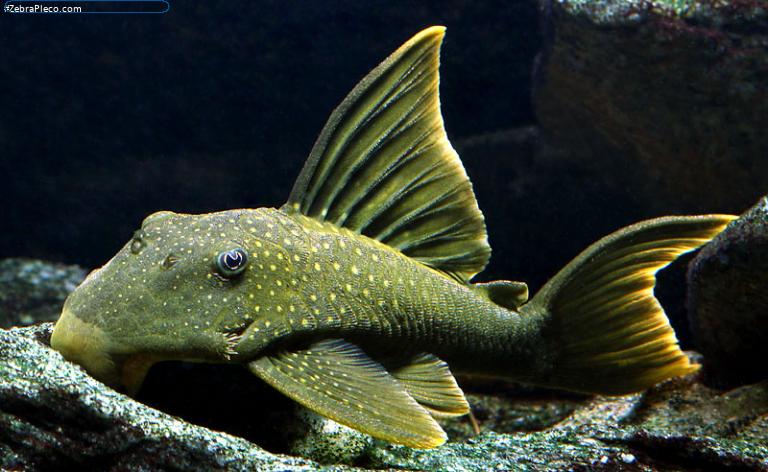
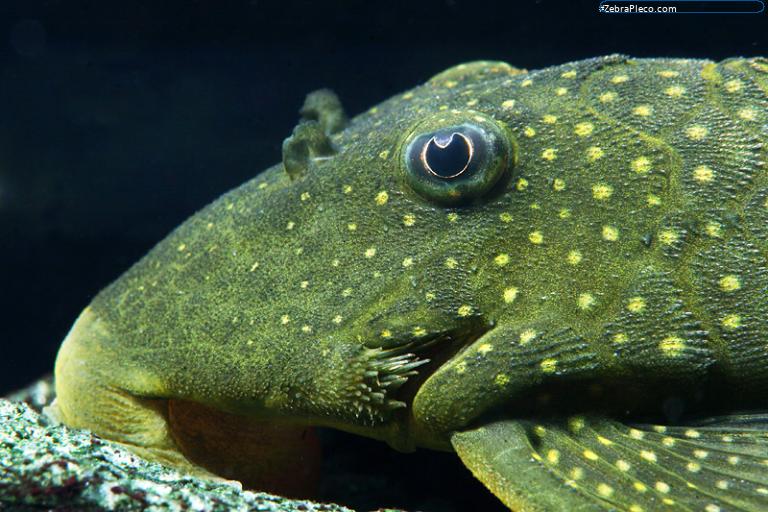
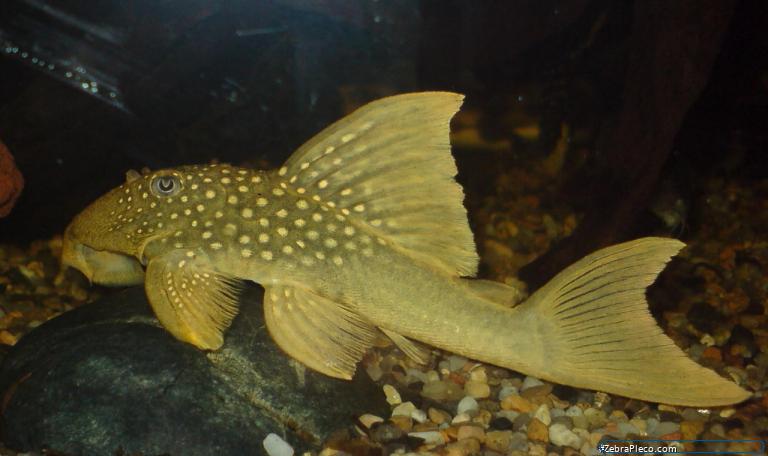
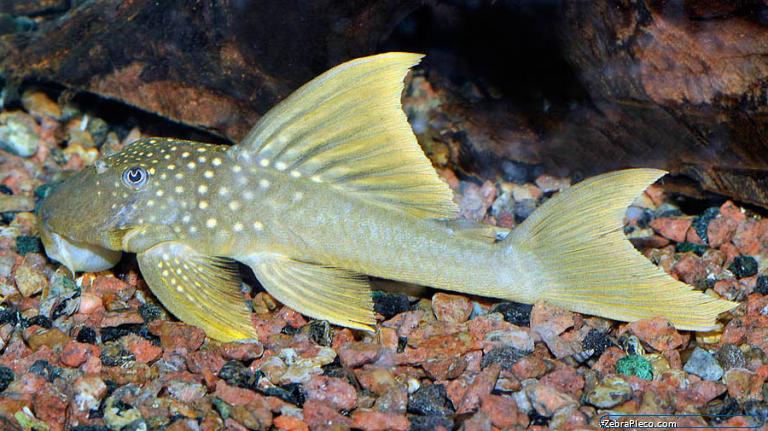
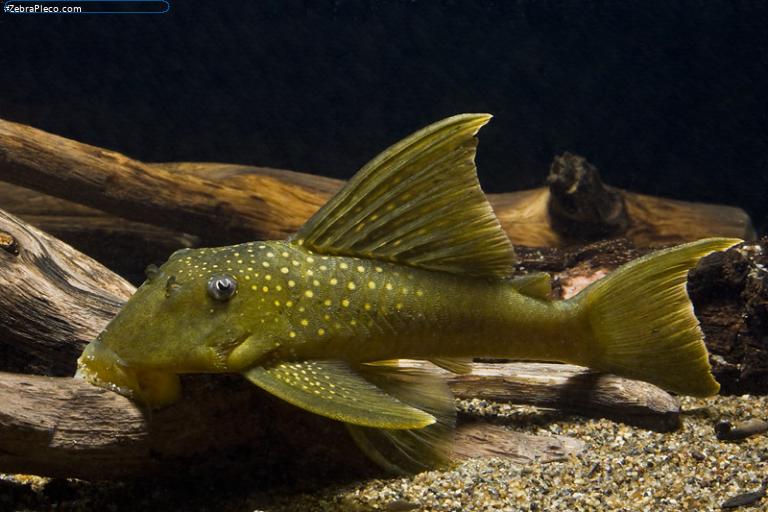
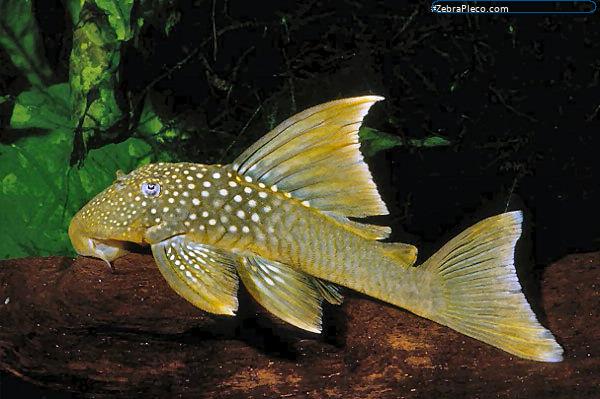
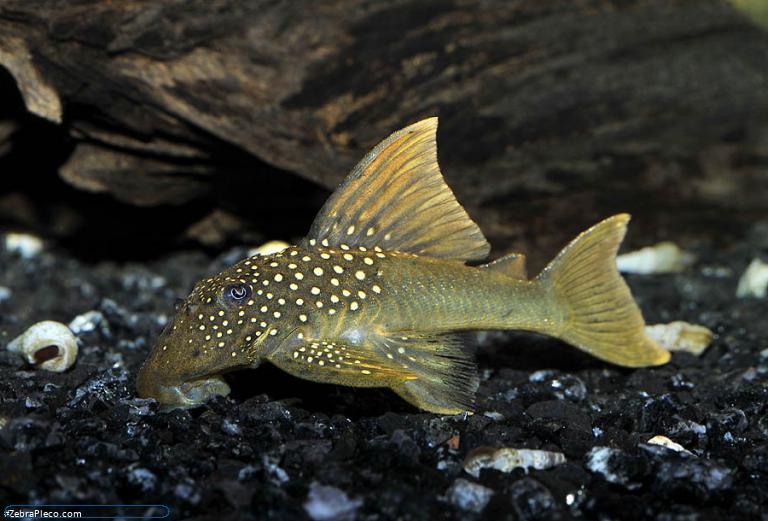
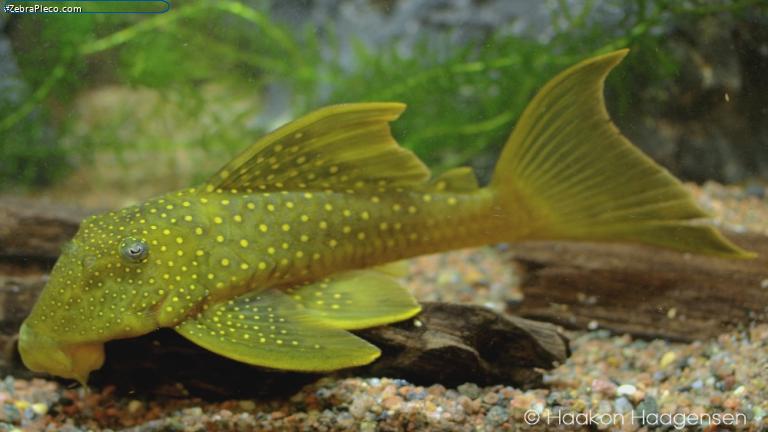
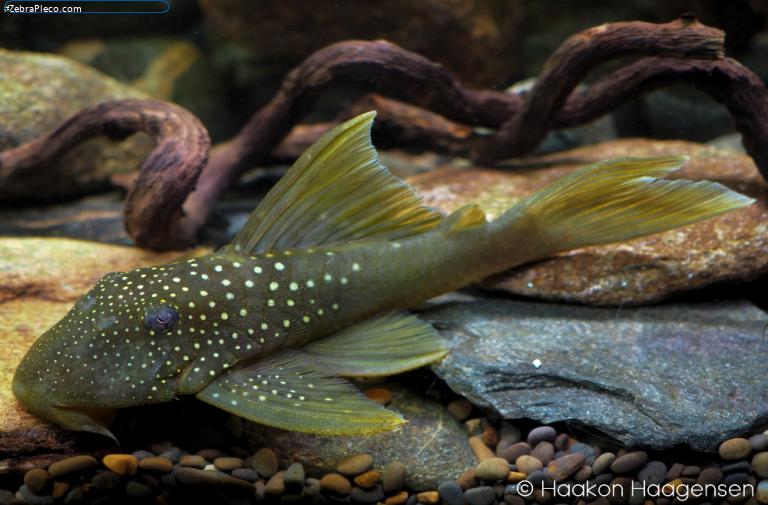
The colouration of this fish can only really be confused with Hemiancistrus subviridis. The key to tell these two apart is that the dorsal fin and the adipose fin are connected in this species, and separated in the Hemiancistrus species. Furthermore, have a look at the shape of the mouth. H. subviridis has a almost perfectly round mouth, while B. demantoides shows a more rectangular mouth.
On a more technical side, this is the keys to distinguish the fish from original species description:
Baryancistrus demantoides can be distinguished from all other Loricariids except Baryancistrus niveatus, Parancistrus, and Spectracanthicus by having the dorsal and adipose fins connected by an expanded posterior section of the dorsal-fin membrane. Baryancistrus demantoides can be separated from the other species with connected dorsal fins by having a yellow-olive colour with white or cream coloured spots (vs. typically dark with white, gold, or no spots); from other Baryancistrus with the dorsal fins connected by having the spots only on the anterior portion on the body (vs. all over), from Parancistrus by not being dorsoventrally flattened, and from Spectracanthicus by having greater than 30 teeth per jaw ramus (vs. less than 25). There is one other described species of Baryancistrus (B. longipinnis) that has an expanded posterior membrane of the dorsal fin, but the membrane does not connect to the adipose fin as in B. demantoides and B. longipinnis lacks light spots.
Sexual Dimorphism (Sexing)
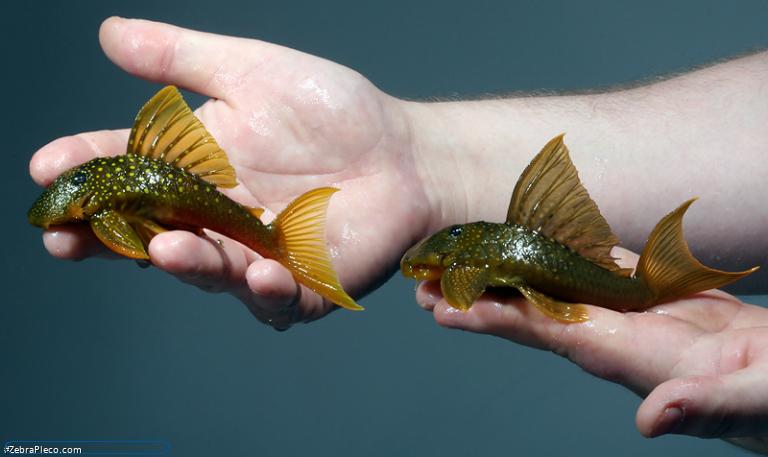
Mature males have broader head and more notable odontodes at the cheek and pectoral fins.
Taxonomy, Synonyms & Etymology
Classification history, linguistic derivations and variant forms
Pronunciation
bah ree ann siss truss - dee man toy dees
Etymology
Greek, barys = heavy + Greek, agkistron = hook - Essentially "Heavy Ancistrus". The specific name refers to a demantoid, a type of garnet that ranges in colour from yellowish green to brownish green and it is in reference to the colour of the fish. The word comes from the obsolete German word diemant meaning diamond and the Greek suffix -oïdes meaning to resemble
Literature & Resources
Scientific publications, external links and citation tools
Literature & References
External Databases
Related Searches