PAGE_HEADER
Peckoltia sp. (L008) , 1988
Image Showcase
Photographs, diagnostic angles and morphological variants
Community & Keeper Tally
Member interactions, breeding records and forum mentions
Aquarium Care & Husbandry
Dietary requirements, tank setup, compatibility and breeding
Feeding & Diet
Omnivorous with a tendency towards meaty foods. Not an effective algae eater. Well fed individuals will not damage most plants. [View Member Food Stats]
Aquarium Furniture & Decor
Rock piles and wood tangles. Plants are not vital.
Compatibility & Suggested Tankmates
Peaceful if a little territorial. As a rough guide give each fish a 12 inch square area well broken up with decorations.
Tankmates: A medium sized pleco that can be combined with a very wide array of tankmates due to its unfussy nature. Perfectly safe with small fishes and shrimp or robust enough to withstand the attention of all but the largest cichlids.
Habitat & Water Parameters
Natural distribution, biotope water conditions and temperature ranges
Geographic Distribution
Brazil: Rio do Pará at Oeiras do Pará
Amazon, Lower Amazon, Tocantins, Lower Tocantins, Pará (click on these areas to find other species found there)
Login to view the map.
Species Description & Identification
Morphology, diagnostic traits and sexual dimorphism
Identification
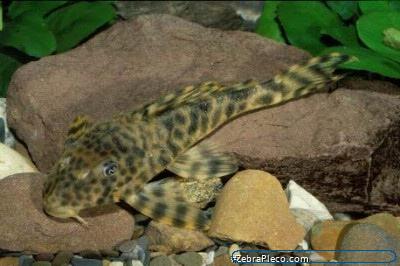
Often labelled as ''Leopard Peckoltia''. Similar to L006 but with irregular smaller spots and blotches.
Sexual Dimorphism (Sexing)
Males develop small teeth-like odontodes which adorn the leading pectoral fin rays and the back half of the fishes body. Females remain unadorned and have a wider girth across the body most evident when the area just behind the pectoral fins is viewed from above.
Taxonomy, Synonyms & Etymology
Classification history, linguistic derivations and variant forms
Pronunciation
peck OLE tea ah
Etymology
Peckoltia: named after Gustavo Peckolt, member of the Natural History Commission of Rondon.
Literature & Resources
Scientific publications, external links and citation tools
Description Reference
DATZ 12/1998, pp 556-558.
The (out of water) picture in Aqualog is not the same species as the original DATZ photo and appears to be of L002.
Related Searches