PAGE_HEADER
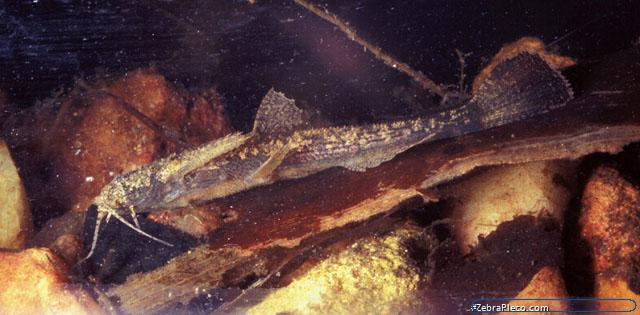
Bunocephalus doriae Boulenger, 1902
Image Showcase
Photographs, diagnostic angles and morphological variants
Community & Keeper Tally
Member interactions, breeding records and forum mentions
Aquarium Care & Husbandry
Dietary requirements, tank setup, compatibility and breeding
Feeding & Diet
In nature, this fish feeds on insect larvae, such as bloodworms. [View Member Food Stats]
Breeding Notes
Unreported in the aquarium.
Habitat & Water Parameters
Natural distribution, biotope water conditions and temperature ranges
Geographic Distribution
South America: Paraguay-Paraná and Uruguay River basins.
La Plata, Paraná, Middle Paraná, Bermejo (click on these areas to find other species found there)
La Plata, Paraná, Paraguay (click on these areas to find other species found there)
La Plata, Paraná (click on these areas to find other species found there)
La Plata, Uruguay (click on these areas to find other species found there)
La Plata, Uruguay, Middle Uruguay, Ibicuí Imported (click on these areas to find other species found there)
La Plata, Uruguay, Middle Uruguay, Ibicuí, Ibirapuitã Imported (click on these areas to find other species found there)
Login to view the map.
Taxonomy, Synonyms & Etymology
Classification history, linguistic derivations and variant forms
Synonyms
Bunocephalus doriai, Bunocephalus retropinnis, Dysichthys doriae
Pronunciation
boon oh SEFF ah luss
Etymology
Bunocephalus: From the Greek bounos, meaning hill and kephale, meaning head; in reference to the bumps on the head of the fish, which is particularly marked in some species.
There are 2 other speciesBrachygobius doriae
Pseudocorynopoma doriae with this specific name.
Literature & Resources
Scientific publications, external links and citation tools
Description Reference
Annals and Magazine of Natural History (Series 7) v. 9 (no. 52) (art. 47), pp 286.
External Databases
Related Searches