PAGE_HEADER
Aspidoras depinnai Britto, 2000
Image Showcase
Photographs, diagnostic angles and morphological variants
Community & Keeper Tally
Member interactions, breeding records and forum mentions
Aquarium Care & Husbandry
Dietary requirements, tank setup, compatibility and breeding
Feeding & Diet
Will readily accepted all prepared foods that reach the bottom of the aquarium such as tablets, granules and larger flakes. Live (or frozen) foods such as bloodworm, white worm, grindal worm (Enchytraeus), Daphnia and Tubifex are readily accepted and good for conditioning groups of fishes for spawning. [View Member Food Stats]
Aquarium Furniture & Decor
Ideally substrate should be sand, but rounded gravel is an imperfect alternative. Avoid keeping over rough edged (chipped) gravel, this will increase this risk of damage the fishes barbels when it tries to dig. Substrate should be bordered with driftwood and aquatic plants leaving an open area for them to search for food and swim. The shade provided by overhanging rock work, arching bogwood, tall or floating plants are all that is required to settle these fishes.
Compatibility & Suggested Tankmates
A peaceful, shoaling, community fish.
Breeding Notes
Spawning notes kindly provided by Eric Bodrock from August 2007. A group consisting of five males and three females (all F1) were spawned in a ten-gallon tank, pH of 6.8 with an average temp around 75°F (24°C). The dGH 8 with a KH of 2. Regular spawning took place about every 3 weeks, on average about 60 eggs, usually deposit on glass sides and/or in the bottom spawning mop. The hatch rate was always low, estimate it takes about one year for them to reach sexual maturity.
Habitat & Water Parameters
Natural distribution, biotope water conditions and temperature ranges
Geographic Distribution
South America: Ipojuca River basin, Brazil.
Southern Atlantic Draining Rivers, North East Brazil Coastal Rivers, Pernambucu state waters, Ipojuca (click on these areas to find other species found there)
Login to view the map.
Species Description & Identification
Morphology, diagnostic traits and sexual dimorphism
Identification
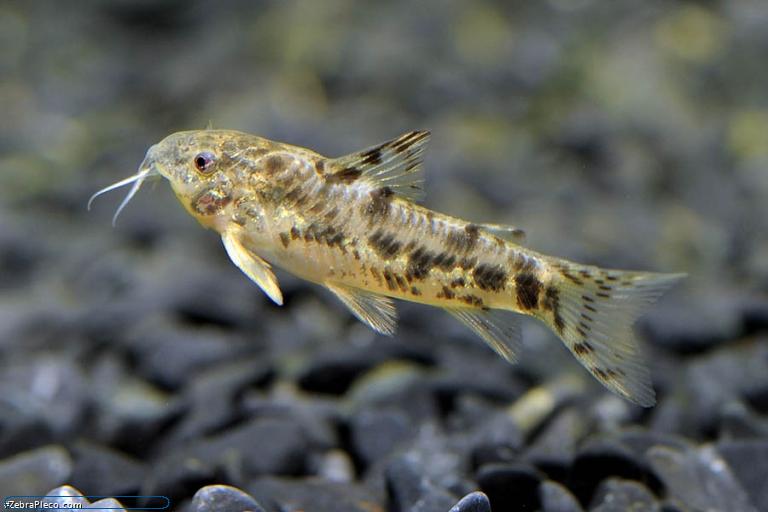
Differs from its congeners in having bifid serrations restricted to distal tip on ossified portion of pectoral spine posterior border (versus single or bifid serrations along entire posterior border) and presence of irregular arclike brown blotch on caudal peduncle (versus absence). Head with an irregular row of minute pores.
Sexual Dimorphism (Sexing)
Females grow larger and are more full-bodied, this is best observed from above the fish. Males will typically have more pointed as opposed to more rounded fin tips as they mature.
Taxonomy, Synonyms & Etymology
Classification history, linguistic derivations and variant forms
Pronunciation
ass pee DOOR ass
Etymology
Aspidoras: From the Greek aspis, meaning shield and doras, meaning skin; in reference to the bony plates. Named to honour Dr. Mário de Pinna.
There is 1 other speciesListrura depinnai with this specific name.
Literature & Resources
Scientific publications, external links and citation tools
Description Reference
Copeia 2000 (no. 4), pp 1049, Figs. 1-5.
External Databases
Related Searches