PAGE_HEADER
Hemibagrus furcatus Ng, Martin-Smith & Ng, 2000
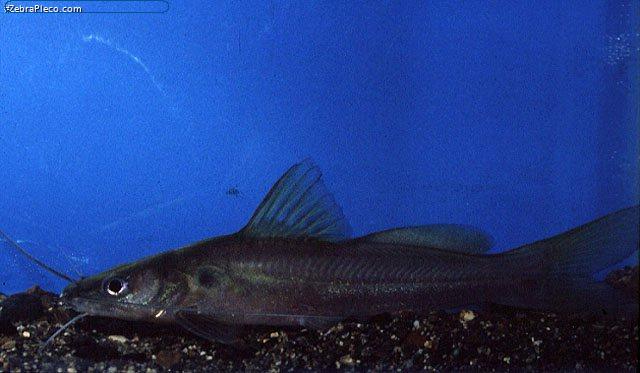
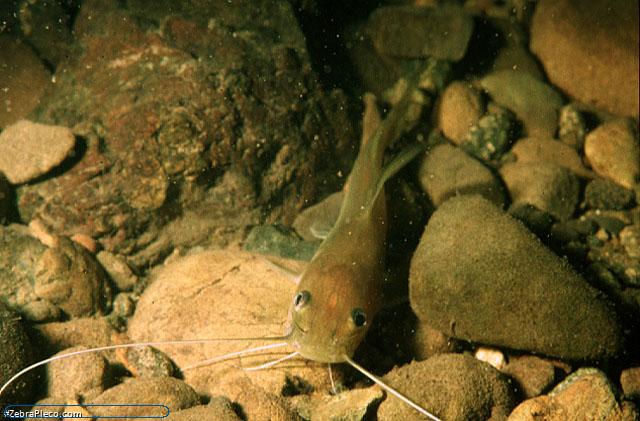
Image Showcase
Photographs, diagnostic angles and morphological variants
Community & Keeper Tally
Member interactions, breeding records and forum mentions
Aquarium Care & Husbandry
Dietary requirements, tank setup, compatibility and breeding
Feeding & Diet
Readily eats all manner of live and prepared foods. Will eat smaller fishes. [View Member Food Stats]
Aquarium Furniture & Decor
Large rocks for the fish to hide among.
Breeding Notes
Unreported in the aquarium.
Habitat & Water Parameters
Natural distribution, biotope water conditions and temperature ranges
Geographic Distribution
Asia: Sabah, Malaysia.
Pacific, Greater Sunda Island Rivers, Borneo Waters, East Borneo Waters, Segama, Upper Segama (click on these areas to find other species found there)
Login to view the map.
Species Description & Identification
Morphology, diagnostic traits and sexual dimorphism
Identification
Members of the genus Hemibagrus are bagrid catfishes that can attain standard lengths of up to 800 mm and are found in large rivers throughout the Indian subcontinent,Southeast and East Asia. Members of this genus have depressed heads,rugose head shields not covered by skin,a slender occipital process and moderately long adipose fins.
Can be distinguished from its congeners by the unique combination of the following characters: head width 18.3-19.5% SL, length of caudal peduncle 18.8-20.7% SL, depth of caudal peduncle 9.4-10.3% SL, length of adipose-fin base 21.2-26.3% SL, dorsal to adipose distance 6.3-8.6% SL, absence of a dark midaxial streak, 4-7 serrations on dorsal spine, bifurcate serrae on the pectoral spine, upper lobe of the caudal fin rounded posteriorly, dorsal fin without an extended second ray, with broader membranes and allowing the fin to be spread wider to give a more rounded appearance.
Sexual Dimorphism (Sexing)
Males have an elongate genital papilla in front of the anal fin.
General Remarks
Inhabits deep pools in mountain streams. Feeds on small fish, frogs and crustaceans in the wild.
Taxonomy, Synonyms & Etymology
Classification history, linguistic derivations and variant forms
Pronunciation
HEM ee BAG russ - fur kat uss
Etymology
From the Greek hemi- meaning half and bagrus, the catfish genus. The specific epithet comes from the Latin furcatus, meaning forked; in reference to the bifurcate serrae on the pectoral spine.
There are 6 other speciesChrysichthys furcatus
Ictalurus furcatus
Lepidocephalichthys furcatus
Nemuroglanis furcatus
Pseudomugil furcatus
Tachysurus furcatus with this specific name.
Literature & Resources
Scientific publications, external links and citation tools
External Databases
Related Searches