PAGE_HEADER
Chaca chaca (Hamilton, 1822)
Image Showcase
Photographs, diagnostic angles and morphological variants








Community & Keeper Tally
Member interactions, breeding records and forum mentions
Aquarium Care & Husbandry
Dietary requirements, tank setup, compatibility and breeding
Feeding & Diet
Baensch states that after acclimatisation pellet food is accepted. I have observed hungry young C. bankanensis eating Tetra Prima (sold in the US as Tetra colorbits) soon after import. On the contrary, long time keepers of Chaca persistently try dried or even frozen food to no avail. Perhaps only young fish will learn to accept "alternative" foods. Either way, a Chaca keeper should be prepared to supply live fish on a regular basis. [View Member Food Stats]
Aquarium Furniture & Decor
A sandy substrate is suggested for all species of Chaca. Some leaf litter is appreciated by this fish although Java moss and plants that do not grow too tall are also effective. Hiding places are not required given subdued lighting.
Compatibility & Suggested Tankmates
An irrepressible predator of small, especially bottom feeding fishes. Fast moving, surface dwelling fishes in tall tank (15''+) are unmolested. That said, anything that comes within range of a hungry Chaca's mouth will rarely survive. In my opinion, one for the species tank.
Tankmates: See compatibility section.
Breeding Notes
This fish has been bred in captivity. A summary of the details follows:
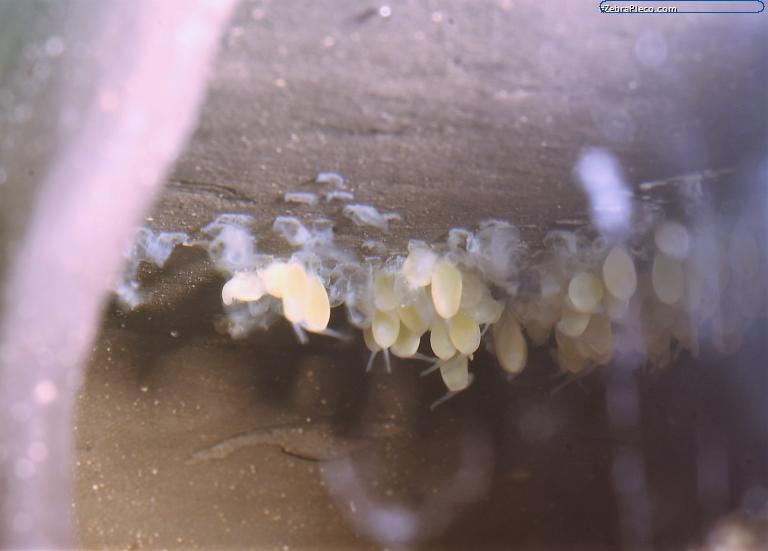
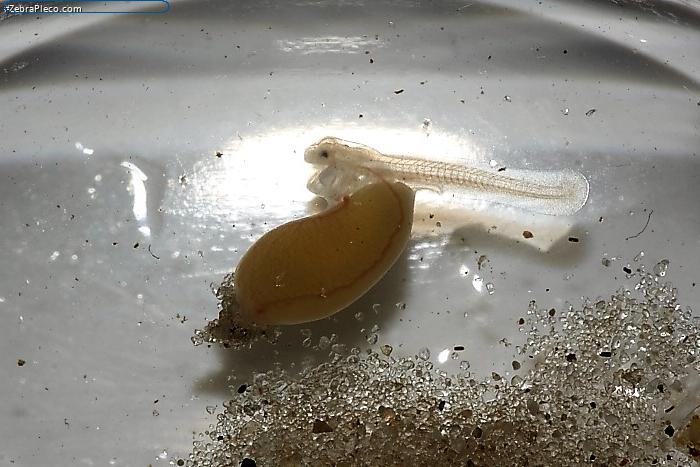
Diet consisted of tubifex, shrimp, small fishes, earthworms and chopped beef heart. A group of 4 fish were kept in a 36 x 18 x 18 bare tank containing a 8'' x 3'' diameter pipe. Spawning occurs in the pipe with all other fish outside. A single (probably male) fish remained to guard the eggs, these hatched 3 days later. Parental care was not observed, yet neither was predation. 10 days after the eggs were laid the fry became free swimming. The next day they began feeding on newly hatched brineshrimp and sifted daphnia. Nearly 400 fry were raised to 1.5''. They developed steadily and uniformly among the brood.
Habitat & Water Parameters
Natural distribution, biotope water conditions and temperature ranges
Geographic Distribution
Asia: India, Bangladesh, Nepal, Malaya and Indonesia. Reported from Myanmar.
Indian waters, North Eastern India Waters, Padma, Jamuna, Brahmaputra (click on these areas to find other species found there)
Indian waters, North Eastern India Waters, Padma, Ganges (click on these areas to find other species found there)
Login to view the map.
Species Description & Identification
Morphology, diagnostic traits and sexual dimorphism
Identification
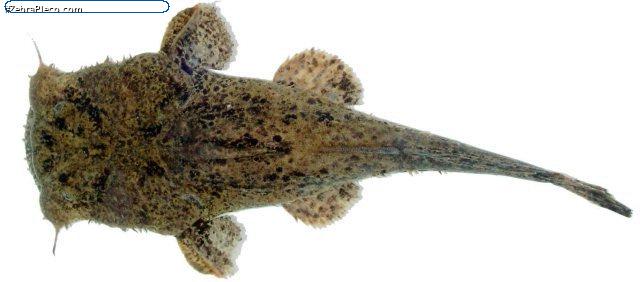
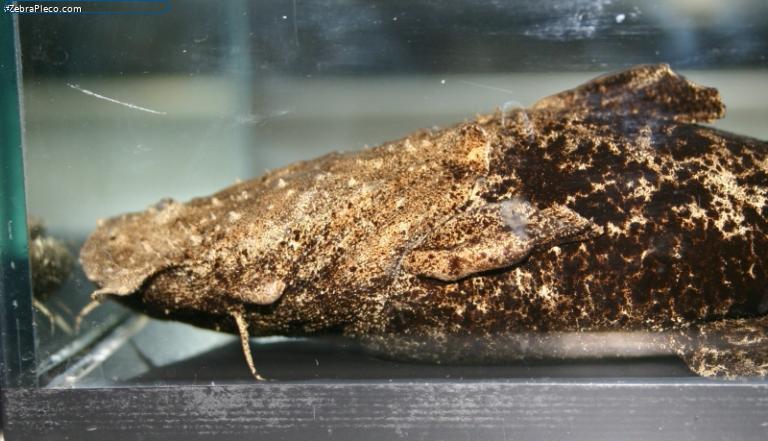
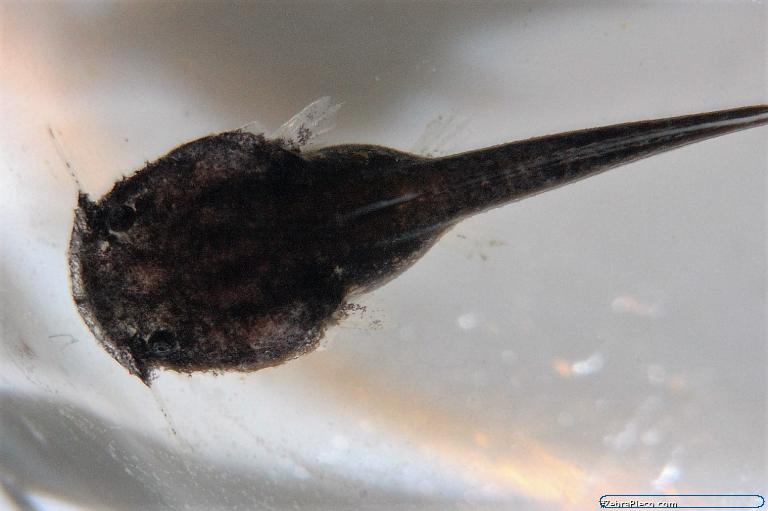
The species of the catfish genus Chaca are easily identified by their extremely large and severely dorsoventrally depressed head, caudal fin with greatly enlarged procurrent rays, and tuberculate skin, often with fimbriate skin flaps on the head and sometimes on the body. The genus forms the monotypic family Chacidae, whose phylogenetic affinities to other catfishes remains unclear despite numerous studies.
C. chaca is a chocolate brown while the similar C. bankanensis is a brighter orange-brown.
Sexual Dimorphism (Sexing)
Males are larger and longer while females are shorter and more bulky.
Taxonomy, Synonyms & Etymology
Classification history, linguistic derivations and variant forms
Synonyms
Chaca buchanani, Chaca lophioides, Platystacus chaca
Pronunciation
CHA kah - chack ah
Etymology
Chaca: The name comes from the local name of the fish, which is probably derived from the sound it makes when irritated.
Literature & Resources
Scientific publications, external links and citation tools
Description Reference
An account of the fishes found in the river Ganges, pp 140, 374, Pl. 28 (fig. 43).
External Databases
Related Searches