
PAGE_HEADER
Farlowella amazonum (Günther, 1864)
Image Showcase
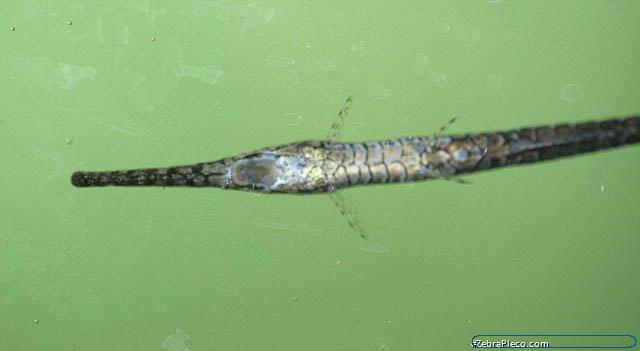
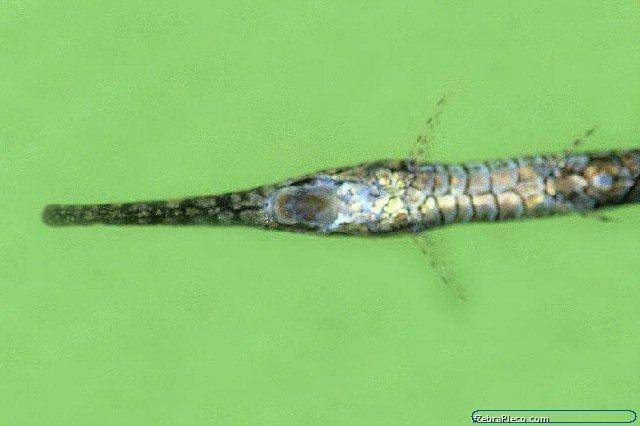
Photographs, diagnostic angles and morphological variants



Community & Keeper Tally
Member interactions, breeding records and forum mentions
Aquarium Care & Husbandry
Dietary requirements, tank setup, compatibility and breeding
Compatibility & Suggested Tankmates
Tankmates: Smaller Tetras or Rasboras are suitably mannered - perhaps hatchetfish are best. Avoid fast or "nippy" fishes such as Danios or Barbs. Will do well with Corydoras catfish, but larger catfish or cichlids are to be avoided.
Breeding Notes
Unreported in the aquarium.
Habitat & Water Parameters
Natural distribution, biotope water conditions and temperature ranges
Geographic Distribution
South America: Amazon, Tocantins, and La Plata River basins.
Amazon (click on these areas to find other species found there)
La Plata (click on these areas to find other species found there)
Amazon, Lower Amazon, Tocantins (click on these areas to find other species found there)
Amazon, Lower Amazon, Tocantins, Lower Tocantins, Acará Imported (click on these areas to find other species found there)
Amazon, Lower Amazon, Tocantins, Lower Tocantins, Pará, Anapu Imported (click on these areas to find other species found there)
Amazon, Middle Amazon (Solimoes), Negro, Lower Negro, Branco (Roraima), Upper Branco (Roraima), Uraricoera Imported (click on these areas to find other species found there)
Login to view the map.
Species Description & Identification
Morphology, diagnostic traits and sexual dimorphism
Identification
The genus Farlowella is distinguished by its elongate and slender body with a pronounced rostrum (of variable length), having the dorsal fin located near the middle of the body and only slightly anterior to the anal fin (vs. having the dorsal fin conspicuously closer to the head than the tail, and significantly further anterior than the anal fin), and having a brownish color with two lateral dark stripes beginning at the tip of the rostrum, passing through the eyes and ending at the tail. A key to the genus can be found here.
General Remarks
Sometimes seen under the misspelling Farlowella amazona.
Taxonomy, Synonyms & Etymology
Classification history, linguistic derivations and variant forms
Synonyms
Acestra amazonum, Farlowella amazona, Farlowella carinata, Farlowella gladiolus, Farlowella oliveirae, Farlowella paranaense, Farlowella pleurotaenia, Farlowella pseudogladiolus
Pronunciation
far LOW ella - ah mah zon ah
Etymology
This genus is named after W. G. Farlow, from Harvard University. Named for the Amazon River where this species was found.
Literature & Resources
Scientific publications, external links and citation tools
Description Reference
Catalogue of the fishes in the British Museum v. 5, pp 261.
External Databases
Related Searches

