PAGE_HEADER
Pseudacanthicus pitanga Chamon, 2015
Image Showcase
Photographs, diagnostic angles and morphological variants
Community & Keeper Tally
Member interactions, breeding records and forum mentions
Aquarium Care & Husbandry
Dietary requirements, tank setup, compatibility and breeding
Feeding & Diet
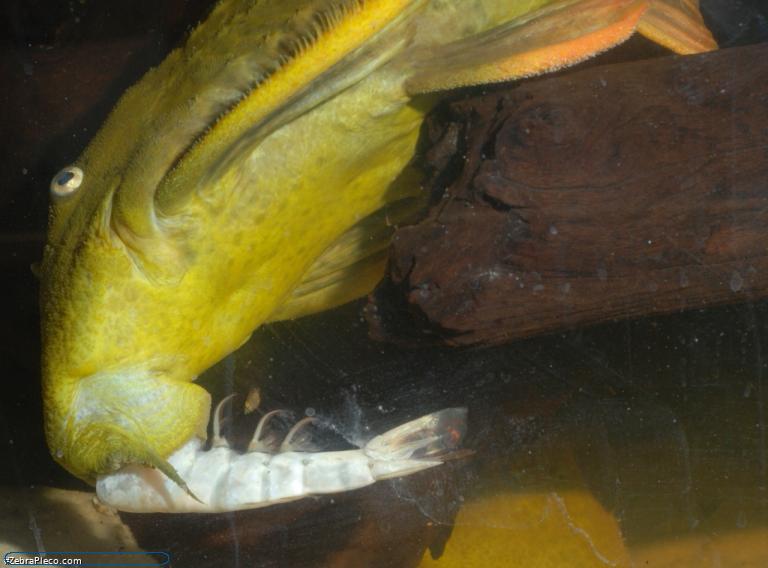
Carnivore although not a predator, prawns and chopped mussel appear favourites and promote favourable growth. Some vegetable should also be provided and thus balances diet. [View Member Food Stats]
Aquarium Furniture & Decor
Not as shy as some members of the genus although a shady retreat should be provided.
Compatibility & Suggested Tankmates
Generally peaceful but territorial from a young age. Some large specimens are aggressively territorial and may cause problems if housed with other large nocturnal fish.
Tankmates: The temptation with large tough Loricariids is to keep them with large, tough other fish such as Oscars or other brutish characters. This actually works quite well with most omnivorous or mainly vegetarian plecos. Pseudacanthicus however are big messy carnivores, but, like all large plecos, produce vast amounts of waste and as such would require monumental filtration to house alongside non-catfish ''equals''. It is better to think of these catfish as the centerpiece fish and stock their aquarium with medium sized (preferably omnivorous) fish. All sizes of barbs work surprisingly well.
Breeding Notes
Unknown but almost certainly a cave / pipe spawner.
Habitat & Water Parameters
Natural distribution, biotope water conditions and temperature ranges
Geographic Distribution
South America: Brazil: Rio Tocantins
Amazon, Lower Amazon, Tocantins, Itacaiúnas (click on these areas to find other species found there)
Amazon, Lower Amazon, Tocantins (click on these areas to find other species found there)
Login to view the map.
Species Description & Identification
Morphology, diagnostic traits and sexual dimorphism
Identification
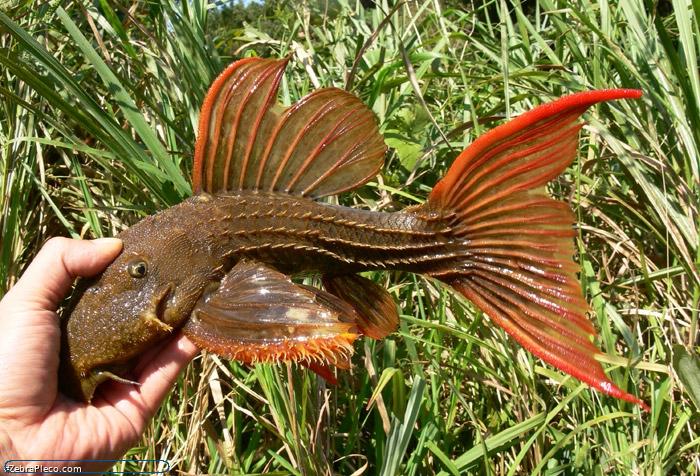
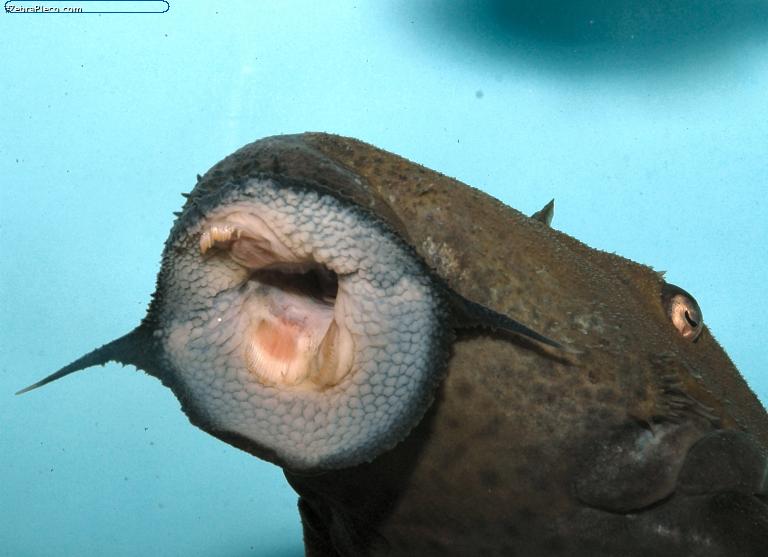
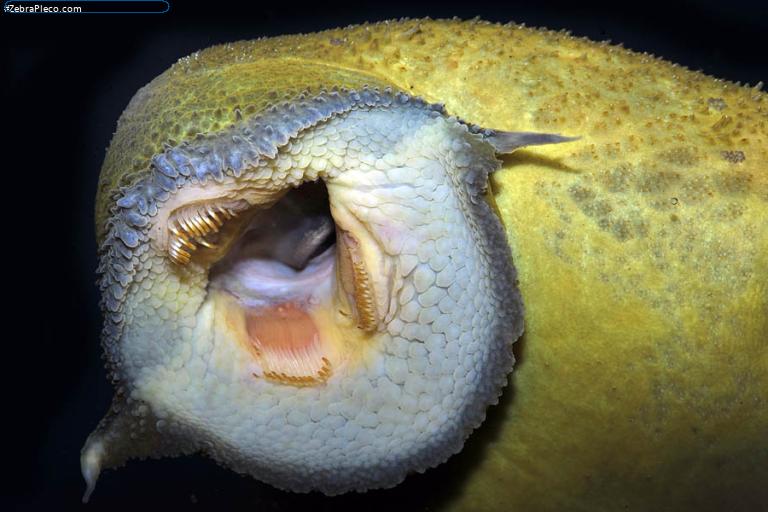
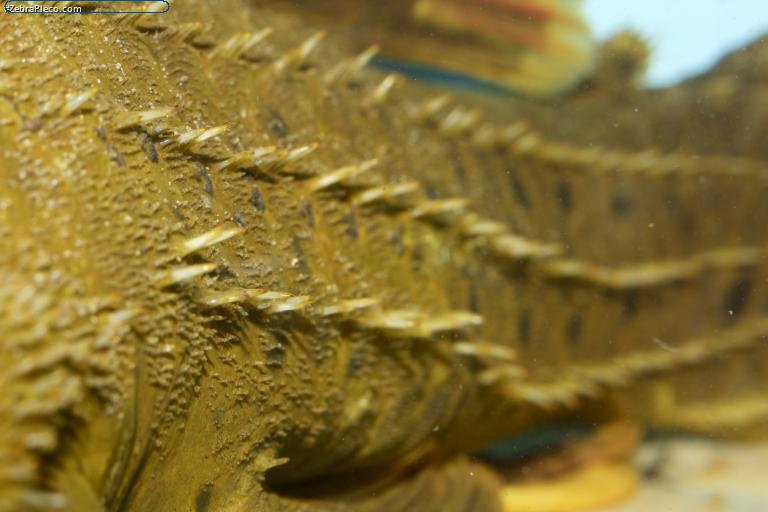
The German common name for this genus is ''Cactus Pleco''. A good name! Pseudacanthicus is a member of the Acanthicus clade. Species of the Acanthicus clade are distinguished from other Loricariidae species by the presence of (1) longitudinal rows of keels (pointed odontodes) along the body sides; (2) eight or more dorsal-fin rays (vs. six or seven in most other loricariids except Pterygoplichthys, Chaetostoma, Pogonopoma and Pseudancistrus pectegenitor); (3) seven to eight infraorbitals (vs. usually five or six); (4) five anal-fin branched rays (vs. usually four); and (5) presence of hypertrophied odontodes along the snout margin (vs. hypertrophied odontodes absent in other loricariids except Isbrueckerichthys and Pareiorhaphis, in Neoplecostominae; Panaque and Pseudancistrus and Neblinichthys, in Ancistrini; and most dimorphic males of Loricariinae). Within the Acanthicus group, Pseudacanthicus is distinguished by the presence of two small plates in the posterior area of the compound pterotic (vs. one median plate or plate absent), and by the presence of narrow premaxillae with a small number of elongate and curved teeth (except from Leporacanthicus).
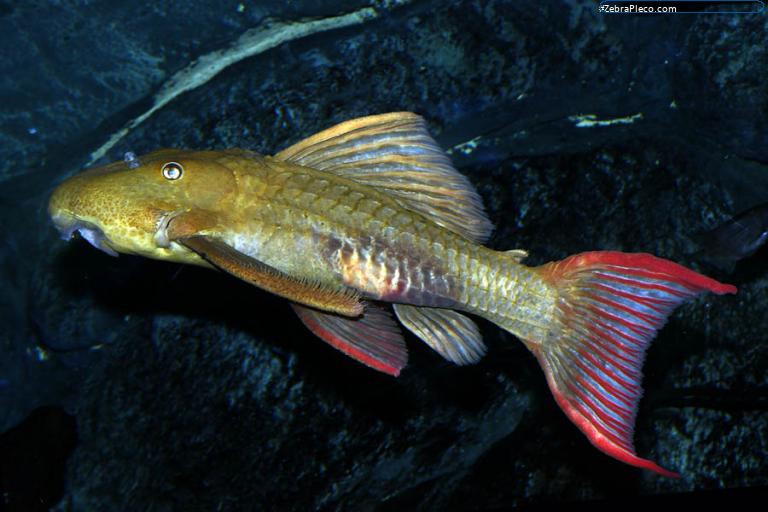
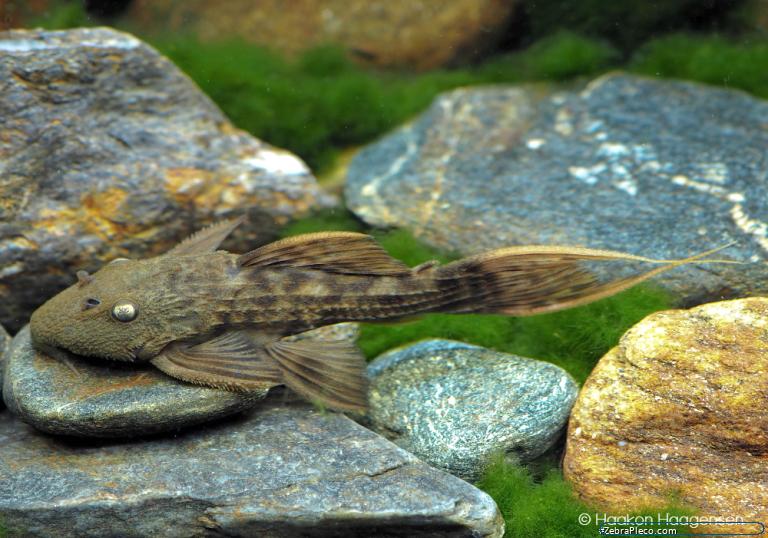
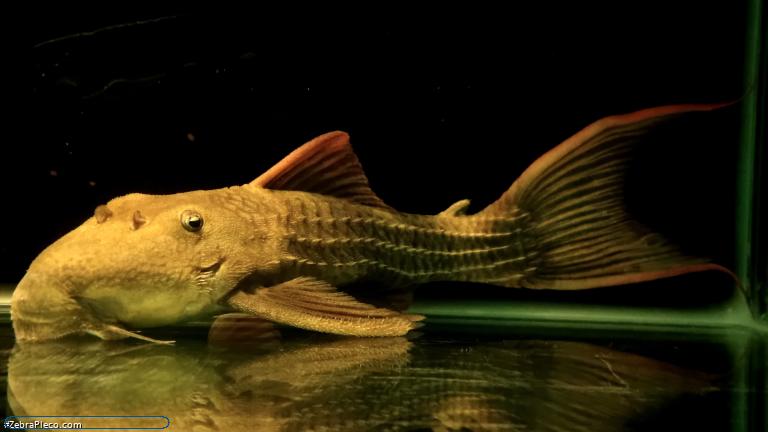
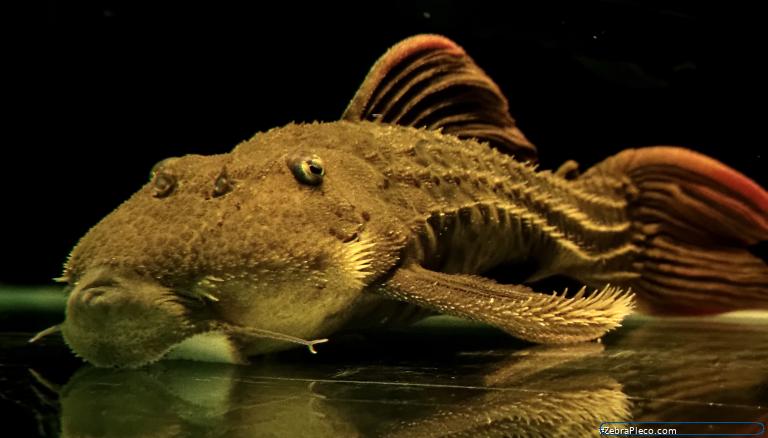
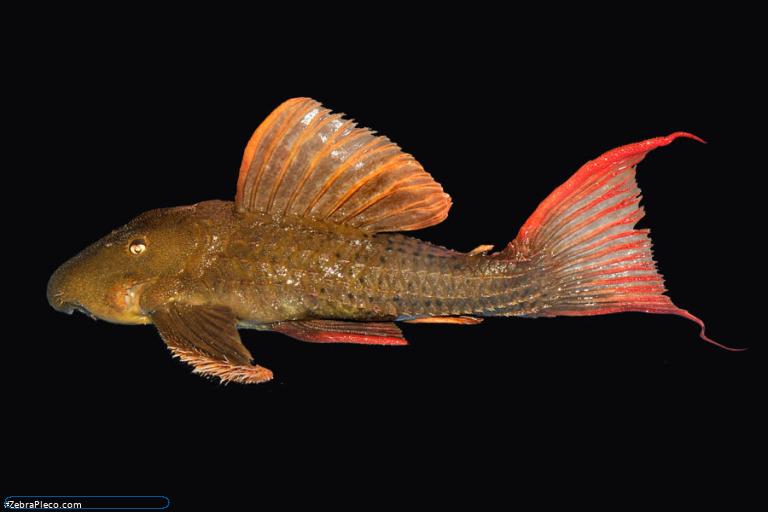
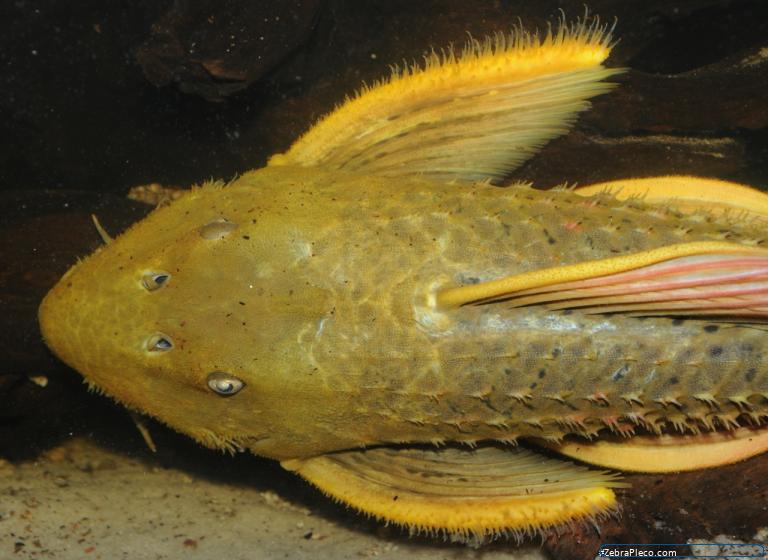
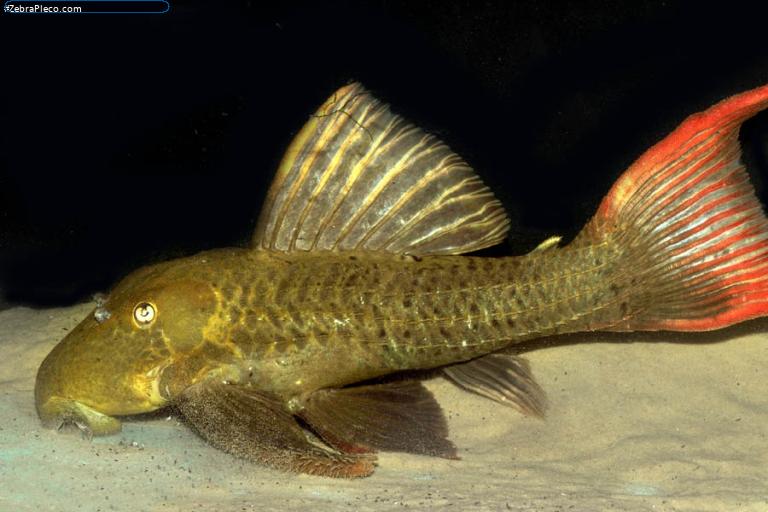
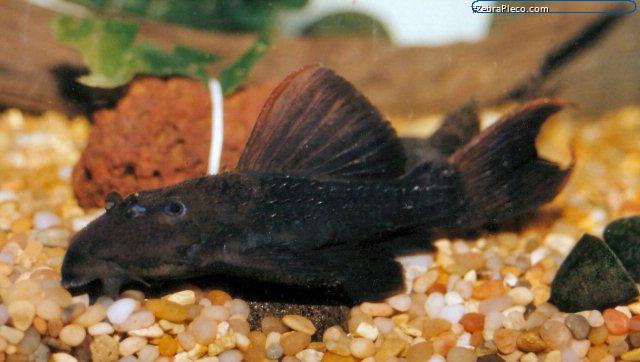
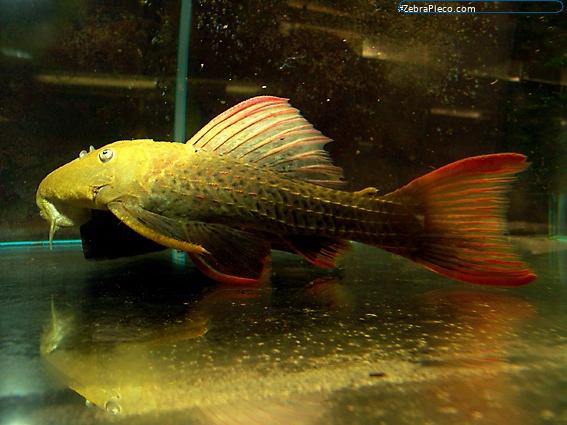
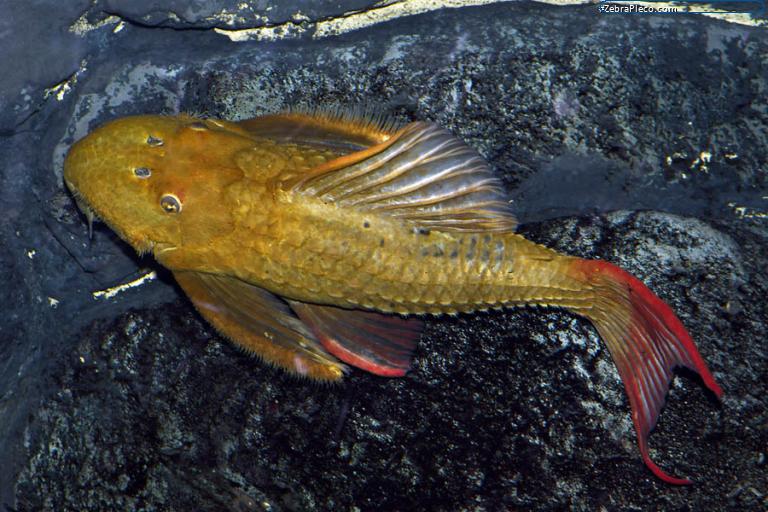
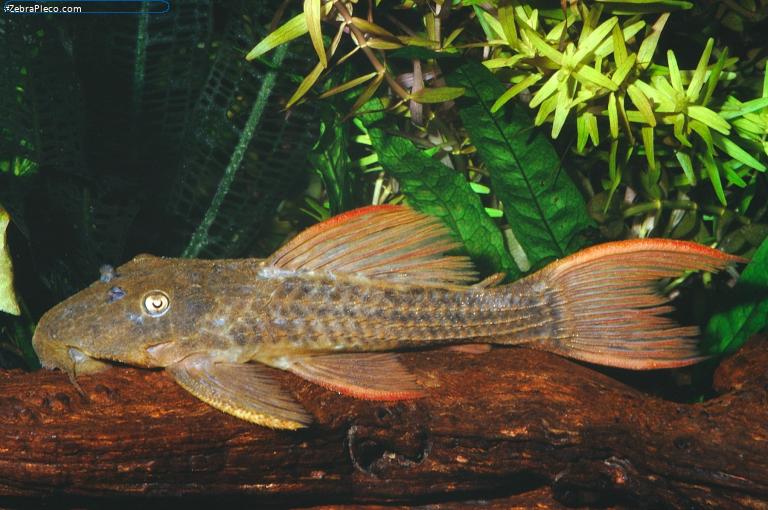
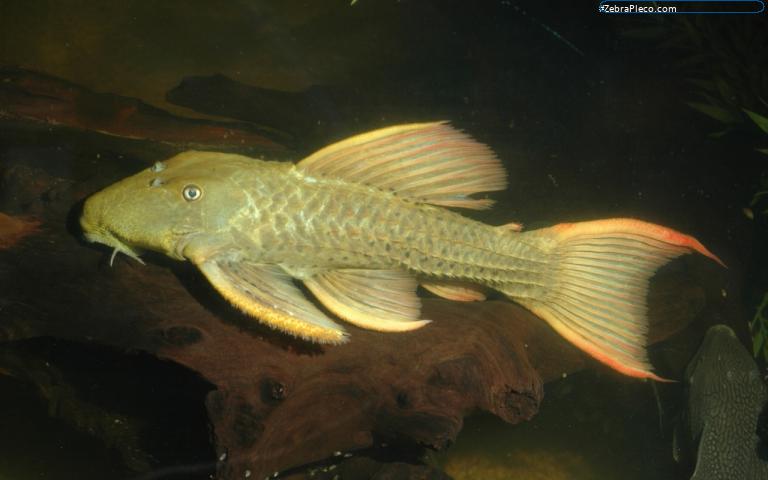
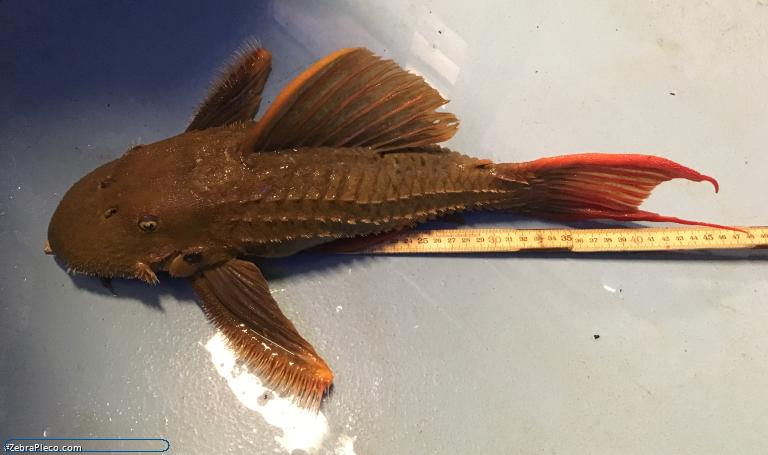
A medium to large Pseudacanthicus with grey / brown body and varying amounts of light to bright orange colouration in the fins. Pseudacanthicus sp. (L025) is from the Rio Xingú and has bright red fins when small fading to an orange-red in adults. Pseudacanthicus sp. (LDA118) is from the Rio Curua-Una and has plain fins when adult. Pseudacanthicus sp. (L024) is from the Rio Tocantins and has pale red fins with brown spots in them (except the caudal). Pseudacanthicus sp. (L024) from the upper Tocantins has brighter fins and the snout is entirely covered in orange blotches, almost bright enough to suggest a separate species.
Sexual Dimorphism (Sexing)
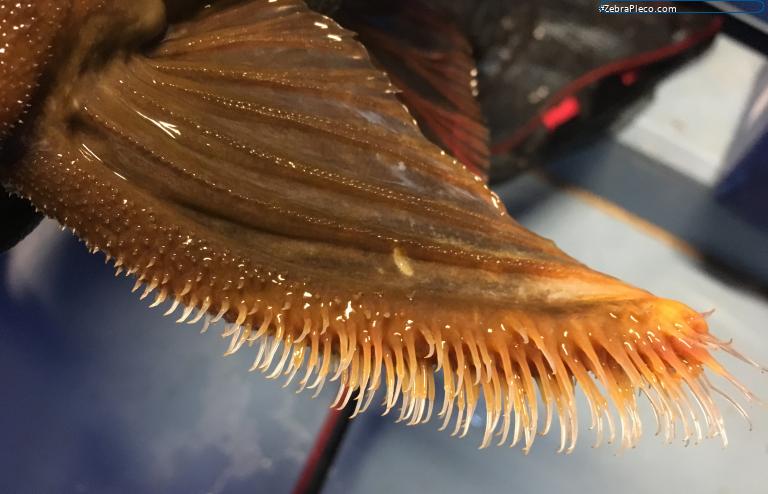
Mature males have considerably more odontodal growth on most fins rays but the pectorals are most adorned. Females fill out quite considerably in relation to the slender males.
Taxonomy, Synonyms & Etymology
Classification history, linguistic derivations and variant forms
Pronunciation
SUE dah KAN thi cuss
Etymology
Pseud- Greek: False, Acanthicus - Greek: Spiny, Thorny. Literally "False Acanthicus" referring to this genus being similar to, yet different from, Acanthicus. The specific epithet comes from the Tupi-Guarani word for red, in reference to the colour of the fins.
Literature & Resources
Scientific publications, external links and citation tools
Literature & References
External Databases
Related Searches