PAGE_HEADER
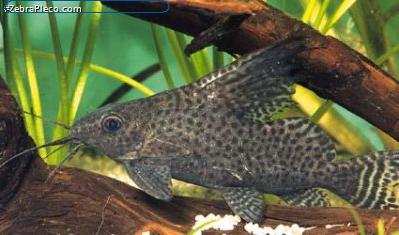
Synodontis eupterus Boulenger, 1901
Image Showcase
Photographs, diagnostic angles and morphological variants



Community & Keeper Tally
Member interactions, breeding records and forum mentions
Aquarium Care & Husbandry
Dietary requirements, tank setup, compatibility and breeding
Feeding & Diet
Bloodworm, Sinking Catfish Pellets, Doromin [View Member Food Stats]
Aquarium Furniture & Decor
Lots of rock caves and bogwood. Likes open spaces to patrol in the twilight / dark. Ensure the fish do not hide near a heater; they can burn themselves which leaves a nasty scar.
Compatibility & Suggested Tankmates
Peaceful. Can be kept singly or in groups given adequate refuge for each individual. A large multi-branched piece of bogwood is ideal.
Tankmates: Most medium or large community fish. Although commonly available as such, not a good species for the small community tank. Anything smaller than 3foot / 1 metre long, go for Synodontis nigriventris instead.
Breeding Notes
Unknown
Habitat & Water Parameters
Natural distribution, biotope water conditions and temperature ranges
Geographic Distribution
Africa: White Nile, Chad, Volta and Niger basins, including the Bénoué.
African Waters, Chad (click on these areas to find other species found there)
African Waters, Nigeria Waters, Niger (click on these areas to find other species found there)
African Waters, Nile, Upper Nile, White Nile (click on these areas to find other species found there)
Login to view the map.
Species Description & Identification
Morphology, diagnostic traits and sexual dimorphism
Identification
All species in the genus Synodontis have a hardened head cap that has attached a process (humeral process) which is situated behind the gill opening and pointed towards the posterior. The dorsal fin and pectoral fins have a hardened first ray which is serrated. Caudal fin is always forked. There is one pair of maxillary barbels, sometimes having membranes and occasionally branched. The two pairs of mandibular barbels are often branched and can have nodes attached. The cone-shaped teeth in the upper jaw are short. S-shaped and movable in the lower jaw. These fish produce audible sounds when disturbed rubbing the base of the pectoral spine against the pectoral girdle.
Juvenile colouration is quite different from that of the adult. The change begins when the fish reach about 40mm and gradually continues until they pass the 100mm mark.
Sexual Dimorphism (Sexing)
First lay the fish in your hand with its head toward your palm and the tail toward your fingers. Hold the dorsal spine between your middle and ring finger so the fish is belly up and you won't get stuck (Which by the way, hurts like crazy!). The genital pore is in a small furrow of tissue (in healthy fish) and will be obstructed by the pelvic fins. Pull down on the tail gently to arch the fishes spine and the pelvic fins will stand and the furrow open to display the genital pore and the anus of the fish. The male has a somewhat ridged genital papillae on which the spermatoduct is on the back side, facing the tail fin. A gravid female will also show an extended papillae but the oviduct is on the ventral side of the papillae (And may also show a little redness if really gravid). A thin or emaciated female will have just two pink pores, the oviduct and the anus.
Taxonomy, Synonyms & Etymology
Classification history, linguistic derivations and variant forms
Synonyms
Synodontis euptera, Synodontis galinae, Synodontis macrepipterus
Pronunciation
sin oh don tiss - you TERR ahh
Etymology
According to Cuvier, Synodontis is an "ancient name for an undetermined fish from the Nile". It is not derived, as often reported, from syn-, together and odous, tooth, presumed etymology of the lizardfish genus Synodus and refers to the closely-spaced lower jaw teeth of both genera. This specific epithet literally means beautiful (eu-=beautiful,good) wing (pteron=wing).
Literature & Resources
Scientific publications, external links and citation tools
Description Reference
Annals and Magazine of Natural History (Series 7) v. 8 (no. 43) (art. 2), pp 11.
External Databases
Related Searches