PAGE_HEADER
Glyptosternon reticulatum McClelland, 1842
Image Showcase
Photographs, diagnostic angles and morphological variants

Community & Keeper Tally
Member interactions, breeding records and forum mentions
Aquarium Care & Husbandry
Dietary requirements, tank setup, compatibility and breeding
Feeding & Diet
Will feed on live/frozen food. [View Member Food Stats]
Aquarium Furniture & Decor
A gravel/rocky bottom and a strong current.
Compatibility & Suggested Tankmates
A peaceful species suitable for the hillstream biotope tank. Best kept in a well-oxygenated tank with strong current. Ideal tankmates include larger fast-water cyprinids such as Garra.
Breeding Notes
Unreported in the aquarium.
Habitat & Water Parameters
Natural distribution, biotope water conditions and temperature ranges
Geographic Distribution
Asia: Afghanistan, Pakistan, India, and Tibet. Also former USSR.
Afghanistan Waters (click on these areas to find other species found there)
Indian waters (click on these areas to find other species found there)
Pakistan Waters (click on these areas to find other species found there)
Tibet Waters (click on these areas to find other species found there)
Login to view the map.
Species Description & Identification
Morphology, diagnostic traits and sexual dimorphism
Identification
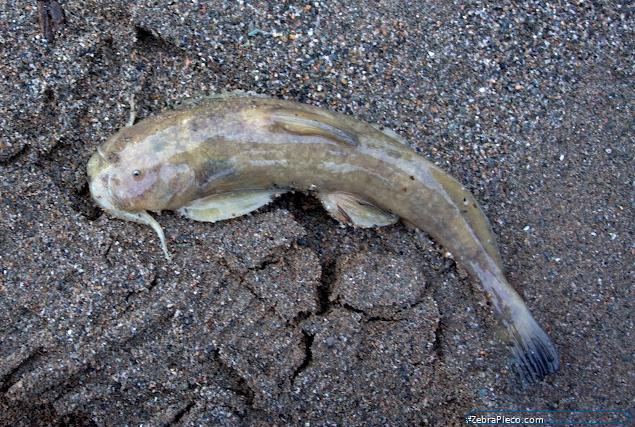
Depressed head and body, enlarged paired fins without ossified first pectoral-fin element (pectoral spine). Gill openings relatively wide and extend to ventral surface of head.
Sexual Dimorphism (Sexing)
Males have a larger genital papilla, and also appear to be more tuberculate during breeding season.
General Remarks
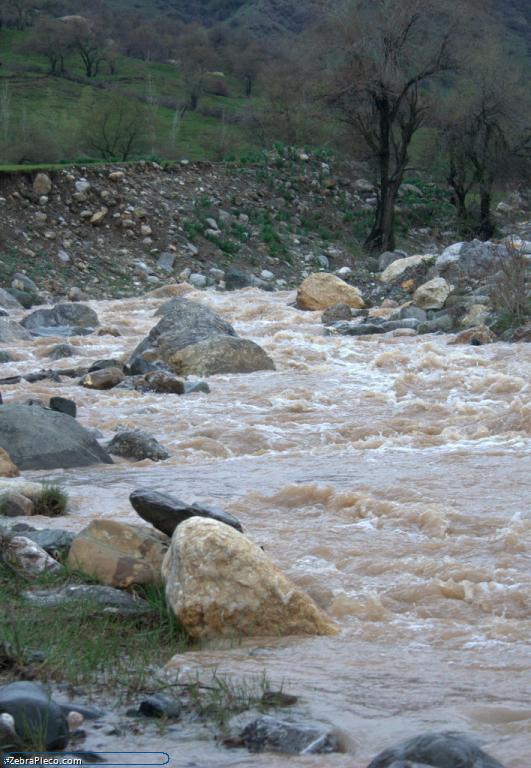
The habitat pictures were taken at approximately 1800 above sea level in the Fergana mountain range in southern Kyrgyzstan in April 2009. The name of the river isn't recorded, but its a tributary of the Kyzylungugir river. The species is relatively common and is eaten locally.
Taxonomy, Synonyms & Etymology
Classification history, linguistic derivations and variant forms
Synonyms
Exostoma labrax, Exostoma stoliczkae, Glyptosternon oschanini, Glyptosternon reticulatus, Glyptosternon stoliczkae, Glyptosternum reticulatum
Pronunciation
Gleep toe stir nawn - reh tick ewe latt uhm
Etymology
The generic name comes from the Greek glyptos, meaning carved, and sternon, meaning breast, in reference to the folds of skin comprising the thoracic adhesive apparatus. The specific epithet comes from the Latin reticulatus, meaning net-like, in reference to the colour pattern.
There is 1 other speciesPseudoplatystoma reticulatum with this specific name.
Literature & Resources
Scientific publications, external links and citation tools
Description Reference
Calcutta Journal of Natural History v. 2 (no. 8), pp 584.
External Databases
Related Searches