PAGE_HEADER
Liobagrus mediadiposalis Mori, 1936
Image Showcase
Photographs, diagnostic angles and morphological variants
Community & Keeper Tally
Member interactions, breeding records and forum mentions
Aquarium Care & Husbandry
Dietary requirements, tank setup, compatibility and breeding
Feeding & Diet
Feeds on small invertebrates and fish in the wild. Adapts readily to prepared food. [View Member Food Stats]
Aquarium Furniture & Decor
Provide plenty of large stones for hiding places and gravel. Make sure the stones are well set in the substrate as the fish will excavate caves beneath them. This fish has a preference for stones 30-40cm in diameter. Smaller stones will likely be ignored as will artificial caves. Plants are not necessary but floating plants are useful as they dim the lighting.
Compatibility & Suggested Tankmates
Non-aggressive, but it should not be trusted with small fish and its nocturnal feeding may unintentionally harass other bottom-dwelling species.
Tankmates: It may be kept in groups provided that there are enough suitable rocks for the fish. In nature, they live one per stone, but may cluster, unhapppily, together if there are not enough hiding spots in the aquarium. In nature they have been found sharing their home with Tachysurus fulvidraco outside of breeding time May be mixed successfully with many species of non-tropical fish and occurs naturally with many species of Bitterlings, Zacco platypus,and Phoxinus phoxinus
Breeding Notes
While Uchida reported in 1934 that the females guards the eggs, and much available literature still follows his assessment, recent researchers and aquarists suggest that it is the male who guards the eggs.
Habitat & Water Parameters
Natural distribution, biotope water conditions and temperature ranges
Geographic Distribution
Asia: South Korea.
Korea Waters (click on these areas to find other species found there)
Login to view the map.
Species Description & Identification
Morphology, diagnostic traits and sexual dimorphism
Identification
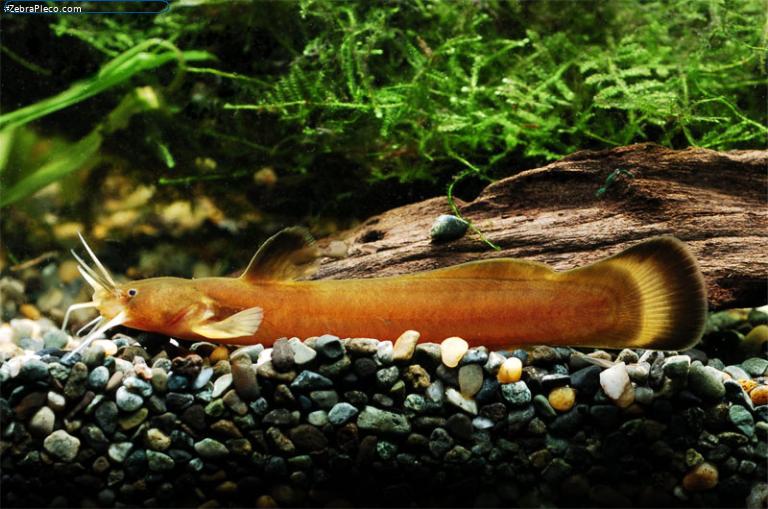
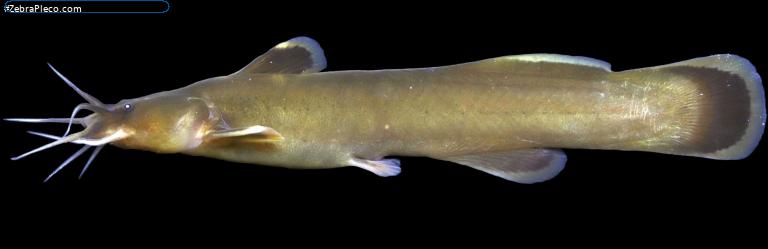
Easily differentiated from the two other Korean Liobagrus species by having an upper jaw that is longer, thus slightly overhanging, the lower jaw. Both L. andersoni and L. obesus have jaws that are of equal length.
Sexual Dimorphism (Sexing)
Males have broader heads. Females noticeably plumper during the breeding season.
Taxonomy, Synonyms & Etymology
Classification history, linguistic derivations and variant forms
Pronunciation
lie oh BAG russ
Etymology
From the Greek, leios, meaning smooth, and bagrus, a name usually used for catfishes; in reference to the smooth head.
Literature & Resources
Scientific publications, external links and citation tools
Description Reference
Dobutsugaku Zasshi = Zoological Magazine Tokyo v. 48 (nos 8-10), pp 673, Pl. 24 (fig. 3).
External Databases
Related Searches