PAGE_HEADER
Trachelyopterus fisheri (Eigenmann, 1916)
Image Showcase
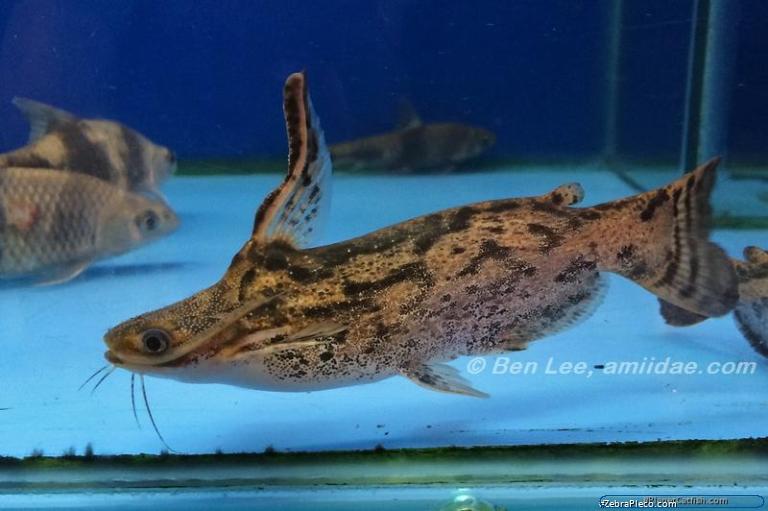
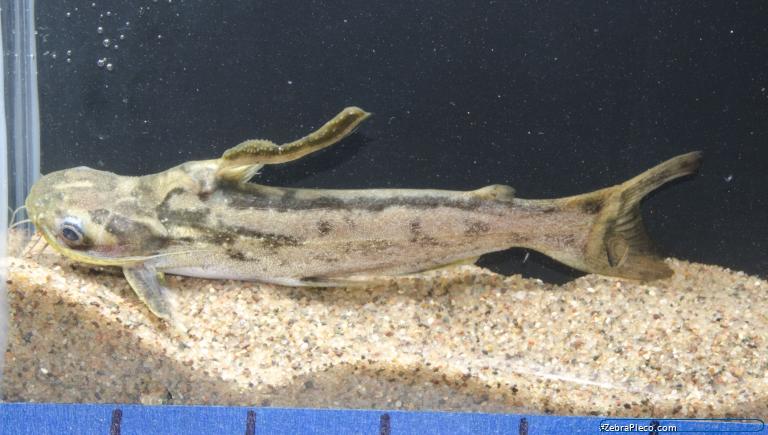
Photographs, diagnostic angles and morphological variants
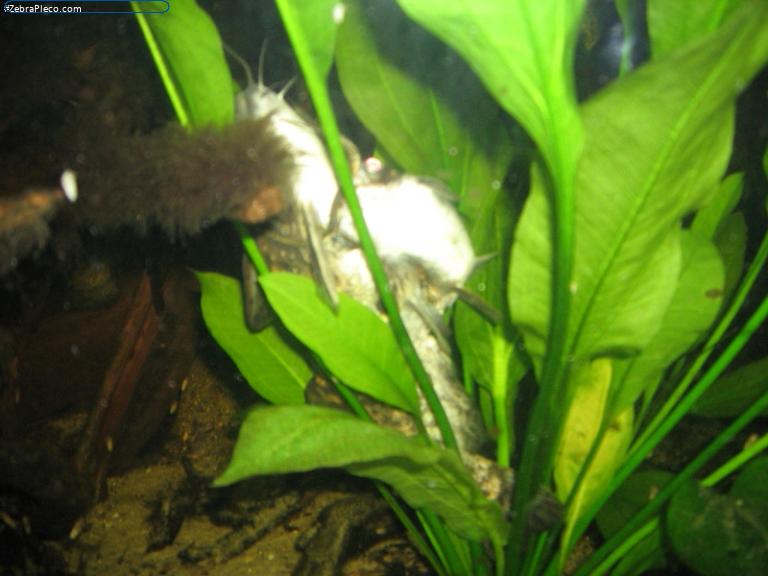
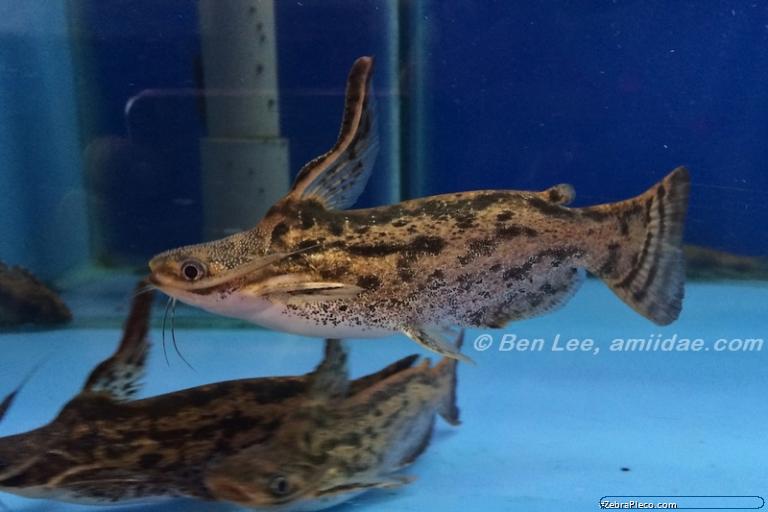
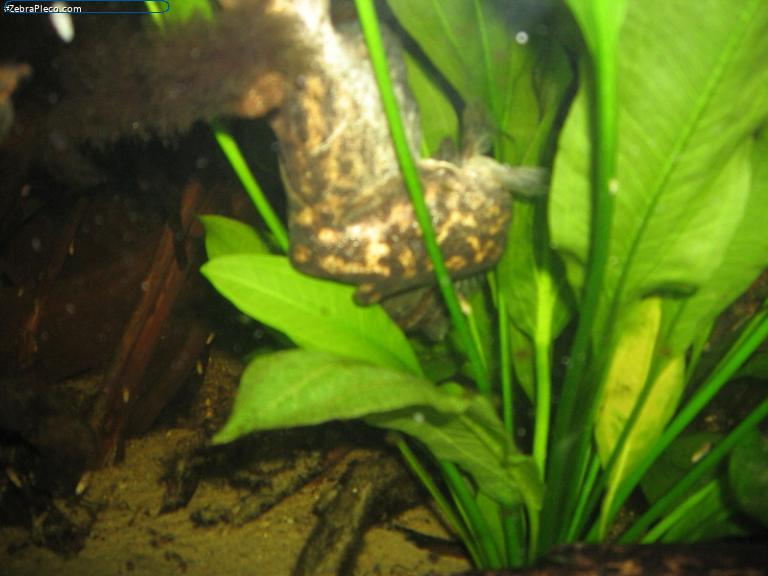
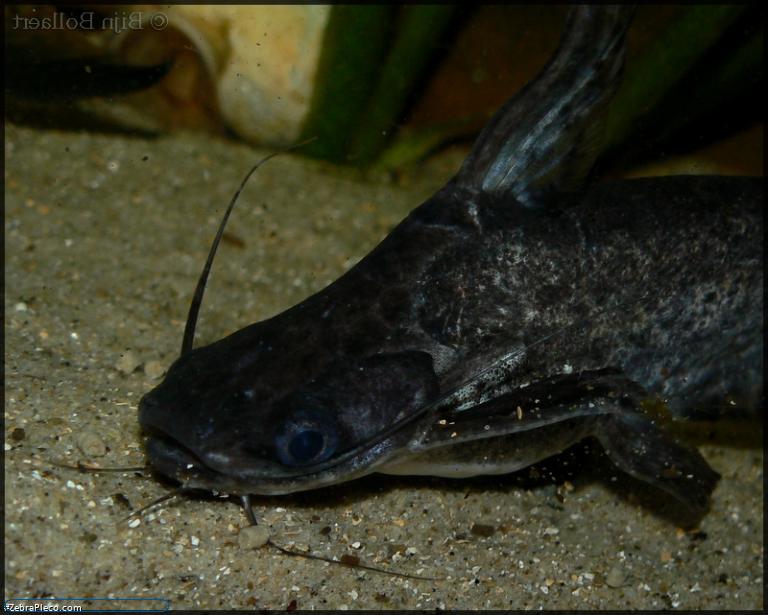
Community & Keeper Tally
Member interactions, breeding records and forum mentions
Aquarium Care & Husbandry
Dietary requirements, tank setup, compatibility and breeding
Feeding & Diet
This species is not shy and can regularly be seen during the day, especially when being fed. All prepared and frozen foods are taken. Like all Auchenipterids - being surface feeders - they are particularly fond of insects and their larvae. [View Member Food Stats]
Aquarium Furniture & Decor
Large pieces of driftwood as hiding places. See to it that there is also plenty of swimming space. The aquarium shouldn't be too brightly lit.
Compatibility & Suggested Tankmates
Despite their size these fish are very gentle, social and peaceful. Smaller fish may, however, be eaten, due to the fact that they rest at night while these woodcats are on the move.
Tankmates: Non-aggressive fish and fishes that aren't too small.
Breeding Notes
Has been recorded (see Reference notes). Like other Auchenipterids, these fish have internal fertilization. The bodies are wrapped around each other and to stay in position the male uses its barbels, dorsal spine and spawning tubercles. The actual mating lasts for about 30 seconds or less. Four weeks later the female lays her eggs. The parents will neither look after their eggs nor eat them.
Habitat & Water Parameters
Natural distribution, biotope water conditions and temperature ranges
Geographic Distribution
South America: Suico River basin.
Colombia Caribbean Rivers, Atrato, Sucio (click on these areas to find other species found there)
Login to view the map.
Species Description & Identification
Morphology, diagnostic traits and sexual dimorphism
Identification
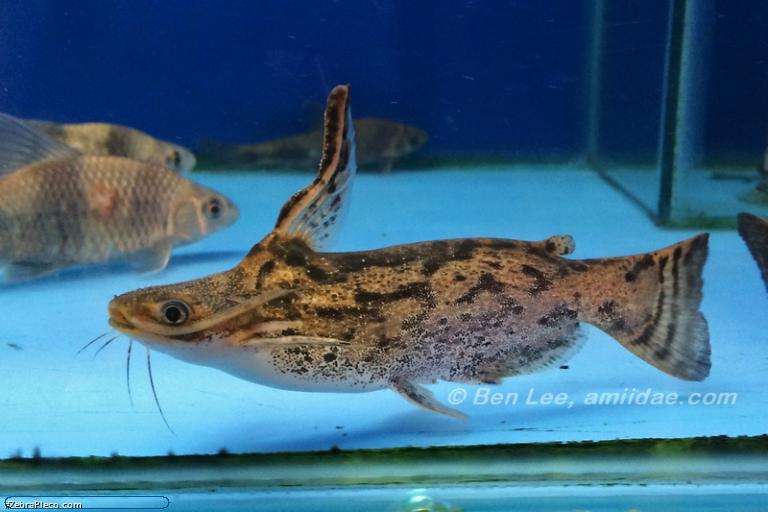
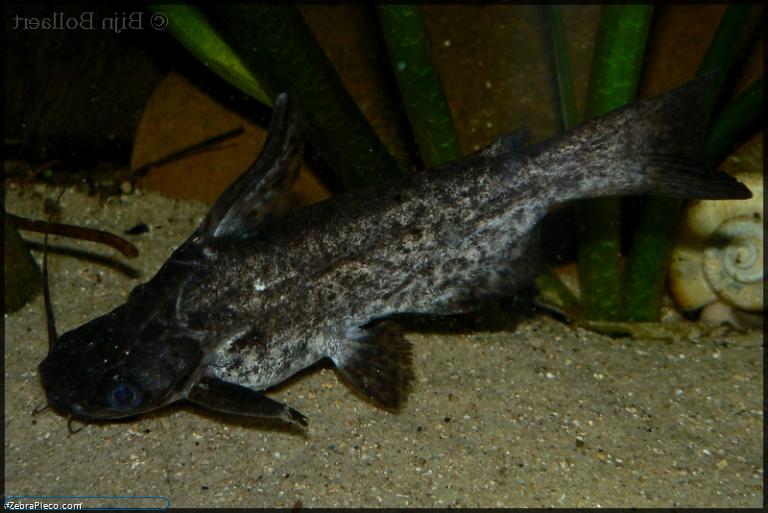
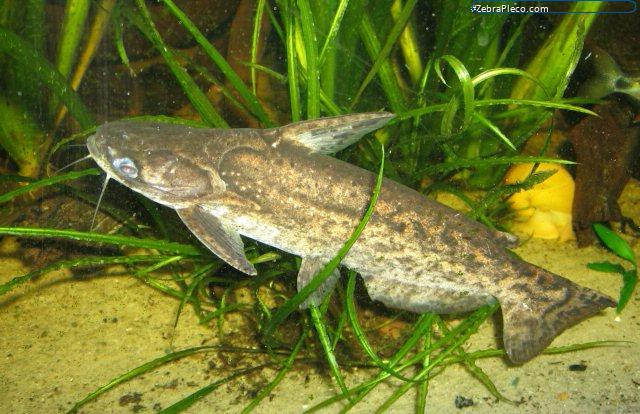
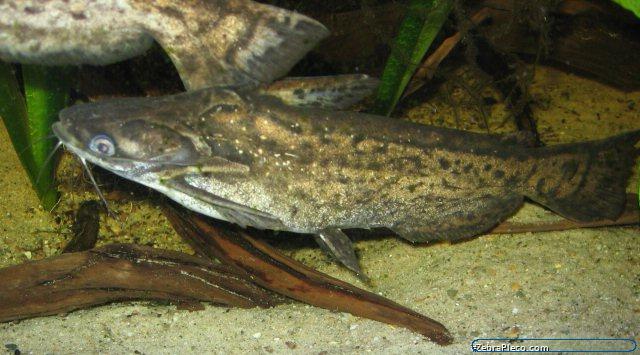
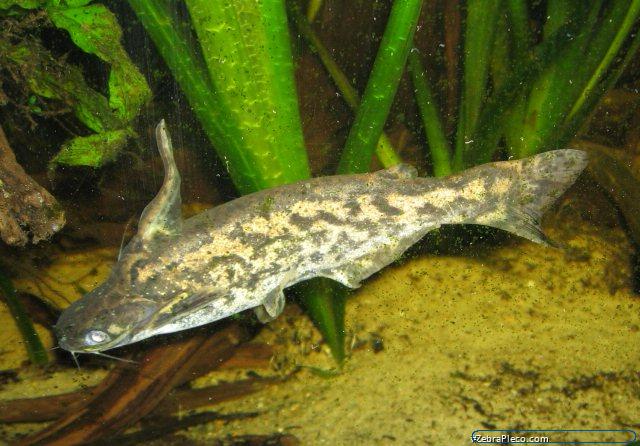
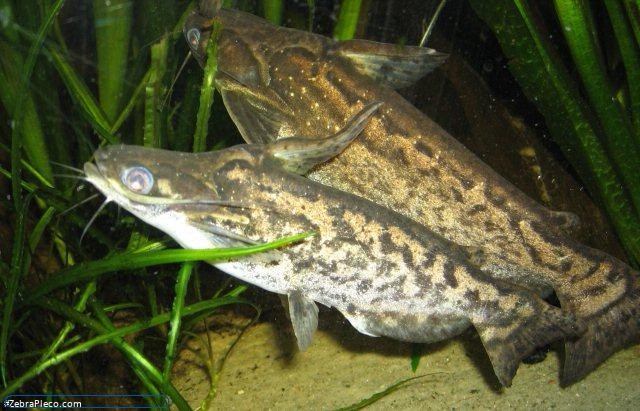
This is by far the most slender of all Trachelyopterus species. Another feature that gives its identity away is the terminal mouth, whereas other Trachelyopterus species have a slightly superior mouth (see also General notes).
Sexual Dimorphism (Sexing)
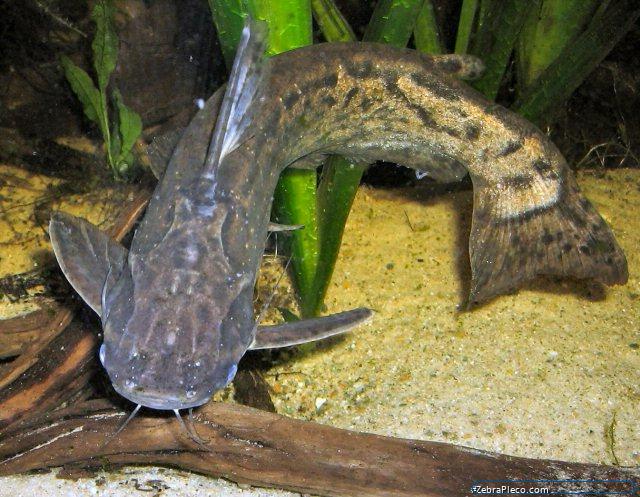
Males have a genital papilla, thickened maxillary barbels, spawning tubercles on the barbels and on top of the head and a curved, enlarged dorsal spine which can be moved up and forward. Also their nape is bent upwards, as can be seen in Tetranematichthys and Ageneiosus spp. Females grow larger and display a plainer colour pattern.
General Remarks
In terms of general captive behaviour, this species doesn't resemble its congeners, but is more easily compared to the larger Auchenipterichthys and smaller ageneiosids. It's a very gentle species that glides through the water and never displays the hastiness which is so typical for other members of its genus. Moreover, the nape and the enlarged dorsal spine make it look more like an Ageneiosus or a Tetranematichthys. See also TFH August 1982, pages 84-89, Burgess and Azuma: The first spawning of the woodcat, Trachycorystes insignis [sic] The same pictures and a very short summary of the article can be found in An Atlas of Marine and Freshwater Catfishes (1989), pages 586-589, Burgess. In this book, the fish is named Parauchenipterus fisheri, which was the correct name at the time.
Taxonomy, Synonyms & Etymology
Classification history, linguistic derivations and variant forms
Synonyms
Parauchenipterus fisheri, Trachycorystes fisheri
Pronunciation
- fish err eye
Etymology
Trachelyopterus: From the Greek, trachelos, meaning neck and pteron, meaning fin; in reference to the long cranial shield, which gives the appearance that the dorsal fin originates at the neck region. The specific epithet is named after the American entrepreneur Carl Graham Fisher.
Literature & Resources
Scientific publications, external links and citation tools
Description Reference
Annals of the Carnegie Museum v. 10 (nos 1-2) (art. 6), pp 82.
External Databases
Related Searches