PAGE_HEADER
Image Showcase
Photographs, diagnostic angles and morphological variants
Community & Keeper Tally
Member interactions, breeding records and forum mentions
Aquarium Care & Husbandry
Dietary requirements, tank setup, compatibility and breeding
Feeding & Diet
Readily feeds on live or frozen foods and other prepared foods such as pellets. May eat very small fishes. [View Member Food Stats]
Aquarium Furniture & Decor
Provide hiding spaces in the form of driftwood or PVC pipes as well as plenty of vegetation. Prefers an area of open water when active.
Compatibility & Suggested Tankmates
A relatively peaceful species that is compatible with most fish. Not safe with very small fishes.
Breeding Notes
No member of this genus has been bred in the aquarium.
Habitat & Water Parameters
Natural distribution, biotope water conditions and temperature ranges
Geographic Distribution
Asia: Chao Phraya to Mekong basins.
Thailand Waters, Chao Praya (click on these areas to find other species found there)
Mekong (click on these areas to find other species found there)
Login to view the map.
Species Description & Identification
Morphology, diagnostic traits and sexual dimorphism
Identification
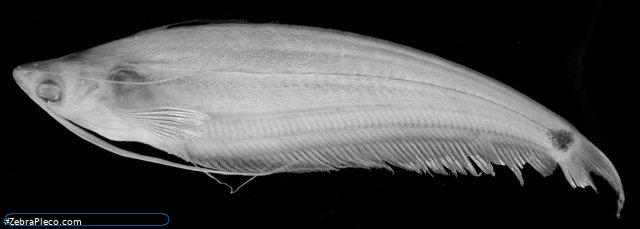
The catfish genus Ompok La Cepède, 1803, consists of medium-sized silurid fishes found in inland waters throughout South and Southeast Asia. The genus is traditionally diagnosed by the presence of a short dorsal fin with 4 rays, strongly forked caudal fin, subcutaneous eye that is set immediately posterior to the mouth rictus and two patches of palatal teeth (Weber & de Beaufort, 1913). Bornbusch (1995) showed that Ompok, as currently understood, is probably paraphyletic.
Like O. eugeneiatus, easily distinguished from congeners by the very long barbels. Ompok pinnatus differs from O. eugeneiatus in having a deeper caudal peduncle, shorter mandibular barbels and fewer anal-fin rays.
Sexual Dimorphism (Sexing)
Males are more slender and have strong serrations on the posterior edge of the pectoral spine (females lack these serrations).
Taxonomy, Synonyms & Etymology
Classification history, linguistic derivations and variant forms
Pronunciation
Awm pok - peen ah tuss
Etymology
The etymology of Ompok is unclear. It is believed to be a corruption of the Indonesian name for mid-sized silurid catfishes, limpok. From the Latin pinnatus, meaning feathered or plumed. In reference to the very long dorsal fin and barbels.
Literature & Resources
Scientific publications, external links and citation tools
Description Reference
Proceedings of the Biological Society of Washington v. 116 (no. 1), pp 48, Fig. 1.
External Databases
Related Searches