PAGE_HEADER
Cnidoglanis macrocephalus (Valenciennes, 1840)
Image Showcase
Photographs, diagnostic angles and morphological variants
Community & Keeper Tally
Member interactions, breeding records and forum mentions
Aquarium Care & Husbandry
Dietary requirements, tank setup, compatibility and breeding
Feeding & Diet
Juveniles may be fed a variety of foods, but adults may show a strong preference for molluscs. [View Member Food Stats]
Aquarium Furniture & Decor
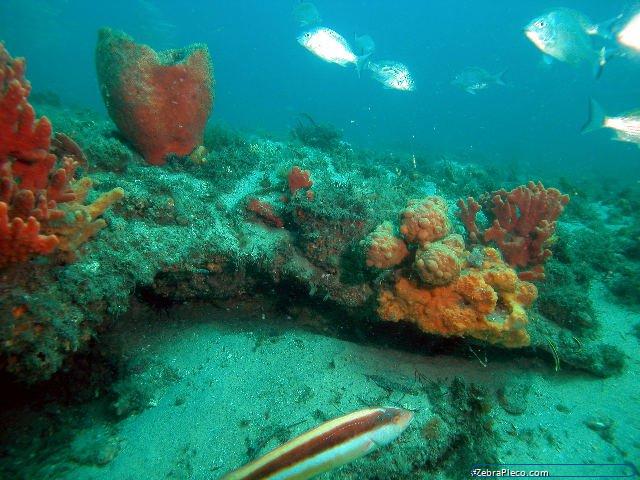
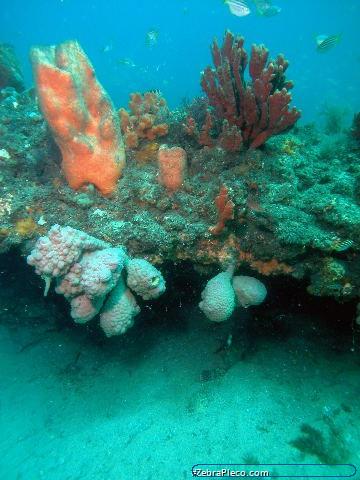
A sand/gravel and coral/rock rubble bottom preferred. Make sure that there is enough rockwork for the fish to hide in during the day.
Compatibility & Suggested Tankmates
Fairly peaceful and compatible with most fish of equal size or larger in a marine setup, although adults appear to be solitary.
Breeding Notes
The fish spawn in the austral spring (August-December). Males guard the eggs (a typical spawn consists of 500-3500 eggs) between their pelvic fins for an unknown period in the nest which the male have constructed among seagrass beds and rocks. The drift weeds found in inshore marine waters, protected inshore marine environments and estuaries act as nursery areas. Cobbler enter these areas during their first year of life and often remain there for long periods.
Habitat & Water Parameters
Natural distribution, biotope water conditions and temperature ranges
Geographic Distribution
Indo-Pacific: endemic to Australia. Present along both eastern and western Australian coasts, from Kirra in southern Queensland to Jervis Bay in New South Wales, and from Kingston in South Australia to the Houtman Abrolhos in Western Australia. Distributional range extension to the Duck River in Tasmania needs verification.
Australia waters (click on these areas to find other species found there)
Login to view the map.
Species Description & Identification
Morphology, diagnostic traits and sexual dimorphism
Identification
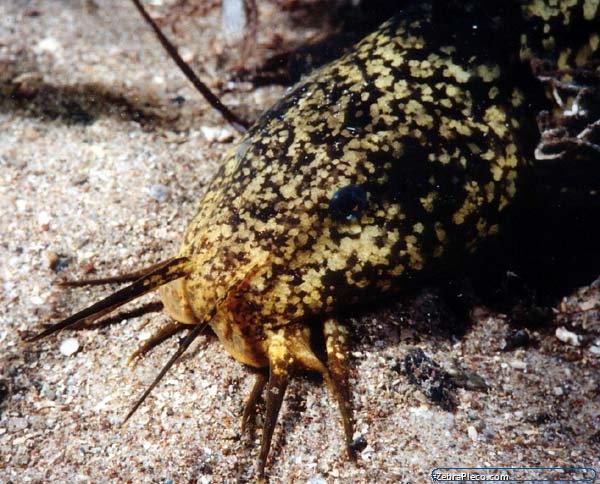
Distinguished by its mottled coloration, 222-234 total median fin rays and molariform teeth.
General Remarks
An inshore marine species which lives in shallow bays and sandy inlets near river mouths. Found most frequently over sand, rocks and weeds in clear to turbid waters. By day, cobbler are most often found in holes and on ledges in banks. They are opportunistic feeders, primarily feeding at night. Food consists of bivalve and univalve molluscs, crustaceans (small prawns and amphipods), polychaete worms, algae and organic debris. Juveniles eat more crustacea - often from among drifting macrophytic algae. Adults feed mainly on molluscs and polychaetes. Capable of inflicting painful stings with its spines.
Taxonomy, Synonyms & Etymology
Classification history, linguistic derivations and variant forms
Synonyms
Choeroplotosus decemfilis, Choeroplotosus limbatus, Cnidoglanis bostockii, Neoplotosus waterhousii, Ostophycephalus duriceps, Plotosus macrocephalus, Plotosus megastomus
Pronunciation
Nee doh glare nees - mak row see fah luss
Etymology
The generic name comes from the Greek knide, meaning nettle, and glanis, meaning catfish; in reference to the painful sting the fish is capable of inflicting. The specific epithet comes from the greek makros, meaning long, and cephale, meaning head; in reference to the longer head of this species.
There are 5 other speciesAtopochilus macrocephalus
Clarias macrocephalus
Gobio macrocephalus
Kryptopterus macrocephalus
Serranochromis macrocephalus with this specific name.
Literature & Resources
Scientific publications, external links and citation tools
Description Reference
Histoire naturelle des poissons v. 15, pp 428, Pl. 449.
External Databases
Related Searches