PAGE_HEADER
Hemisilurus moolenburghi Weber & de Beaufort, 1913
Image Showcase
Photographs, diagnostic angles and morphological variants
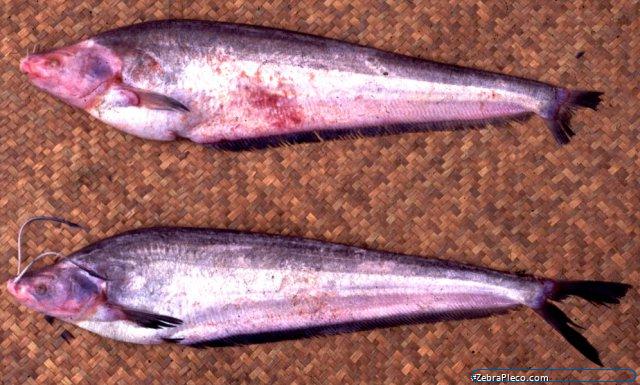
Community & Keeper Tally
Member interactions, breeding records and forum mentions
Aquarium Care & Husbandry
Dietary requirements, tank setup, compatibility and breeding
Breeding Notes
Unreported in the aquarium.
Habitat & Water Parameters
Natural distribution, biotope water conditions and temperature ranges
Geographic Distribution
Asia: Sumatra and western Borneo.
Pacific, Greater Sunda Island Rivers, Sumatra Waters (click on these areas to find other species found there)
Pacific, Greater Sunda Island Rivers, Borneo Waters, Western Borneo Waters (click on these areas to find other species found there)
Login to view the map.
Species Description & Identification
Morphology, diagnostic traits and sexual dimorphism
Identification
This species is diagnosed by its distinctive barbel morphology, especially in the females.
Sexual Dimorphism (Sexing)
Females are more deeper bodied and have longer maxillary barbels (reaching just to opercle) with feathery extensions at the tip. Males are more slender, have shorter, simple maxillary barbels (not reaching opercle), and prominent serrations on the posterior edge ofthe pectoral spine.
Taxonomy, Synonyms & Etymology
Classification history, linguistic derivations and variant forms
Pronunciation
Ham mee see loo russ - moo lern berg ee
Etymology
From the Greek hemi- meaning half and Silurus, the word for catfish. Named after P. H. Moolenburgh, who collected the fish.
Literature & Resources
Scientific publications, external links and citation tools
Description Reference
Fishes Indo-Australian Archipelago v. 2, pp 212, Figs. 84-85.
External Databases
Related Searches