
PAGE_HEADER

 Male
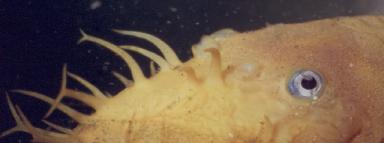 Close-up showing black eye
 Dorsal view - male

 Female
 Six week old youngster
 Youngsters at three months
 Spawning site


 Two day old fry
 Three day old fry


| ⇓ Zebra Pleco (Hypancistrus zebra) Data Sheet | |
|---|---|
| Scientific Name | Ancistrus sp. (4) |
| Common Names | L144, Black Eyed Yellow Bristlenose Blåøjet Antennesugemalle (Danish, Denmark), Citronancistrus (Swedish, Sweden), False L144, Lemon Bristlenose |
| Synonym(s) | |
| Pronunciation | an SISS truss |
| Etymology | The name Ancistrus is derived from the Greek word agkistron, meaning hook, in reference to the interopercular odontodes that are hooked. There are 8 other speciesChaetostoma sp(4) Hypoptopoma sp(4) Hypostomus sp(4) Mastiglanis sp(4) Pimelodella sp(4) Rineloricaria sp(4) Synodontis sp(4) Trachelyopterus sp(4) with this name. |
| ⇓ Species Information | |
| Size | 110mm or 4.3" SL. Find near, nearer or same sized spp. |
| Identification | Mature males and sometimes females have soft tentacles (bushy fleshy growths) on the snout - this is unique to the genus Ancistrus. Similar to the more common albino Ancistrus but with black eyes. Generally inaccurately sold as Ancistrus sp. L144. The true L144 is a different species imported from Paraguay. |
| Sexing | Males develop soft tentacles on the head and while sometimes females also do, it is never to the grand extent of those found on that of the conspecific male. Typical for the genus with males possessing the so-called ''bushy nose''. Females also may have much smaller growths on the head but to a much lesser extent. |
| General Remarks | This fish appears to be a form of Ancistrus cf. cirrhosus. |
| ⇓ Habitat Information | |
| Distribution | The fish pictured here is of unknown origin and is likely to be a captive bred form. |
| pH | 6.2 - 7.2 |
| Temperature | 21.0-23.0°C or 69.8-73.4°F (Show species within this range) |
| Other Parameters | Undemanding and long established in captivity, so almost any clean, well oxygenated water is accepted. Slightly acidic to neutral, soft to moderately hard water at the cooler end of tropical temperatures gives the best results. As with all Ancistrus, a good current, efficient filtration and generous water changes matter far more than exact chemistry. |
| ⇓ Husbandry Information | |
| Feeding | Typical for the genus. Feed vegetables, algae wafers, and once a week frozen or live foods. User data. |
| Furniture | A sand or rounded pebble substrate with rocks forming a few caves. Driftwood also a good idea. |
| Compatibility | An ideal community fish. |
| Suggested Tankmates | A good choice for most peaceful community aquaria containing characins, barbs, rainbowfishes, dwarf cichlids and other catfishes. Males are territorial towards one another, so either keep a single male or provide a cave for each. Avoid boisterous, much larger fishes and slow, long finned tankmates, which may occasionally be rasped at. |
| Breeding | See Shane's World here. |
| Breeding Reports | There is no breeding report. |
| ⇓ Further Information | |
| Wishlists | There is no wish to keep this species. |
| Spotters | There is no record of this fish being seen. |
| ⇓ More Resources | |
| Forum BBCode | |
| Find CLOG | 69 mentions on the forum, starting 7th Jun 05 |
 | Look up A. sp. (4) on PlanetCatfish.com |
 | LFS label creator ARN ref:1.4.4.905 |
| Last Update | Tue Sep 15, 2026 3:44 pm (Species record created: Thu Jul 18, 2002 7:00 am) |
