
PAGE_HEADER
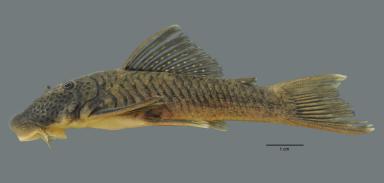 Rio Seiko
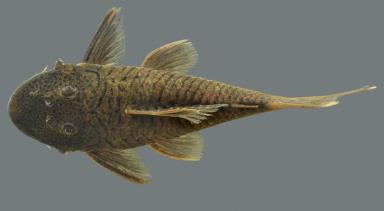 Rio Seiko
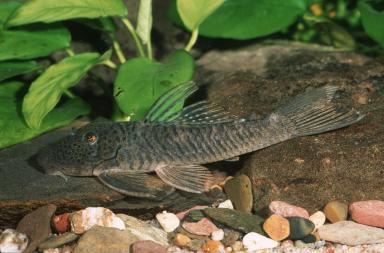 Rio Xingu
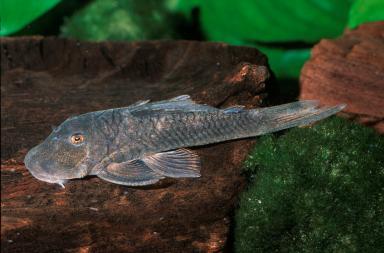 Rio Maicuru
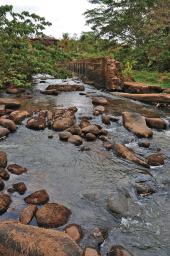 Rio Seiko habitat
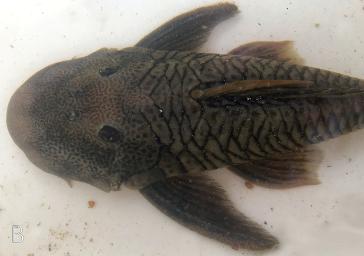
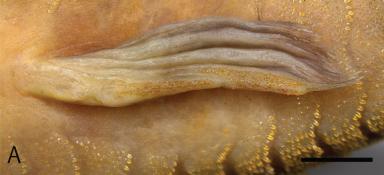 Modified anal fin of male
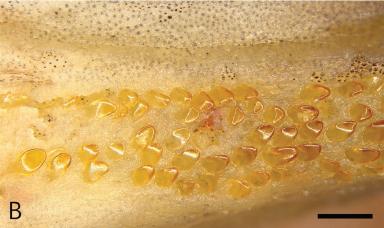 Odontodes on male's anal fin
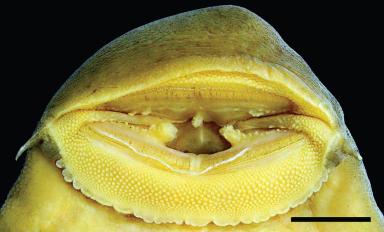 Close-up of mouth
| ⇓ Zebra Pleco (Hypancistrus zebra) Data Sheet | |
|---|---|
| Scientific Name | Chaetostoma orientale Meza-Vargas, Calegari, Lujan, Ballen, Oyakawa, Sousa, Rapp Py-Daniel & Reis, 2022 |
| Common Names | L413, Maicuru Rubbernose L416, Xingu Rubbernose, Maicuru-gumminæse (Danish), Xingu-gumminæse (Danish) |
| Type Locality | Maicuru River at road PA-254, Amazon River basin, Monte Alegre, Pará, Brazil, 1°36'47"S, 54°22'37"W, elevation 33 metres. |
| Synonym(s) | |
| Pronunciation | KATE oh STOW mah |
| Etymology | Greek, chaite = hair + Greek, stoma = mouth. There is 1 other speciesCetopsidium orientale with this name. |
| ⇓ Species Information | |
| Size | 132mm or 5.2" SL. Find near, nearer or same sized spp. |
| Identification | The genus Chaetostoma is not straightforward to identify, but as a general rule, the species has spines behind the gill-cover (interopercular odontodes), no plates on the abdomen, and aside from C. platyrhynchus also lack plates on the snout edge. Different from Ancistrus by not having fleshy tentacles on the snout. |
| Sexing | The males have however a larger and broader head, slimmer ventral sides and disproportionately large pelvic fins. Perhaps the over-sized pelvic fins play a large role in the fertilization of the eggs. By inverting these over the clutch of eggs, they prevent the sperm cells being carried away by fast water current. In addition to having larger fan-like pelvic fins and a larger unplated area around the snout, mature males have the second unbranched anal fin ray broader and longer than first unbranched ray. Their second unbranched ray has small but conspicuous spatulate odontodes along anterior surface of free distal portion. Males also develop a skin flap on the dorsal surface of the pelvic-fin leading ray that attaches to the body above the ray insertion, along with development of odontodes erupting from the skin on branched rays 1–3; odontodes are fewer and less developed in females, which also lack the skin flap on the leading ray. |
| General Remarks | Not commercially exported in any great numbers. |
| ⇓ Habitat Information | |
| Distribution | Amazon, Lower Amazon, Xingu, Lower Xingu, Jaraucu (click on these areas to find other species found there) Amazon, Lower Amazon, Xingu, Lower Xingu (click on these areas to find other species found there) Amazon, Lower Amazon, Maicuru (click on these areas to find other species found there) Login to view the map. |
| IUCN Red List Category | Not Evaluated |
| ⇓ Husbandry Information | |
| Furniture | Well rounded stones stacked to replicate a river bottom and provide caves. |
| Breeding Reports | There is no breeding report. |
| ⇓ Further Information | |
| Literature & References | Original Description: <b> Meza-Vargas, V., B. B. Calegari, N. K. Lujan, G. A. Ballen, O. T. Oyakawa, L. M. Sousa, L. Rapp Py-Daniel and R. E. Reis</b> 2022 (29 June) <a href="https://www.researchgate.net/publication/361630299_A_New_Species_of_Chaetostoma_Siluriformes_Loricariidae_Expands_the_Distribution_of_Rubbernose_Plecos_Eastward_into_the_Lower_Amazon_Basin_of_Brazil" target=_blank>See ref. online</a> |
| Wishlists | There is no wish to keep this species. |
| Spotters | There is no record of this fish being seen. |
| ⇓ More Resources | |
| Forum BBCode | |
| Find CLOG | 1 mention on the forum, starting 29th Jun 22 |
 | Look up C. orientale on PlanetCatfish.com |
 | Look up C. orientale on Fishbase |
 | Look up C. orientale on Encyclopedia of Life |
 | Look up C. orientale on Global Biodiversity Information Facility |
 | LFS label creator ARN ref:1.4.26.8609 |
| Last Update | Wed Jan 01, 2025 8:02 pm (Species record created: Wed Jun 29, 2022 3:54 pm) |
