
PAGE_HEADER
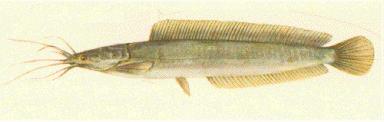
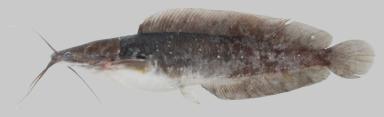
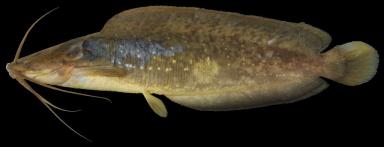
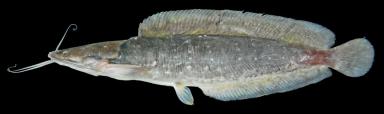
| ⇓ Zebra Pleco (Hypancistrus zebra) Data Sheet | |
|---|---|
| Scientific Name | Clarias macrocephalus Günther, 1864 |
| Common Names | Pla Duk Storhovedet ålemalle (Danish, Denmark) |
| Type Locality | Thailand. |
| Synonym(s) | |
| Pronunciation | klar ee ass |
| Etymology | Clarias: From the Greek chlaros, meaning lively; in reference to the ability of the fish to live for long periods out of water. There are 5 other speciesAtopochilus macrocephalus Cnidoglanis macrocephalus Gobio macrocephalus Kryptopterus macrocephalus Serranochromis macrocephalus with this name. |
| ⇓ Species Information | |
| Size | 1200mm or 47.2" SL. Find near, nearer or same sized spp. |
| Identification | Clarias species are characterized by having an elongated body; a soft rayed dorsal fin extending to, or nearly to, the caudal fin base; a soft rayed anal fin extending from just behind the anus to the caudal fin base; pectoral fins each with a serrated anterior bony spine; head depressed, covered largely by firmly sutured, surface sculptured bony plates forming a protective helmet; four pairs of flagellate barbels (nasals, maxillaries, inner and outer mandibulars); air breathing organs derived from the 2nd and 4th epibranchials within a superbranchial chamber. Distinguished from Southeast Asian congeners by an extremely short and rounded occipital process and by a very high dorsal fin. The combination of these characters are diagnostic for the species. Occipital process wide, broadly curved, with length 3-5 times in its width; distance between dorsal and occipital process 5-7 times in distance from tip of snout to end of occipital process |
| Sexing | The genital papilla, which is to the right of the anus as you look at the fish with its head to the left, is elongated and pointed in males while it is round and relatively larger (and larger than the anus) in females. In ventral view especially, females are much broader in the body than males of equal age and rearing practices. |
| ⇓ Habitat Information | |
| Distribution | Asia: Thailand to Viet Nam. Introduced to China, Malaysia, Guam and the Philippines. Thailand Waters (click on these areas to find other species found there) Vietnam waters (click on these areas to find other species found there) Login to view the map. |
| IUCN Red List Category | Not Evaluated , a distribution map is available on the IUCN species page. Last assessed 2026. |
| ⇓ Husbandry Information | |
| Feeding | Feeds on aquatic insects, young shrimps and small fishes. User data. |
| Suggested Tankmates | Large cyprinids (silver sharks, tinfoil or spanner barbs for example) or Central American cichlids. |
| Breeding | Unreported in the aquarium, in nature, this species spawns in small streams. |
| Breeding Reports | There is no breeding report. |
| ⇓ Further Information | |
| Reference | Catalogue of the fishes in the British Museum v. 5, pp 18. |
| Wishlists | There is no wish to keep this species. |
| Spotters | There is no record of this fish being seen. |
| ⇓ More Resources | |
| Forum BBCode | |
| Find CLOG | 4 mentions on the forum, starting 4th Mar 09 |
 | Look up C. macrocephalus on PlanetCatfish.com |
 | Look up C. macrocephalus on Fishbase |
 | Look up C. macrocephalus on Encyclopedia of Life |
 | Look up C. macrocephalus on Global Biodiversity Information Facility |
 | LFS label creator ARN ref:1.6.8.787 |
| Last Update | Thu Jan 02, 2025 9:39 am (Species record created: Sat Nov 11, 2006 2:16 pm) |
