
PAGE_HEADER
 Video
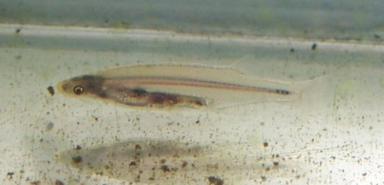
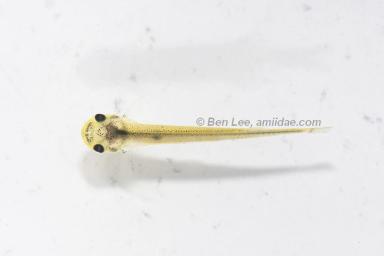 Dorsal view
| ⇓ Zebra Pleco (Hypancistrus zebra) Data Sheet | |
|---|---|
| Scientific Name | Tridentopsis brevis (Eigenmann & Eigenmann, 1889) |
| Common Names | Glass Candiru Dwarf Parasitic Catfish, Glass Parasitic Catfish, Pygmæ-parasitmalle (Danish, Denmark) |
| Type Locality | Tabatinga, Amazonas, Brazil. |
| Synonym(s) | Tridens brevis, Tridensimilis brevis |
| Etymology | There are 15 other speciesAmphilius brevis Apistogramma brevis Chetia brevis Delturus brevis Hypostomus brevis Lamprologus brevis Mochokus brevis Nannocharax brevis Peckoltia brevis Petruichthys brevis Puntius brevis Pyrrhulina brevis Trachydoras brevis Tympanopleura brevis Zaireichthys brevis with this name. |
| ⇓ Species Information | |
| Size | 30mm or 1.2" SL. Find near, nearer or same sized spp. |
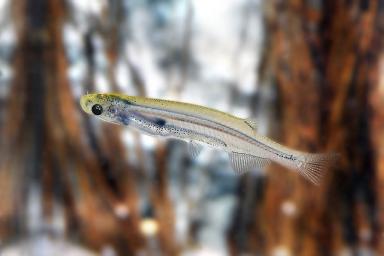
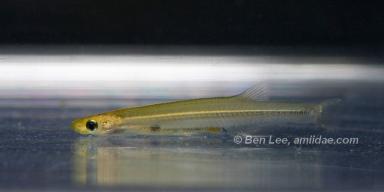
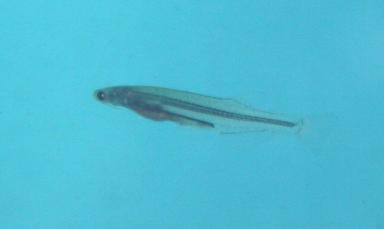
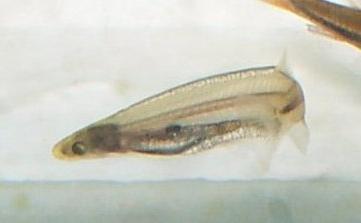
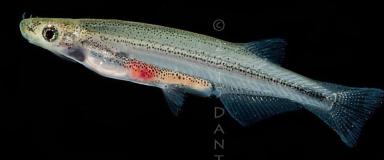
| Identification | Minute species of Catfish, usually actively swimming in the water column, at other times resting on plants or substrate. Tiny barbels visible on close examination (particularly when feeding). Body is remarkably transparent, the organs are enclosed in a silvery sac, although the stomach contents and other areas of the alimentary tract may be visible. There are two dark pigment spots on the body, one in the humeral area, the other on the caudal peduncle (this spot actually appear to be made up of pigmented skeletal elements as opposed to epidermal pigment). |
| Sexing | Unknown, although females may show ovaries through body wall when gravid. |
| General Remarks | One of the photographed specimens originated in a shipment of Corydoras pygmaeus from Peru. |
| ⇓ Habitat Information | |
| Distribution | South America: Amazon River basin. Amazon (click on these areas to find other species found there) Login to view the map. |
| IUCN Red List Category | Not Evaluated , a distribution map is available on the IUCN species page. Last assessed 2026. |
| pH | 5.6 - 7.6 |
| Temperature | 21.0-30.0°C or 69.8-86°F (Show species within this range) |
| Other Parameters | Large water changes not appreciated, very regular small changes optimal. Strong flow not required. |
| ⇓ Husbandry Information | |
| Feeding | Small Live Crustaceans, Worms, Insect Larvae taken eagerly. Dry food ignored. Incipient parasitism. User data. |
| Furniture | Not important. Sand or bare base probably best. |
| Compatibility | Complex and variable. No problems with small characins, but there is some evidence that they are opportunistically lepidophagous on slightly larger fish under some circumstances. It has been observed that they will attack large ultra peaceful fish e.g. Doradids. There are no intraspecific compatibility problems observed, a larger group needs to be assembled to gather more information. |
| Breeding | No member of this genus has been bred in the aquarium. |
| Breeding Reports | There is no breeding report. |
| ⇓ Further Information | |
| Reference | Proceedings of the California Academy of Sciences (Series 2) v. 2, pp 54. |
| Wishlists | There is no wish to keep this species. |
| Spotters | There is no record of this fish being seen. |
| ⇓ More Resources | |
| Forum BBCode | |
| Find CLOG | 7 mentions on the forum, starting 8th Jun 09 |
 | Look up T. brevis on PlanetCatfish.com |
 | Look up T. brevis on Fishbase |
 | Look up T. brevis on Encyclopedia of Life |
 | Look up T. brevis on Global Biodiversity Information Facility |
 | LFS label creator ARN ref:1.26.1302.775 |
| Last Update | Thu Jan 02, 2025 9:39 am (Species record created: Mon Jan 07, 2002 8:00 am) |
