
PAGE_HEADER
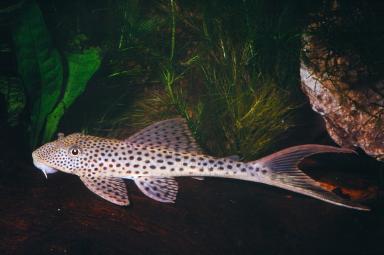
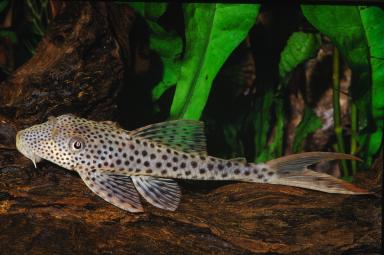
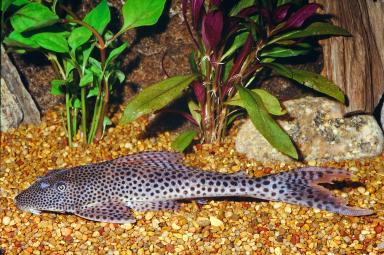
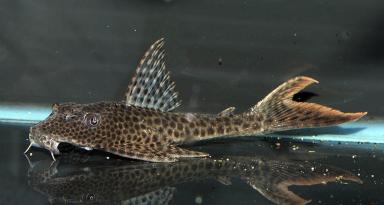
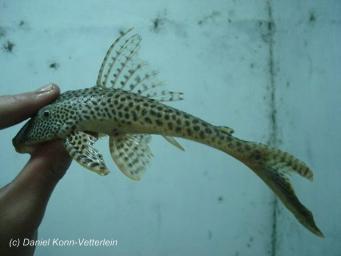
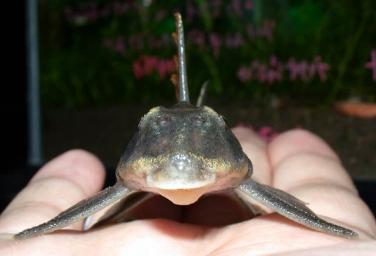
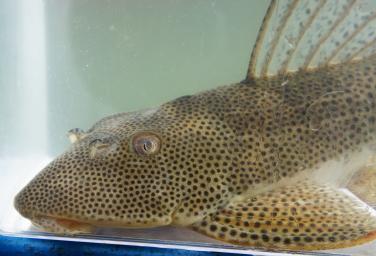
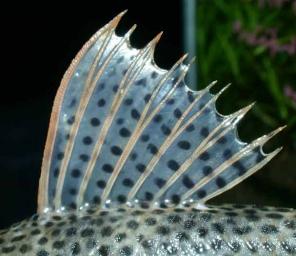 Close-up of dorsal fin
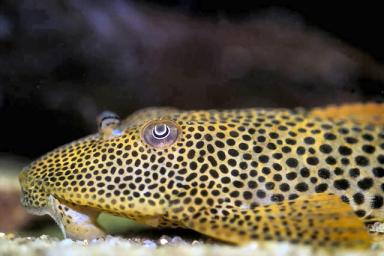 Close-up of head
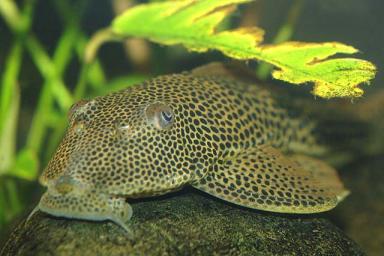
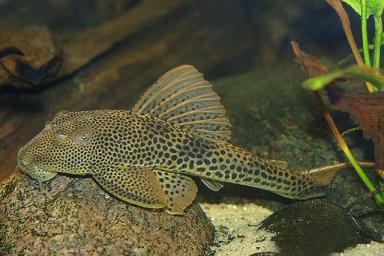
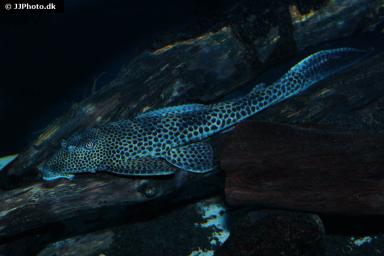
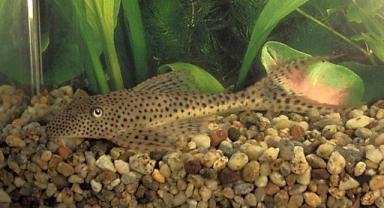
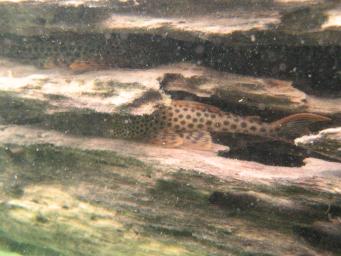 Underwater - Rio Xingu (Vitoria)
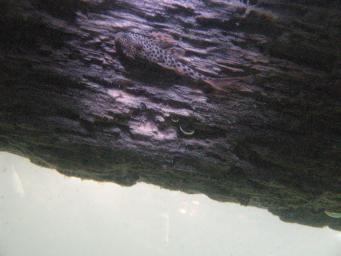 Juvenile - Underwater - Rio Xingu (Vitoria)
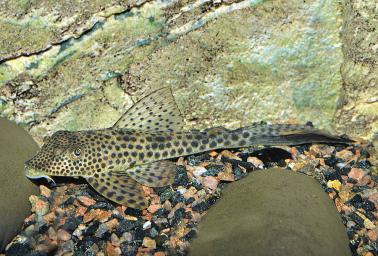
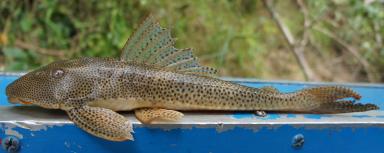 Lower Rio Branco, Brazil
 Lower Rio Branco, Brazil
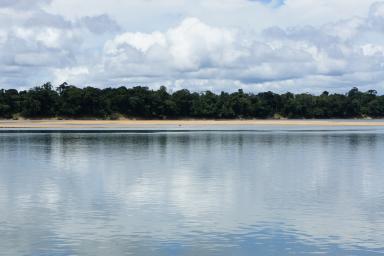 Habitat: Lower Rio Branco
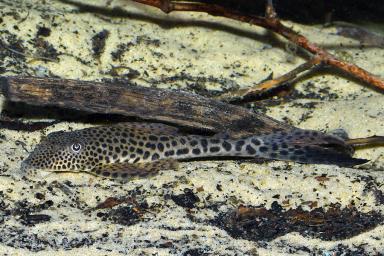
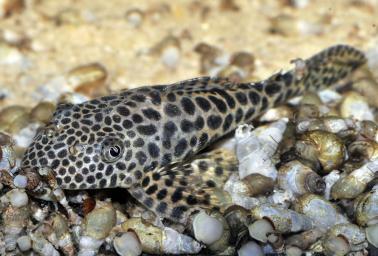
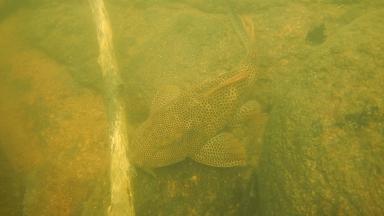 Adult, Rio Xingu
| ⇓ Zebra Pleco (Hypancistrus zebra) Data Sheet | |
|---|---|
| Scientific Name | Aphanotorulus emarginatus (Valenciennes, 1840) |
| Common Names | L011, Red Fin Thresher Pleco L035, L108, L116, Tærskesugemalle (Danish, Denmark) |
| Type Locality | Probably from Brazil. |
| Synonym(s) | Hypostoma squalinum, Hypostomus annae, Hypostomus emarginatus, Hypostomus squalinus, Plecostomus annae, Squaliforma annae, Squaliforma emarginatus, Squaliforma squalina |
| Pronunciation | ah FAN oh to RULE uss |
| Etymology | Greek, aphanes = hidden + Latin, torulus, -i = muscle, little string. There are 3 other speciesChiloglanis emarginatus Microsynodontis emarginatus Tachysurus emarginatus with this name. |
| ⇓ Species Information | |
| Size | 400mm or 15.7" SL. Find near, nearer or same sized spp. |
| Identification | In Aphanotorulus, all species show clear sexual dimorphism and have a generally flatter appearance than other hypostomine genera. The posterior edge of the oral disc is jagged rather than smooth.
Aphanotoroulus can be distinguished from Isorineloricaria by having caudal peduncles
that do not become greatly lengthened with size and that are oval in cross section (vs. caudal peduncle proportions that get proportionately longer with size and that become round in cross-section), and by having small dark spots (less than half plate diameter) on a light tan background (vs. spots almost as large as lateral plates on a nearly white background. An elongate species that appears widespread throughout the Amazon and correspondingly has acquired a series of L numbers. We are talking about a very widely distributed, variable species. In terms of distribution and regional variation this species is to the Loricariidae what Corydoras aeneus is to the Callichthyidae. Can be most readily distinguished by its long crescent shaped caudal fin which has a red or orange outer margin. |
| Sexing | Males in breeding condition posses extremely elongate, bristle-like odontodes. These cover the entire back and sides behind the dorsal fin. |
| General Remarks | L108 - DATZ 9/1992 p552 L116 - DATZ 10/1992 pp619-620. |
| ⇓ Habitat Information | |
| Distribution | L011 - Brazil: Rio Xingú at Altamira. L035 was introduced from Brazil, specifically the Rio Araguaia, just upstream of confluence with the Rio Tocantins. L108 - Ecuador: Upper Rio Napo. Brazil, Pará, Rio Trombeta (Oriximiná). Amazon, Lower Amazon, Tocantins, Lower Tocantins, Araguaia (click on these areas to find other species found there) Amazon, Middle Amazon (Solimoes), Negro, Lower Negro, Branco (Roraima) (click on these areas to find other species found there) Guyana Waters, Coastal Rivers of Guyanas, Essequibo (click on these areas to find other species found there) Amazon, Middle Amazon (Solimoes), Negro (click on these areas to find other species found there) Amazon, Lower Amazon, Trombetas (click on these areas to find other species found there) Amazon, Upper Amazon, Napo, Upper Napo (click on these areas to find other species found there) Amazon, Lower Amazon, Xingu (click on these areas to find other species found there) Amazon, Juruá Imported (click on these areas to find other species found there) Amazon, Lower Amazon, Tocantins, Lower Tocantins, Araguaia, Upper Araguaia, Vermelho Imported (click on these areas to find other species found there) Login to view the map. |
| IUCN Red List Category | Not Evaluated , a distribution map is available on the IUCN species page. Last assessed 2026. |
| pH | 6.4 - 7.2 |
| Temperature | 25.0-28.0°C or 77-82.4°F (Show species within this range) |
| Other Parameters | dH 5-5.8 |
| ⇓ Husbandry Information | |
| Feeding | An adaptible omnivore with a preference towards greens. Cucumber or similar should be offered periodically but this fish with do well an most sinking pellet food. User data. |
| Furniture | Open shaded spaces sized appropriately to the fish, this fish likes to swim in and out fast and so space must be given to avoid mistakes when the fish is in flight. Large terracotta pipes are ideal, doesn't appear to have a requirement for bogwood or plants. |
| Compatibility | Requires space as an adult fish as is more flighty than, say, Pterygoplichthys spp. Peaceful with plecos even one third of its size. |
| Suggested Tankmates | Medium to large sized community fish and ideal and pretty addition to a south american cichlid tank, will withstand life in a well oxygenated discus tank and is a good pleco as such as it rarely leaves the bottom. |
| Breeding | Has been bred in the aquarium. |
| Breeding Reports | There is no breeding report. |
| ⇓ Further Information | |
| Reference | Histoire naturelle des poissons v. 15, pp 500. |
| Wishlists | There is no wish to keep this species. |
| Spotters | There is no record of this fish being seen. |
| ⇓ More Resources | |
| Forum BBCode | |
| Find CLOG | 2 mentions on the forum, starting 6th Sep 10 |
 | Look up A. emarginatus on PlanetCatfish.com |
 | Look up A. emarginatus on Fishbase |
 | Look up A. emarginatus on Encyclopedia of Life |
 | Look up A. emarginatus on Global Biodiversity Information Facility |
 | LFS label creator ARN ref:1.4.142.750 |
| Last Update | Thu Jan 02, 2025 9:37 am (Species record created: Sat Nov 24, 2001 8:00 am) |
