
PAGE_HEADER
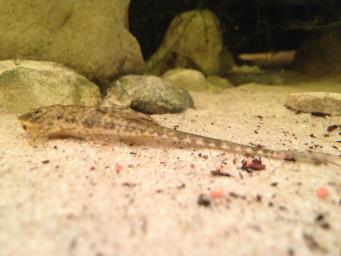
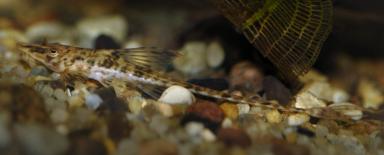
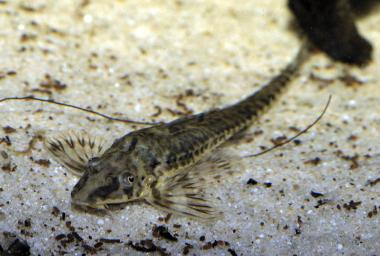
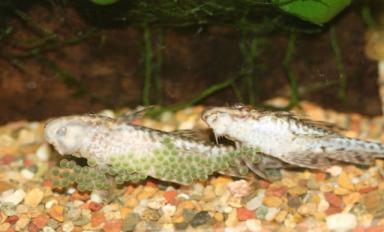 Pair with eggs
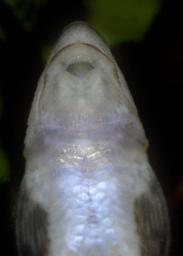 Close-up of mouth
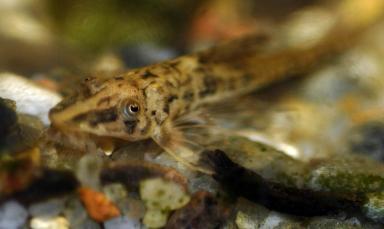
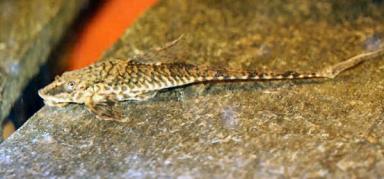
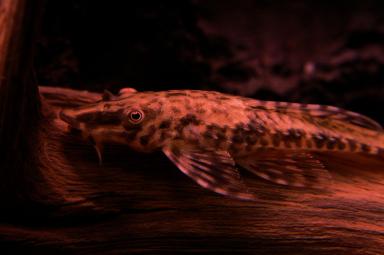
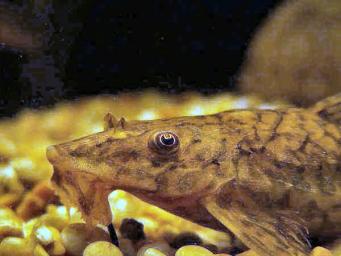 Close-up of head
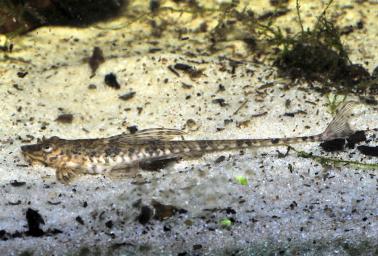
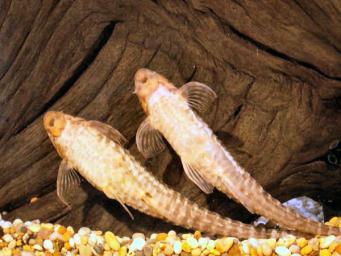 Pair, female to left
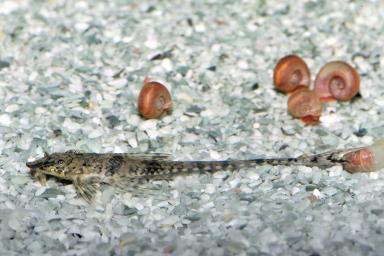
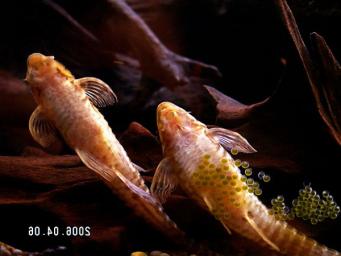 Pair guarding eggs in foreground
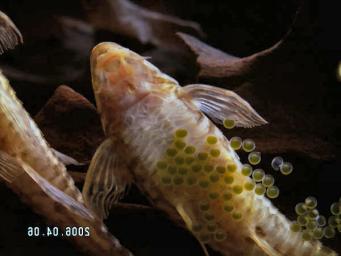 Close-up of pair guarding eggs
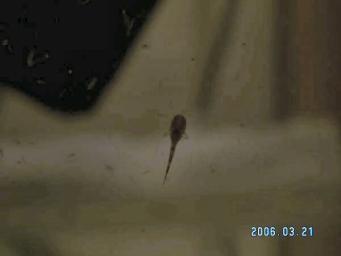 Fry
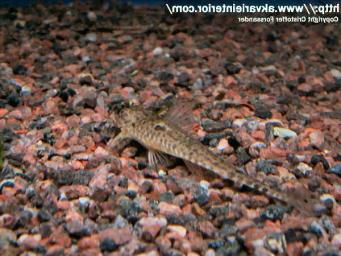
| ⇓ Zebra Pleco (Hypancistrus zebra) Data Sheet | |
|---|---|
| Scientific Name | Rineloricaria parva (Boulenger, 1895) |
| Common Names | Common Whiptail Catfish Lg6, Slank Sugemalle (Danish, Denmark) |
| Type Locality | Descalvados, Mato Grosso, Brazil. |
| Synonym(s) | Hemiloricaria parva, Loricaria parva, Rineloricaria parva |
| Pronunciation | rhine lor ee kar ee ah. - PAR vah. |
| Etymology | Greek, rhinos = nose + Latin, lorica, loricare = cuirass of corslet of leather. From the Latin parvus, meaning small, in reference to the modest adult size of this species relative to its congeners. There are 6 other speciesHarttiella parva Melanotaenia parva Paracanthopoma parva Pimelodella parva Pseudorasbora parva Pseudotatia parva with this name. |
| ⇓ Species Information | |
| Size | 110mm or 4.3" SL. Find near, nearer or same sized spp. |
| Identification | Relative to congeners, this species has proportionately larger fins. In particular it has a very large dorsal pectoral fin. Similarly the species has a larger eye diameter combined with a wide interorbital gap - characteristic for this species. Referred to in some hobby literature by the nomen nudem Sturisomatichthys foerschi, it is also known as LG6. Comparison by German hobbyists to the BMNH lecotype demonstrates that what has been known in the hobby by these names is indeed H. parva. |
| Sexing | Mature males develop bristle-like odontodes along the sides of the head and on the leading rays of the pectoral fins, and are slimmer than the noticeably broader, plainer headed females. |
| ⇓ Habitat Information | |
| Distribution | South America: Paraguay River basin. La Plata, Paraná, Paraguay (click on these areas to find other species found there) La Plata, Paraná, Paraguay, Upper Paraguay (click on these areas to find other species found there) La Plata, Paraná, Paraguay, Upper Paraguay, Miranda Imported (click on these areas to find other species found there) Login to view the map. |
| IUCN Red List Category | Not Evaluated , a distribution map is available on the IUCN species page. Last assessed 2026. |
| pH | 6.0 - 7.6 |
| Temperature | 21.0-24.0°C or 69.8-75.2°F (Show species within this range) |
| Other Parameters | A fish of the Paraguay basin, where it lives over sand and leaf litter in gently flowing, often seasonally cool water. Neutral to slightly acidic, soft to moderately hard water is ideal, and a drop in temperature together with softer water is often used to trigger spawning. Clean, well oxygenated water with a steady current is important. |
| ⇓ Husbandry Information | |
| Feeding | An adaptable omnivore with a bias towards vegetable matter. Sinking algae and spirulina wafers, blanched courgette or cucumber and dried foods are all taken, and should be supplemented with frozen bloodworm or brineshrimp. Feeding in the evening suits this largely crepuscular fish. User data. |
| Furniture | A sand substrate with rounded stones, branches, twigs and leaf litter, arranged to provide plenty of long, flat surfaces to rest upon. Lengths of narrow pipe or bamboo laid on the bottom are used as refuges and as spawning sites, although the fish will also use vertical surfaces including the aquarium glass. |
| Compatibility | Entirely peaceful and non-territorial, harmless even to small fry. Males may display to one another over spawning tubes but do no damage. Too retiring to compete with fast or aggressive tankmates. |
| Suggested Tankmates | Ideal for a peaceful community of small characins, dwarf cichlids, Otocinclus and Corydoras. Several may be kept together, and a group will spawn readily in a mature aquarium. |
| Breeding | Relatively commonly bred, this species lays green eggs on vertical surfaces including aquarium glass. |
| Breeding Reports | There is no breeding report. |
| ⇓ Further Information | |
| Reference | Proceedings of the Zoological Society of London 1895 (pt 3), pp 527. |
| Wishlists | There is no wish to keep this species. |
| Spotters | There is no record of this fish being seen. |
| ⇓ More Resources | |
| Forum BBCode | |
| Find CLOG | 47 mentions on the forum, starting 22nd Nov 07 |
 | Look up R. parva on PlanetCatfish.com |
 | Look up R. parva on Fishbase |
 | Look up R. parva on Encyclopedia of Life |
 | Look up R. parva on Global Biodiversity Information Facility |
 | LFS label creator ARN ref:1.4.43.743 |
| Last Update | Tue Sep 15, 2026 4:34 pm (Species record created: Fri Nov 23, 2001 8:00 am) |
