
PAGE_HEADER
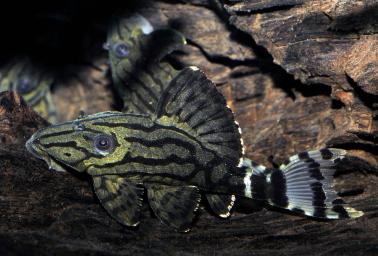
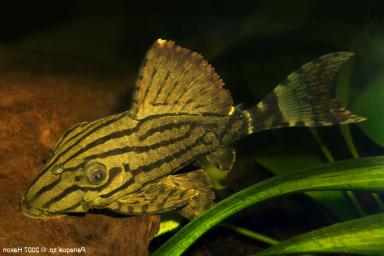
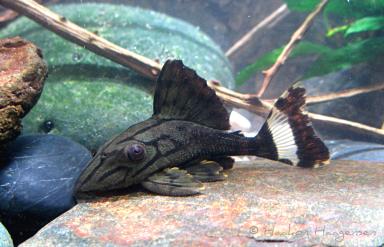
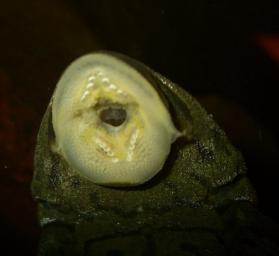 Close-up of mouth
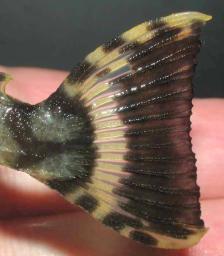
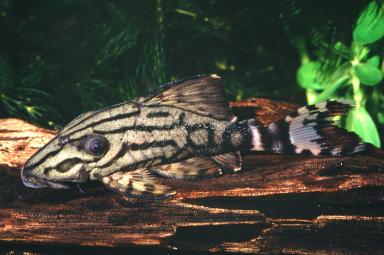
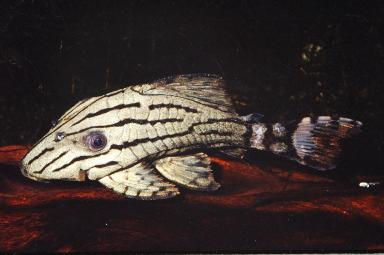 Stress colouration

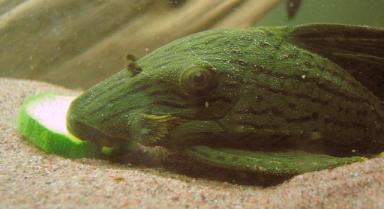 Close-up eating cucmber
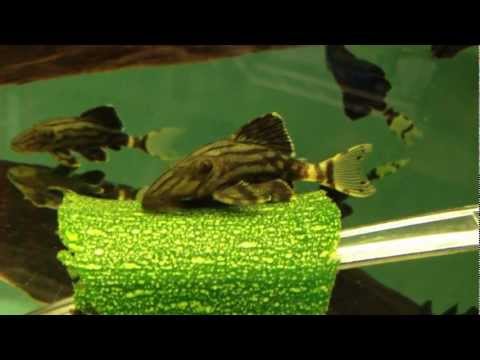 Video
 Adult
 Dorsal view
 Juvenile


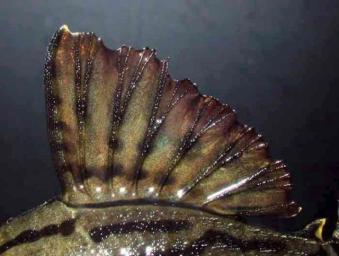
 Stress colouration
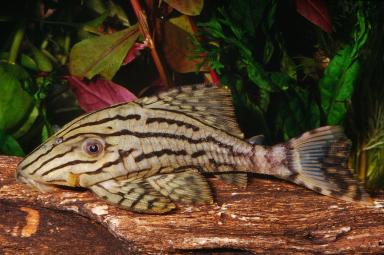 Stress colouration
 Male, 36 cm TL
 5 years old, 30 cm TL, maybe female
 Ventral view, 32 cm TL, unsexed
| ⇓ Zebra Pleco (Hypancistrus zebra) Data Sheet | |
|---|---|
| Scientific Name | Panaque sp. (L191) |
| Common Names | L191, Dull Eyed Royal Pleco Broken Line Royal Pleco, Gråøjet Kongesugemalle (Danish, Denmark) |
| Synonym(s) | |
| Pronunciation | pan ah KAY. |
| Etymology | The generic epithet "panaque" is a Venezuelan common name for this fish. |
| ⇓ Species Information | |
| Size | 500mm or 19.7" SL. Find near, nearer or same sized spp. |
| Identification | The genus Panaque is identified by the teeth, which are spoon-shaped. This means that the teeth are noticeably wider at the tip than at the base. Other loricariidae have teeth that are similar width all the way from one end to the other. A second distinguishing feature is the lack of a buccal papilla, which is a "flap of skin" on the inside of the mouth. See pictures in this PDF on Pterygoplichthys. This species has a dull (not red or orange) eye and a basic olive colouration that greys with age and, irrespective of age, black longitudinal stripes. Young fish show a white ring around the caudal peduncle, a windowed or clear caudal fin and white tips to the fins. |
| Sexing | Undocumented, although with most ancistrine plecos the genital papilla of the female is round and blunt, that of the male by comparison is smaller and pointed. It is not known at what size this method of sexing can be used on Royal Plecos. It is possible that heavy odontal growth is associated with males. . |
| General Remarks | It is thought by some that this species most closely matches the description of the Blue Eyed Pleco, Panaque suttonorum. In adulthood, it is grey with dark grey spots and dashes. In youth, especially, it shows the white caudal peduncle ring. It's likely a close relative unless the Maracaibo species is proven to be surprisingly widespread. |
| ⇓ Habitat Information | |
| Distribution | South America: Colombia: rio Caguán Amazon, Middle Amazon (Solimoes), Japurá, Caquetá, Upper Caquetá, Caguán (click on these areas to find other species found there) Login to view the map. |
| pH | 6.5 - 7.5 |
| Temperature | 24.0-29.0°C or 75.2-84.2°F (Show species within this range) |
| ⇓ Husbandry Information | |
| Feeding | All Panaque appear to feed on wood, so wood should be present in the tank. They also take prepared algae wafers and fresh vegetables (zucchini, cucumber, peas, green beans) and tubers (potato, yams and similar). User data. |
| Furniture | Natural habitat is among fallen trees and wood-tangles. |
| Compatibility | Generally peaceful, but may defend their territory against conspecifics. |
| Suggested Tankmates | Most community fish, this fish is very secretive and so you will want more active fish around to provide something to watch. Larger specimens will work nearly all but the most ferocious and aggressive fish. Smaller specimens should not be kept with large predators, for obvious reasons. |
| Breeding | Unreported in the aquarium. |
| Breeding Reports | There is no breeding report. |
| ⇓ Further Information | |
| Wishlists | There is no wish to keep this species. |
| Spotters | There is no record of this fish being seen. |
| ⇓ More Resources | |
| Forum BBCode | |
| Find CLOG | 38 mentions on the forum, starting 11th Dec 05 |
 | Look up P. sp. (L191) on PlanetCatfish.com |
 | LFS label creator ARN ref:1.4.27.642 |
| Last Update | Fri Feb 05, 2021 4:44 pm (Species record created: Mon Jun 25, 2001 7:00 am) |
