
PAGE_HEADER
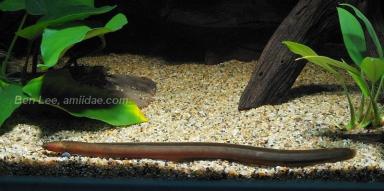
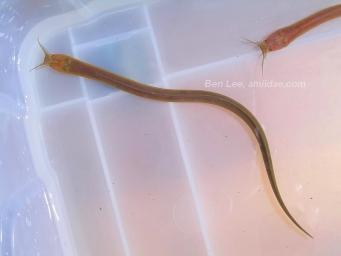
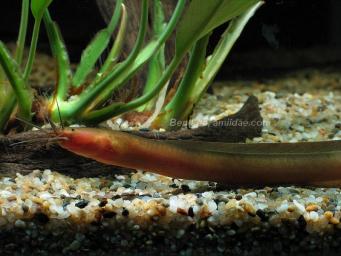
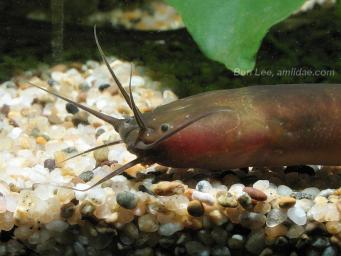 Close-up of head
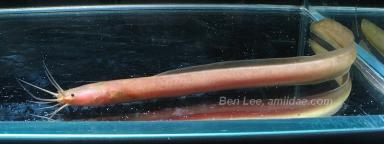
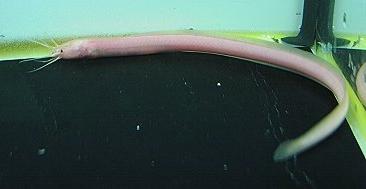 Albino
 Video showing terrestrial feeding behaviour. A small piece of fish is presented on the terrestrial section of the aquarium.
 Video (slow-motion) from a high-speed recording zoomed in on the moment of prey capture / feeding terrestrially on a piece of fish.
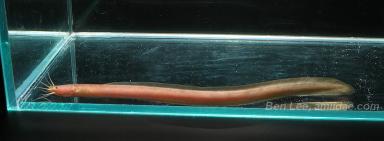
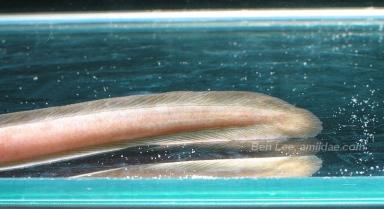 Close-up of tail
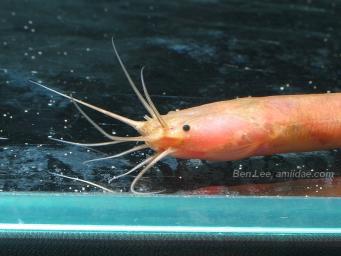 Close-up of head
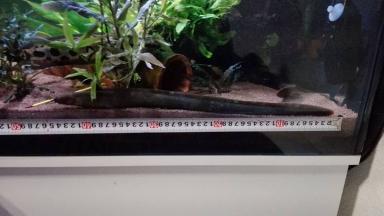
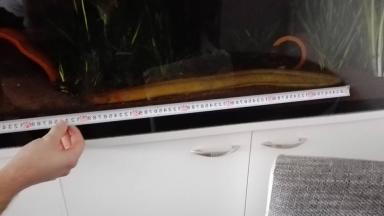 60 cm plus
 63 cm
| ⇓ Zebra Pleco (Hypancistrus zebra) Data Sheet | |
|---|---|
| Scientific Name | Channallabes apus (Günther, 1873) |
| Common Names | Eel Catfish Lemmeløs ålemalle (Danish, Denmark) |
| Type Locality | Interior of Ambriz, Angola. |
| Synonym(s) | Clariallabes apus, Gymnallabes apus |
| Pronunciation | cha nal ah bez - ah pess |
| Etymology | Channallabes: From the Greek, channe, meaning anchovy and allabes, the name of a Nilotic fish (a kind of lamprey); in reference to the shape of the fish. From the Greek prefix a- meaning without and pous, meaning foot; in reference to the lack of pelvic fins. |
| ⇓ Species Information | |
| Size | 327mm or 12.9" SL. Find near, nearer or same sized spp. |
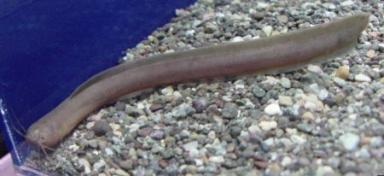
| Identification | Distinguished by the extremely elongate body, reduced cranial shield, confluent median fins, small eyes and absence of pelvic fins. |
| Sexing | The genital papilla, which is to the right of the anus as you look at the fish with its head to the left, is elongated and pointed in males while it is round and relatively larger (and larger than the anus) in females. In ventral view especially, females are much broader in the body than males of equal age and rearing practices. It may be hard to see with the naked eye. |
| General Remarks | Recent research has documented this species' ability to feed terrestially (videos above). The catfish's neck is especially flexible, with specialised vertebrae that allow it to hold its head up out of the water without using fins. The fish's diet provided the scientists with the first clue to its remarkable behaviour - it mainly eats beetles which are found on land. The researchers speculate that a similar feeding strategy could have been used by the first vertebrates to emerge from the oceans. The fish is known to burrow into the substrate and has been caught by hook and line in waterlogged areas adjacent to rivers and swamps simply by digging a hole and fishing in the resulting pool. |
| ⇓ Habitat Information | |
| Distribution | Africa: Angola to Congo River Basin. African Waters, Congo (click on these areas to find other species found there) Login to view the map. |
| IUCN Red List Category | Least Concern , a distribution map is available on the IUCN species page. Last assessed 2009. |
| pH | 5.8 - 7.0 |
| Temperature | 22.0-27.0°C or 71.6-80.6°F (Show species within this range) |
| Other Parameters | Sensitive to bad water; this species appears particularly susceptible to bacterial / parasitic infections. |
| ⇓ Husbandry Information | |
| Feeding | Will take all manner of pelleted food, as well as frozen/live food (the latter being preferred). User data. |
| Furniture | Provide plenty of driftwood for the fish to hide. Ensure that the tank cover is tight-fitting/weighed down, they are capable of climbing out. |
| Compatibility | A peaceful fish that is best suited for the West African biotope tank. Ideal tankmates include mid-sized African barbs, tetras, and cichlids. |
| Breeding | Unreported in the aquarium. |
| Breeding Reports | There is no breeding report. |
| ⇓ Further Information | |
| Literature & References | Original Description: <b> Günther, A.</b> 1873 (1 Aug.) <a href="http://biodiversitylibrary.org/page/19214203" target=_blank>See ref. at BHL</a> |
| Wishlists | There is no wish to keep this species. |
| Spotters | There is no record of this fish being seen. |
| ⇓ More Resources | |
| Forum BBCode | |
| Find CLOG | 14 mentions on the forum, starting 5th Nov 04 |
 | Look up C. apus on PlanetCatfish.com |
 | Look up C. apus on Fishbase |
 | Look up C. apus on Encyclopedia of Life |
 | Look up C. apus on Global Biodiversity Information Facility |
 | LFS label creator ARN ref:1.6.176.631 |
| Last Update | Wed Jan 01, 2025 7:58 pm (Species record created: Sat Jun 09, 2001 7:00 am) |
