
PAGE_HEADER
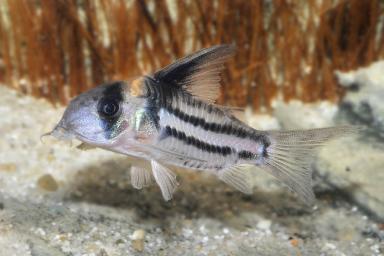
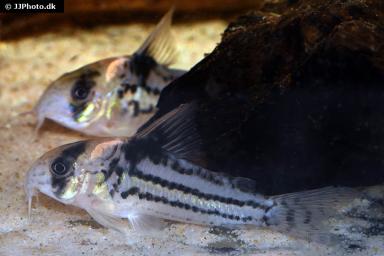
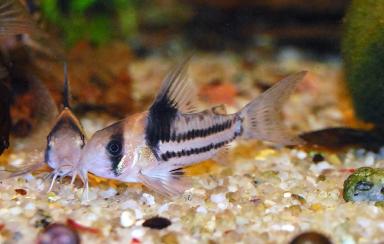 Juvenile
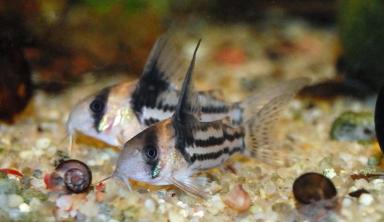 Juvenile
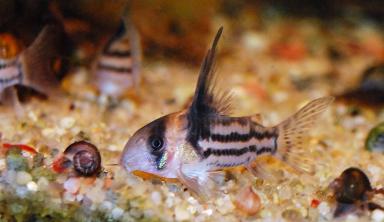 Juvenile
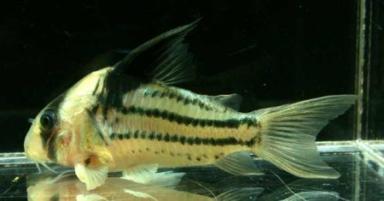
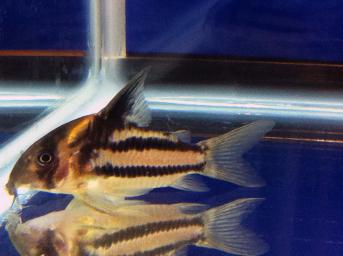
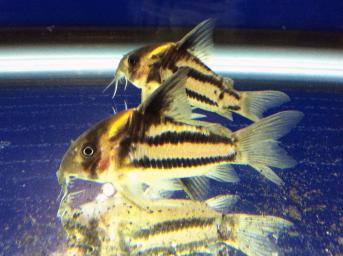
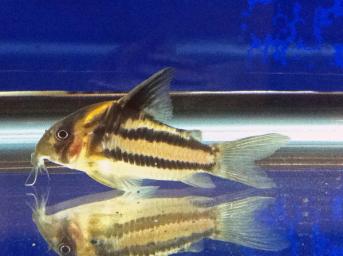
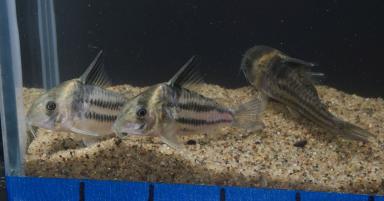
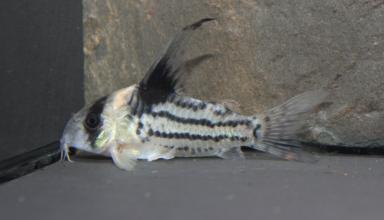
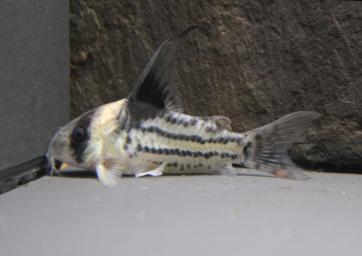
| ⇓ Zebra Pleco (Hypancistrus zebra) Data Sheet | |
|---|---|
| Scientific Name | Hoplisoma parallelum (Burgess, 1993) |
| Common Names | C002, Two Line Cory Parallel-stribet Pansermalle (Danish, Denmark) |
| Type Locality | Rio Içana, Rio Negro drainage, Brazil. |
| Synonym(s) | Corydoras parallelus |
| Pronunciation | hop lee so mah - para LELL uss |
| Etymology | The genus name is latin for wavy, referring to “dark purplish spots tending to run together, forming undulating longitudinal bands” - a common if not uniform colouration pattern found in this genus. This specific epithet refers to the parallel lines that run horizontally along the specimens body. |
| ⇓ Species Information | |
| Size | 52mm or 2" SL. Find near, nearer or same sized spp. |
| Sexing | Females grow larger and are more full-bodied, this is best observed from above the fish. Males will typically have more pointed as opposed to more rounded fin tips as they mature. |
| ⇓ Habitat Information | |
| Distribution | South America: Upper Negro River basin. Amazon, Middle Amazon (Solimoes), Negro, Upper Negro, Içana (click on these areas to find other species found there) Amazon, Middle Amazon (Solimoes), Negro, Upper Negro (click on these areas to find other species found there) Login to view the map. |
| IUCN Red List Category | Not Evaluated , a distribution map is available on the IUCN species page. Last assessed 2026. |
| Temperature | 24.0-27.0°C or 75.2-80.6°F (Show species within this range) |
| ⇓ Husbandry Information | |
| Feeding | Will readily accepted all prepared foods that reach the bottom of the aquarium such as tablets, granules and larger flakes. Live (or frozen) foods such as bloodworm, white worm, grindal worm (Enchytraeus), Daphnia and Tubifex are readily accepted and good for conditioning groups of fishes for spawning. User data. |
| Furniture | Ideally, and close to mandatory, substrate should be sand, but rounded gravel is an imperfect alternative. Avoid keeping over rough edged (chipped) gravel or sharp sand. This will increase the risk of damage to the fishes barbels when it tries to dig. Substrate should be bordered with driftwood and aquatic plants leaving an open area for them to search for food and swim. The shade provided by overhanging rock work, arching bogwood, tall or floating plants are all that is required to settle a group of these fishes. |
| Compatibility | A peaceful, shoaling, community fish. |
| Breeding | Spawned by Eric Bodrock in May 2009 who provided these notes. Spawning group consisted of five males and three females which were tank-raised fish about one year old. Used a 10-gallon tank with a pH range of 6.2–7.1 and a TDS range of 201–261 ppm. Temperature from 74°–75°F (23°–24°C). Spawning takes place during daylight hours. Large 2mm eggs are deposited singly, mostly on the glass with a few on Anubias leaves or the underside of leaf litter. Hatch rate of 80% or better. |
| Breeding Reports | There is no breeding report. |
| ⇓ Further Information | |
| Reference | Tropical Fish Hobbyist v. 41 (no. 12) (issue no. 450), pp 154, Figs. |
| Wishlists | There is no wish to keep this species. |
| Spotters | There is no record of this fish being seen. |
| ⇓ More Resources | |
| Forum BBCode | |
| Find CLOG | 8 mentions on the forum, starting 13th Feb 10 |
 | Look up H. parallelum on PlanetCatfish.com |
 | Look up H. parallelum on Fishbase |
 | Look up H. parallelum on Encyclopedia of Life |
 | Look up H. parallelum on Global Biodiversity Information Facility |
 | LFS label creator ARN ref:1.1.1580.63 |
| Last Update | Tue Sep 15, 2026 3:54 pm (Species record created: Mon Apr 30, 2001 7:00 am) |
