
PAGE_HEADER
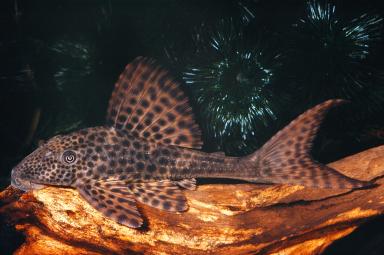
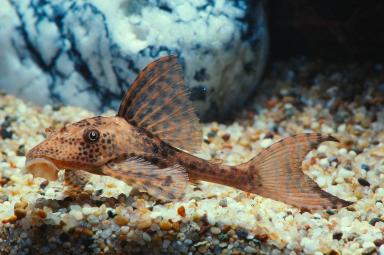
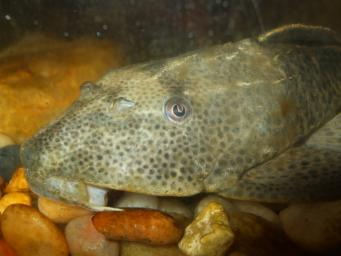 Close-up of head
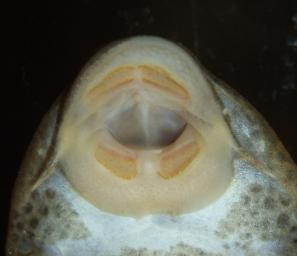 Close-up of mouth
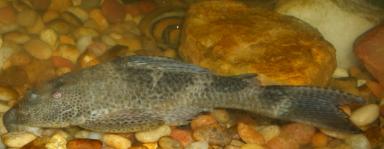
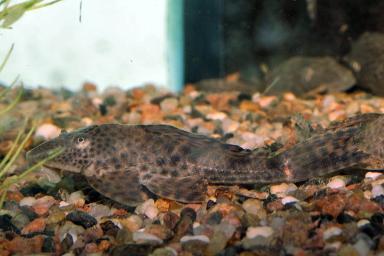
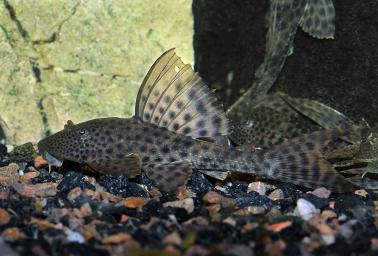
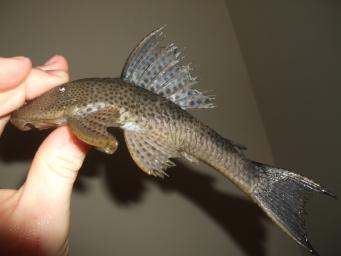
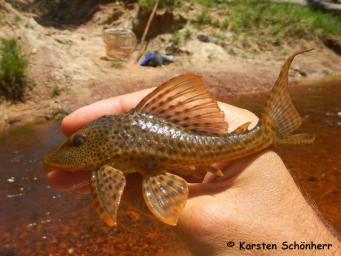 Marshall creek (Suriname river drainage)
| ⇓ Zebra Pleco (Hypancistrus zebra) Data Sheet | |
|---|---|
| Scientific Name | Hypostomus plecostomus (Linnaeus, 1758) |
| Common Names | Plecostomus Acari (Portuguese, Brazil), Almindelig Sugemalle (Danish, Denmark), Saugmaulwels (German, Germany) |
| Type Locality | Suriname River. |
| Synonym(s) | Acipenser plecostomus, Acipenser spec, Hypostomus guacari, Loricaria flava, Plecostomus bicirrosus, Plecostomus brasiliensis, Plecostomus plecostomus, Pterygoplichthys plecostomus |
| Pronunciation | hi POSS tow muss - PLEK oss toe mus |
| Etymology | Greek, hypo = under + Greek, stoma = mouth. pleco = sucker, stomus = mouth. |
| ⇓ Species Information | |
| Size | 500mm or 19.7" SL. Find near, nearer or same sized spp. |
| Identification | Due to the number of species in the genus, identification is very difficult without exact provenance of the specimen. Most ''common plecos'' are now exported from Peru and Brazil. Photos of the real H. plecostomus are common in aquarium literature from the 1960s and 70s when ''common plecos'' were exported from Venezuela, Suriname, and the Guyanas. |
| Sexing | Large adult males possess thickened pectoral fins that turn reddish pink. Gravid adult females appear thicker when viewed from above. |
| General Remarks | Also found throughout the Orinoco basin, although some authors believe that Orinoco specimens may represent a different species. The photographs above are mostly of H. plecostomus from the Orinoco basin. Weber (2003) restricted distribution to coastal drainages of the Guianas. |
| ⇓ Habitat Information | |
| Distribution | South America: Guianan coastal drainages. Have been introduced to several Asian countries for the aquarium trade. Orinoco (click on these areas to find other species found there) Guyana Waters, Coastal Rivers of Guyanas, Suriname Coastal Rivers, Suriname (click on these areas to find other species found there) Login to view the map. |
| IUCN Red List Category | Least Concern , a distribution map is available on the IUCN species page. Last assessed 2021. |
| pH | 6.5 - 8.0 |
| Temperature | 20.0-30.0°C or 68-86°F (Show species within this range) |
| Other Parameters | In nature, this fish is common in slower portions of larger rivers. It inhabits nearly every environment from riffles, the river banks, and driftwood snags. |
| ⇓ Husbandry Information | |
| Feeding | A true omnivore that will eat anything. The diet should be primarily vegetarian. User data. |
| Furniture | Ideally a large tank with driftwood and a few caves. Substrate is unimportant. |
| Compatibility | Larger specimens can be territorial, but they rarely cause damage to tankmates. Smaller fishes are ignored. |
| Suggested Tankmates | Keep with medium to large sized community fishes or most American cichlids. |
| Breeding | Probably never accomplished. They normally spawn in holes in the river bank, but I have also captured this species in mountain rivers and ponds that did not have earthen banks. In these habitats it must spawn in caves formed by rocks and/or driftwood. |
| Breeding Reports | There is no breeding report. |
| ⇓ Further Information | |
| Reference | Systema Naturae, Ed. X v. 1, pp 238. |
| Wishlists | There is no wish to keep this species. |
| Spotters | There is no record of this fish being seen. |
| ⇓ More Resources | |
| Forum BBCode | |
| Find CLOG | 72 mentions on the forum, starting 21st Sep 04 |
 | Look up H. plecostomus on PlanetCatfish.com |
 | Look up H. plecostomus on Fishbase |
 | Look up H. plecostomus on Encyclopedia of Life |
 | Look up H. plecostomus on Global Biodiversity Information Facility |
 | LFS label creator ARN ref:1.4.17.580 |
| Last Update | Sun Jun 01, 2025 8:36 pm (Species record created: Sat May 05, 2001 7:00 am) |
