
PAGE_HEADER
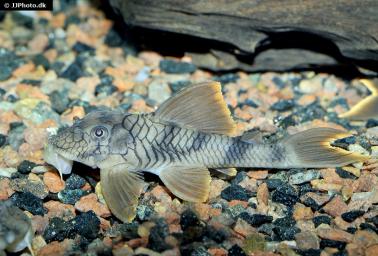
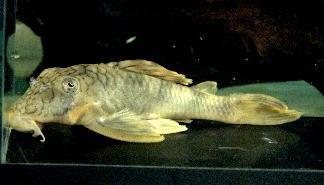
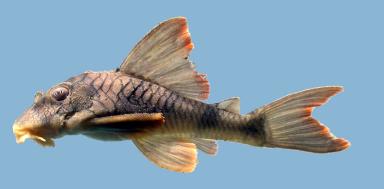 Holotype. Photo by M. H. Sabaj
| ⇓ Zebra Pleco (Hypancistrus zebra) Data Sheet | |
|---|---|
| Scientific Name | Peckoltia cavatica Armbruster & Werneke, 2005 |
| Common Name | Dusky Worm Line Peckoltia |
| Type Locality | Rupununi River, 3.7 kilometres south-southeast. of Massara, 03.86228°N, 59.28439°W, Rupununi (Region 9), Guyana. |
| Synonym(s) | |
| Pronunciation | peck OLE tea ah - cah vat ick ahh |
| Etymology | Peckoltia: named after Gustavo Peckolt, member of the Natural History Commission of Rondon. From the Latin cavaticus meaning born or living in caves. In reference to the fact that, in nature, this species is found in holes in lateritic rocks, and the fact that it is likely that such holes are where this species breeds. |
| ⇓ Species Information | |
| Size | 72mm or 2.8" SL. Find near, nearer or same sized spp. |
| Identification | From Armbruster: Peckoltia braueri can be separated from P. cavatica by having the dorsal saddles patches better developed (vs. barely visible), by having the head plates and bones not completely outlined in black and with lines intense (vs. having all of the head plates and bones completely outlined in black and with the lines lighter), by having black vermiculations on the pterotic-supracleithrum (vs. no vermiculations), by having at least one, broken band in the caudal fin (vs. no bands in the caudal fin), and by having the marginal orange band of the dorsal and caudal fins not as thick or as intense as in P. cavatica. |
| Sexing | Males develop small teeth-like odontodes which adorn the leading pectoral fin rays and the back half of the fishes body. Females remain unadorned and have a wider girth across the body most evident when the area just behind the pectoral fins is viewed from above. Males develop small teeth-like odontodes which adorn the leading pectoral fin rays and the back half of the fishes body. Females remain unadorned and have a wider girth across the body most evident when the area just behind the pectoral fins is viewed from above. |
| ⇓ Habitat Information | |
| Distribution | South America: Rupununi River in Guyana. Guyana Waters, Coastal Rivers of Guyanas, Essequibo, Rupununi (click on these areas to find other species found there) Login to view the map. |
| IUCN Red List Category | Endangered , a distribution map is available on the IUCN species page. Last assessed 2020. |
| pH | 6.5 - 7.2 |
| Temperature | 23.0-27.0°C or 73.4-80.6°F (Show species within this range) |
| ⇓ Husbandry Information | |
| Feeding | Omnivorous with a tendency towards meaty foods. Not an effective algae eater. Well fed individuals will not damage most plants. User data. |
| Furniture | Rock piles and wood tangles. Plants are not vital. |
| Compatibility | Peaceful if a little territorial. As a rough guide give each fish a 12 inch square area well broken up with decorations. |
| Suggested Tankmates | A medium sized pleco that can be combined with a very wide array of tankmates due to its unfussy nature. Perfectly safe with small fishes and shrimp or robust enough to withstand the attention of all but the largest cichlids. |
| Breeding Reports | There is no breeding report. |
| ⇓ Further Information | |
| Literature & References | Original Description: <b> Armbruster, J. W. and D. C. Werneke</b> 2005 (4 Mar.) <a href="http://www.mapress.com/zootaxa/2005f/zt00882.pdf" target=_blank>Download ref. <img src="images/pdficon_small.gif" border="0" alt="" /></a> |
| Wishlists | There is no wish to keep this species. |
| Spotters | There is no record of this fish being seen. |
| ⇓ More Resources | |
| Forum BBCode | |
| Find CLOG | 4 mentions on the forum, starting 30th Apr 09 |
 | Look up P. cavatica on PlanetCatfish.com |
 | Look up P. cavatica on Fishbase |
 | Look up P. cavatica on Encyclopedia of Life |
 | Look up P. cavatica on Global Biodiversity Information Facility |
 | LFS label creator ARN ref:1.4.18.578 |
| Last Update | Wed Jan 01, 2025 8:04 pm (Species record created: Sat Sep 29, 2001 7:00 am) |
