
PAGE_HEADER
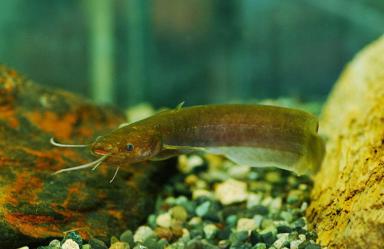
| ⇓ Zebra Pleco (Hypancistrus zebra) Data Sheet | |
|---|---|
| Scientific Name | Silurus microdorsalis (Mori, 1936) |
| Common Names | Slender Catfish Miyoogi (Korean) |
| Type Locality | Rakuto River at Ei-yo, southern Chosen, Korea. |
| Synonym(s) | Parasilurus microdorsalis |
| Pronunciation | See loo russ |
| Etymology | From the Greek silouros which is the name of the fish. The specific epithet, microdorsalis, means "with a small dorsal fin". |
| ⇓ Species Information | |
| Size | 350mm or 13.8" SL. Find near, nearer or same sized spp. |
| Identification | As the name suggests, S. microdorsalis possesses a very small dorsal fin. In addition, adult size is much smaller than the other Silurus species living in its native waters. |
| Sexing | Males much more slender than females, the latter which swell to twice their normal size when ripe with eggs |
| General Remarks | At a maximum length of just 25cm, this fish is the dwarf of the genus and far more suited for the average aquarist |
| ⇓ Habitat Information | |
| Distribution | Asia: Yalu River in Korea and China. |
| IUCN Red List Category | Least Concern , a distribution map is available on the IUCN species page. Last assessed 2024. |
| pH | 6.5 - 7.5 |
| Temperature | 15.0-25.0°C or 59-77°F (Show species within this range) |
| Other Parameters | This fish can tolerate considerably lower temperatures for short periods of time |
| ⇓ Husbandry Information | |
| Feeding | Eats worms, crustaceans, insects and small fish. Frozen and pellet foods are accepted in captivity. User data. |
| Furniture | Provide outcrops of stones that the fish can swim in and around. Ceramic or PVC pipes, if supplied will be used as a cave. The substrate can be sand or fine gravel. Plants and wood decorations are a welcome addition and the fish will lounge on them on occasion but be sure to leave open water for swimming. |
| Compatibility | Peaceful with members of its own species |
| Suggested Tankmates | Tankmates should be large enough not to be eaten. Fishes from the same region safe to house with it include Hemibarbus labeo, large Carassius auratus, and the Coreoperca spp. |
| Breeding | A breeding report in the Korean language book Korean Freshwater Fish (Pet Care vol. 4) states that courtship activity occurs over a 3 to 7 day period. During that time, the pair selects a spawning site among large gravel and stones. The males will frequently nudge the females belly and ventral regions and appears to assist in pressing the eggs out. Eggs are attached to the side or tops of stones and guarded by the male until hatching, The small fry feed first in infusoria but grow rapidly and can soon take newly hatched brine shrimp and finely powdered foods. In nature, spawning occurs in May/June and by September the fry have generally reached about 5cm in length. |
| Breeding Reports | There is no breeding report. |
| ⇓ Further Information | |
| Reference | Dobutsugaku Zasshi = Zoological Magazine Tokyo v. 48 (nos 8-10), pp 671, Pl. 24 (fig. 1) |
| Wishlists | There is no wish to keep this species. |
| Spotters | There is no record of this fish being seen. |
| ⇓ More Resources | |
| Forum BBCode | |
| Find CLOG | 1 mention on the forum, starting 20th Apr 18 |
 | Look up S. microdorsalis on PlanetCatfish.com |
 | Look up S. microdorsalis on Fishbase |
 | Look up S. microdorsalis on Encyclopedia of Life |
 | Look up S. microdorsalis on Global Biodiversity Information Facility |
 | LFS label creator ARN ref:1.7.35.5654 |
| Last Update | Thu Jan 02, 2025 8:43 am (Species record created: Sun Sep 08, 2013 9:22 am) |
