
PAGE_HEADER
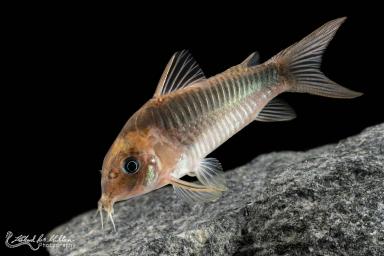
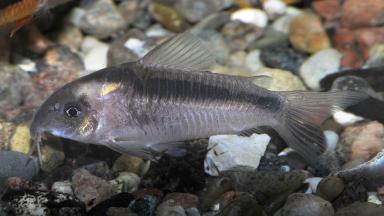
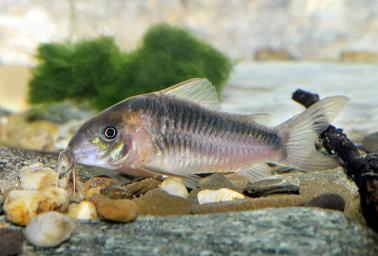
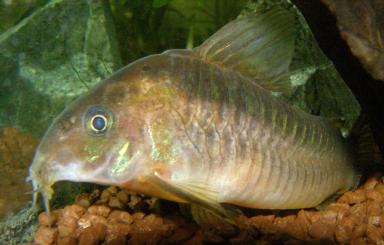 Twelve years old
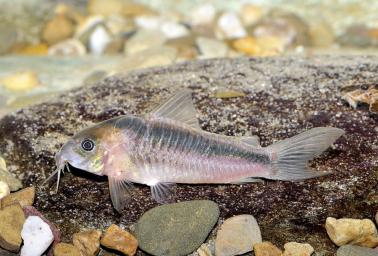
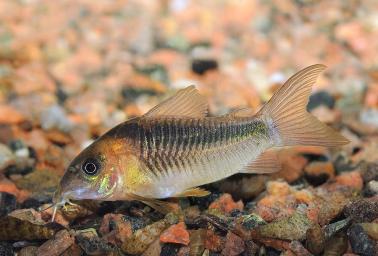
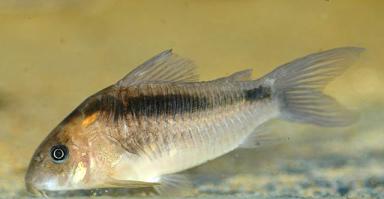
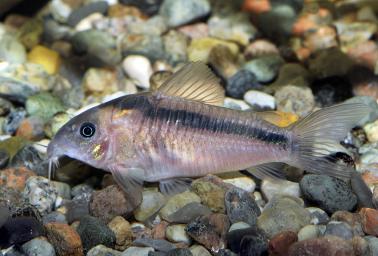
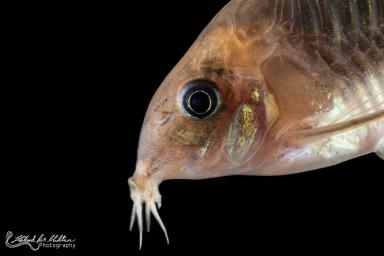 Close-up of head
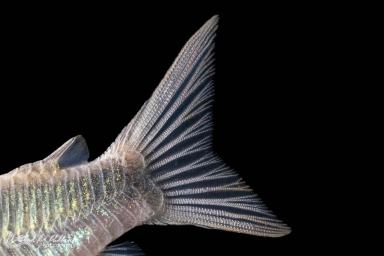 Close-up of caudal fin
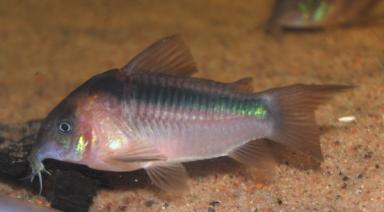
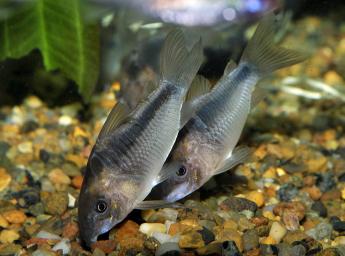
| ⇓ Zebra Pleco (Hypancistrus zebra) Data Sheet | |
|---|---|
| Scientific Name | Osteogaster zygata (Eigenmann & Allen, 1942) |
| Common Names | Black Band Corydoras Sortrygget Pansermalle (Danish, Denmark) |
| Type Locality | Río Hallagua system, Yurimaguas (5°54'S, 76°04'W), Loreto, Peru. |
| Synonym(s) | Corydoras zygatus |
| Pronunciation | os tee oh gas terr - z eye GAT uss |
| Etymology | Zygatus from the Greek zygados: team, pair. On the similarity with Corydoras rabauti |
| ⇓ Species Information | |
| Size | 56mm or 2.2" SL. Find near, nearer or same sized spp. |
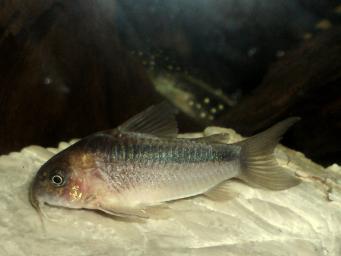
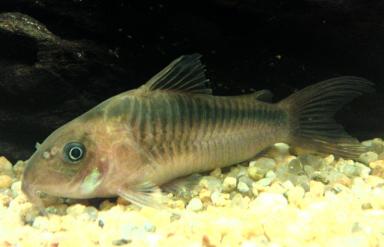
| Identification | C. zygatus background colour is pinky-grey, fins are colourless or slightly sooty. Adults have a copper "eyebrow". There is a dark line which always has a green shine to it, this line ends on the caudal peduncle never extending onto the caudal fin and without the downward twist that C.rabautihas and with which it is often confused. There often is a vertical line through the dark stripe just at the base of the dorsal spine, this manifests itself as a break in the stripe. C.zygatus show a number of vertical grey bars on the forward most ventral scutes, rabauti can have this as well but it "usually" shows as a dark smudge without the distinct bars.Adult zygatuscan become scruffy looking. Differences are clearly visible when looking at the fry of the two species. |
| Sexing | Females grow larger and are more full-bodied, this is best observed from above the fish. Males will typically have more pointed as opposed to more rounded fin tips as they mature. Females are rounder, bigger. |
| General Remarks | Rarely active during the day and is very shy. |
| ⇓ Habitat Information | |
| Distribution | South America: western Amazon River basin. Amazon, Upper Amazon, Marañón, Pastaza, Bobonaza (click on these areas to find other species found there) Amazon, Upper Amazon, Marañón, Huallaga (click on these areas to find other species found there) Login to view the map. |
| IUCN Red List Category | Not Evaluated , a distribution map is available on the IUCN species page. Last assessed 2026. |
| Temperature | 16.0-25.0°C or 60.8-77°F (Show species within this range) |
| ⇓ Husbandry Information | |
| Feeding | The usual range of food (frozen, live or commercially prepared). Not a picky eater but no scavenger either. User data. |
| Furniture | fine sand, driftwood aquatic plants leaving an open area for them to search for food and swim. |
| Compatibility | Peaceful. |
| Breeding | Typical Corydoradinae T-position manner. They spawn after a good water change. The temperature at spawning time is around 16°C Female would lay around six hundred eggs. With two males the fecundity rate is between 95-100%. The small eggs have been known to be laid singly, scattered all over the tank. |
| Breeding Reports | There is no breeding report. |
| ⇓ Further Information | |
| Reference | Fishes of western South America, pp 175, Pl. 12 (fig. 1). |
| Wishlists | There is no wish to keep this species. |
| Spotters | There is no record of this fish being seen. |
| ⇓ More Resources | |
| Forum BBCode | |
| Find CLOG | 18 mentions on the forum, starting 31st Jan 04 |
 | Look up O. zygata on PlanetCatfish.com |
 | Look up O. zygata on Fishbase |
 | Look up O. zygata on Encyclopedia of Life |
 | Look up O. zygata on Global Biodiversity Information Facility |
 | LFS label creator ARN ref:1.1.1579.511 |
| Last Update | Thu Jan 02, 2025 9:40 am (Species record created: Fri May 04, 2001 7:00 am) |
