
PAGE_HEADER
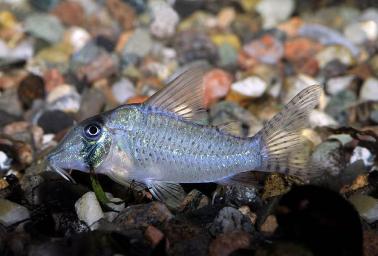 Lateral view
| ⇓ Zebra Pleco (Hypancistrus zebra) Data Sheet | |
|---|---|
| Scientific Name | Brochis (sub-clade 3) sychri Weitzman, 1960 |
| Common Names | Long Nosed Fairy Catfish Fepansermalle (Danish, Denmark), Panzerwels (German, Germany) |
| Type Locality | South America, specific locality unkown (aquarium specimen) [apparently Province Maynas, Río Nanay, right bank near Shiriyana, Peru]. |
| Synonym(s) | |
| Pronunciation | bro kiss sub clade four - sigh cry |
| Etymology | Named to honour Mr. Al Sychr. |
| ⇓ Species Information | |
| Size | 43mm or 1.7" SL. Find near, nearer or same sized spp. |
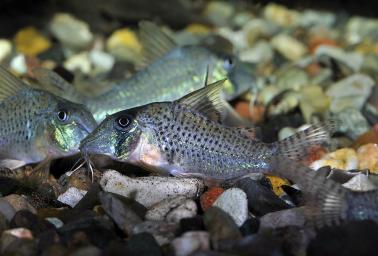
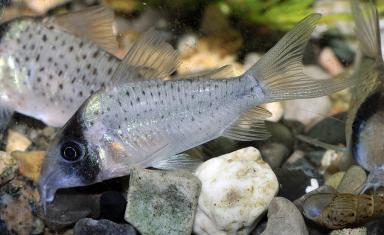
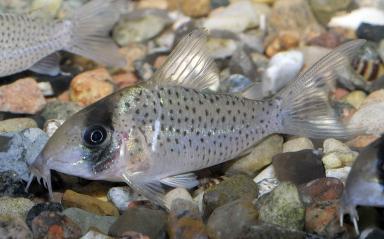
| Identification | Often confused with C097. In C. sychri the head shape is longer, with a distinct angular profile from dorsal to top of head above the eye and then down to the snout. Some specimens may even show a curve to the snout, making it more of a saddle shape. C097 has a shorter, straighter profile. The body spotting is more like small blotches rather than defined spots in C. sychri, but in C097 the spots are usually well defined, fewer, and more evenly spaced out. If you compare the colour patterns to those of C. loretoensis (C. sychri) and C. atropersonatus (C097) may better explain the differences, but always allow for a certain amount of variability. |
| Sexing | Females grow larger and are more full-bodied, this is best observed from above the fish. Males will typically have more pointed as opposed to more rounded fin tips as they mature. |
| ⇓ Habitat Information | |
| Distribution | South America: Nanay River basin, Loreto, Peru. Amazon, Upper Amazon, Nanay (click on these areas to find other species found there) Login to view the map. |
| IUCN Red List Category | Not Evaluated , a distribution map is available on the IUCN species page. Last assessed 2026. |
| ⇓ Husbandry Information | |
| Feeding | Will readily accepted all prepared foods that reach the bottom of the aquarium such as tablets, granules and larger flakes. Live (or frozen) foods such as bloodworm, white worm, grindal worm (Enchytraeus), Daphnia and Tubifex are readily accepted and good for conditioning groups of fishes for spawning. User data. |
| Furniture | Ideally substrate should be sand, but rounded gravel is an imperfect alternative. Avoid keeping over rough edged (chipped) gravel, this will increase this risk of damage the fishes barbels when it tries to dig. Substrate should be bordered with driftwood and aquatic plants leaving an open area for them to search for food and swim. The shade provided by overhanging rock work, arching bogwood, tall or floating plants are all that is required to settle these fishes. |
| Compatibility | A peaceful, shoaling, community fish. |
| Breeding | Unreported in the aquarium. |
| Breeding Reports | There is no breeding report. |
| ⇓ Further Information | |
| Reference | Stanford Ichthyological Bulletin v. 7 (no. 4), pp 151, Figs. 7-8. |
| Wishlists | There is no wish to keep this species. |
| Spotters | There is no record of this fish being seen. |
| ⇓ More Resources | |
| Forum BBCode | |
| Find CLOG | No mentions on the forum |
 | Look up B. sychri on PlanetCatfish.com |
 | Look up B. sychri on Fishbase |
 | Look up B. sychri on Encyclopedia of Life |
 | Look up B. sychri on Global Biodiversity Information Facility |
 | LFS label creator ARN ref:1.1.1585.506 |
| Last Update | Wed Jun 12, 2024 8:55 pm (Species record created: Fri May 04, 2001 7:00 am) |
