
PAGE_HEADER
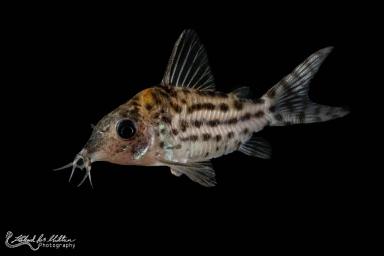
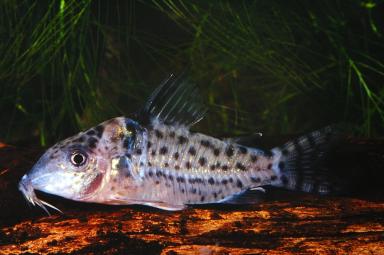
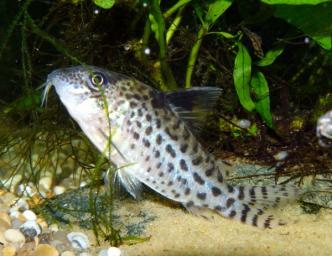
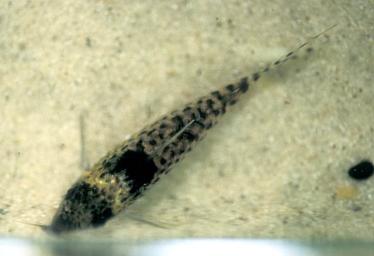 Dorsal view
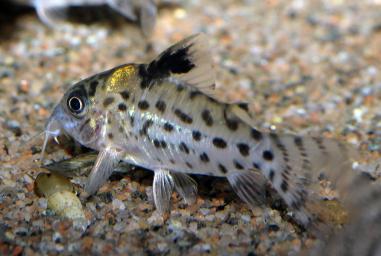 Juvenile
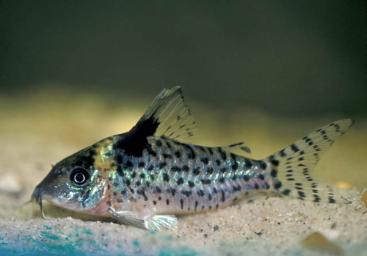
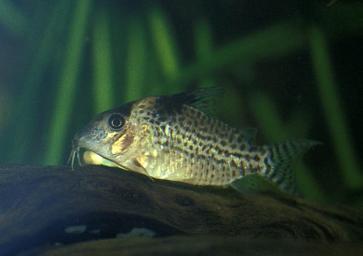
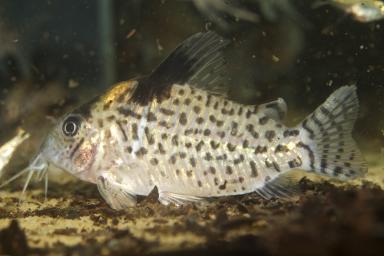
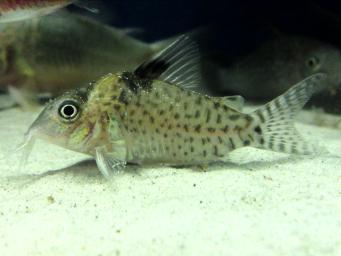 Lateral view
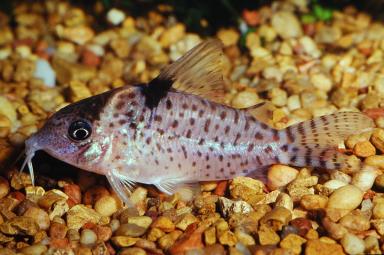
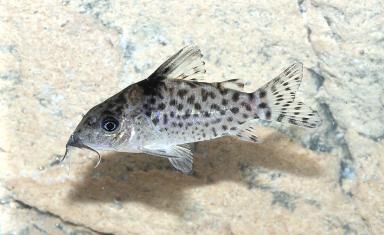
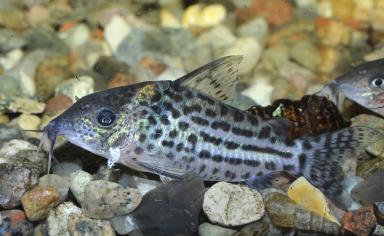
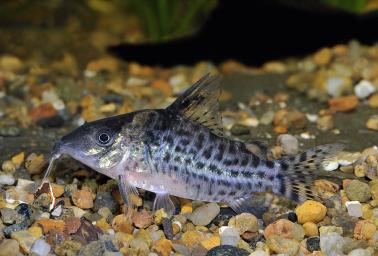
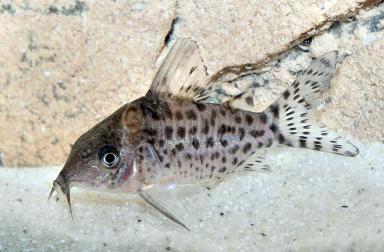
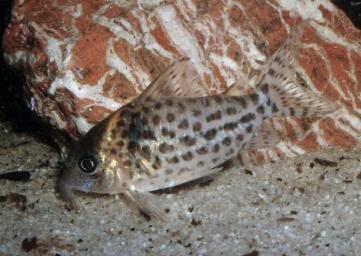
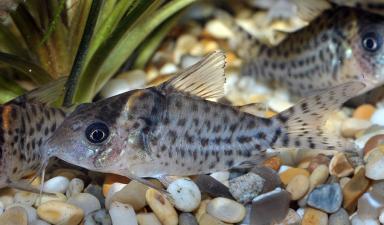

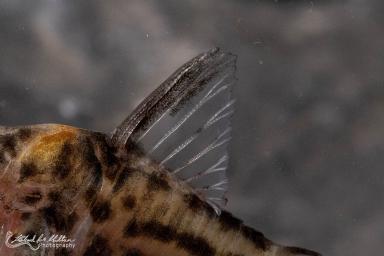 Close-up of dorsal fin
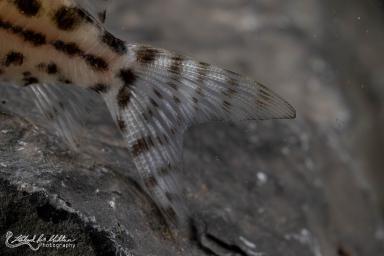 Close-up of caudal fin
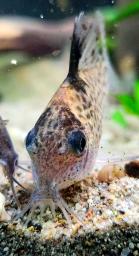 Head-on view
| ⇓ Zebra Pleco (Hypancistrus zebra) Data Sheet | |
|---|---|
| Scientific Name | Brochis (sub-clade 3) ambiacus Cope, 1872 |
| Common Names | Spotted Corydoras Langsnudet Kravepansermalle (Danish, Denmark), Panzerwels (German, Germany) |
| Type Locality | Río Ambyiacu, Peru. |
| Synonym(s) | Corydoras ambiacus, Corydoras grafi, Corydoras longirostris |
| Pronunciation | bro kiss sub clade four - am bee ACK uss |
| Etymology | Named for the Rio Ampiyacu in Peru, where the specimen was originally found. |
| ⇓ Species Information | |
| Size | 49mm or 1.9" SL. Find near, nearer or same sized spp. |
| Identification | This species was described in 1872 with no picture or drawing and a couple of paragraphs of text. The author notes, "Straw colour, with numerous indefinite brown spots on the sides. Dorsal fin with a large black spot covering anterior half, which also expands on the dorsal region round the base of the fin. Four vertical brown bands on caudal fin; anal spotted. Cheeks with blue reflections". In short, it should have no black marking in the top half of the dorsal fin and in particular the dorsal fin spine. Otherwise very similar to Corydoras agassizi. |
| Sexing | Females grow larger and are more full-bodied, this is best observed from above the fish. Males will typically have more pointed as opposed to more rounded fin tips as they mature. |
| ⇓ Habitat Information | |
| Distribution | South America: Upper Amazon River basin. Amazon, Upper Amazon, Ampiyacu (click on these areas to find other species found there) Login to view the map. |
| IUCN Red List Category | Not Evaluated , a distribution map is available on the IUCN species page. Last assessed 2026. |
| pH | 6.0 - 8.0 |
| Temperature | 21.0-25.5°C or 69.8-77.9°F (Show species within this range) |
| Other Parameters | dH 2-25. |
| ⇓ Husbandry Information | |
| Feeding | Will readily accepted all prepared foods that reach the bottom of the aquarium such as tablets, granules and larger flakes. Live (or frozen) foods such as bloodworm, white worm, grindal worm (Enchytraeus), Daphnia and Tubifex are readily accepted and good for conditioning groups of fishes for spawning. User data. |
| Furniture | Ideally substrate should be sand, but rounded gravel is an imperfect alternative. Avoid keeping over rough edged (chipped) gravel, this will increase this risk of damage the fishes barbels when it tries to dig. Substrate should be bordered with driftwood and aquatic plants leaving an open area for them to search for food and swim. The shade provided by overhanging rock work, arching bogwood, tall or floating plants are all that is required to settle these fishes. |
| Compatibility | A peaceful, shoaling, community fish. |
| Breeding | Has been bred in the aquarium. |
| Breeding Reports | There is no breeding report. |
| ⇓ Further Information | |
| Reference | Proceedings of the Academy of Natural Sciences of Philadelphia v. 23, pp 280. |
| Wishlists | There is no wish to keep this species. |
| Spotters | There is no record of this fish being seen. |
| ⇓ More Resources | |
| Forum BBCode | |
| Find CLOG | 37 mentions on the forum, starting 20th Feb 07 |
 | Look up B. ambiacus on PlanetCatfish.com |
 | Look up B. ambiacus on Fishbase |
 | Look up B. ambiacus on Encyclopedia of Life |
 | Look up B. ambiacus on Global Biodiversity Information Facility |
 | LFS label creator ARN ref:1.1.1585.461 |
| Last Update | Mon Apr 28, 2025 6:21 pm (Species record created: Mon Apr 30, 2001 7:00 am) |
