
PAGE_HEADER
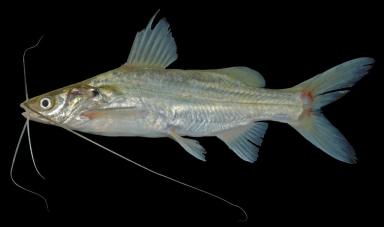
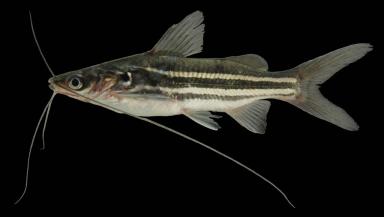
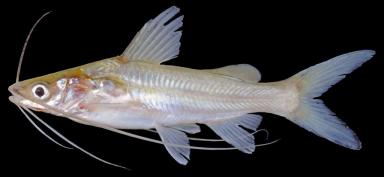
| ⇓ Zebra Pleco (Hypancistrus zebra) Data Sheet | |
|---|---|
| Scientific Name | Mystus mysticetus Roberts, 1992 |
| Common Name | Mystic Mystus |
| Type Locality | Nakorn Phanom market, Thailand. |
| Synonym(s) | |
| Pronunciation | miss tuss - Mis tee see tuss |
| Etymology | The generic name is probably derived from the Latin mystax, meaning moustache, in reference to the long barbels. It was first used by Scopoli in 1777 making it a very old genus that has included many catfishes from throughout the world at one time or another. The specific epithet is the Greek generic name of the baleen whales and alludes to the numerous slende, baleen-like gill rakers of this species. |
| ⇓ Species Information | |
| Size | 130mm or 5.1" SL. Find near, nearer or same sized spp. |
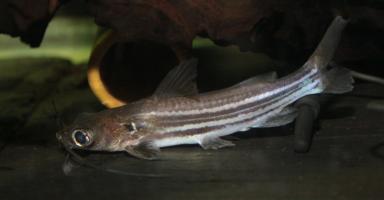
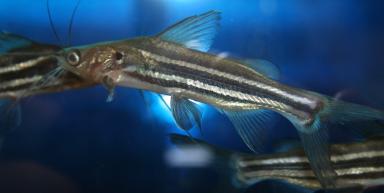
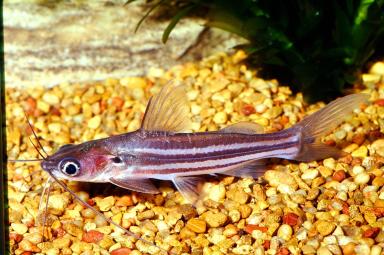
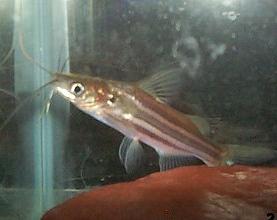
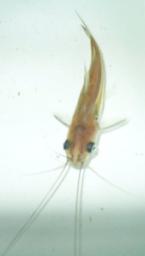
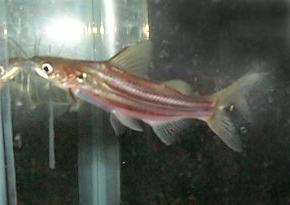
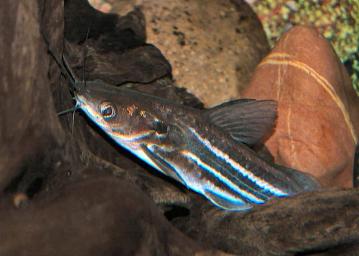
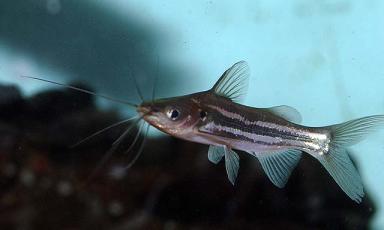
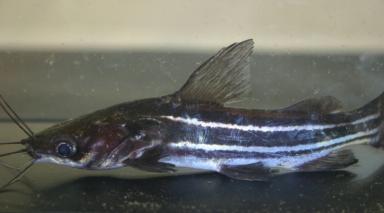
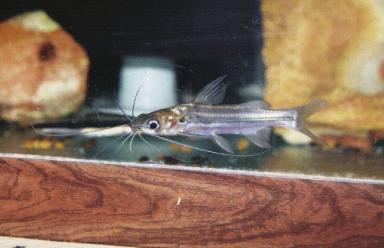
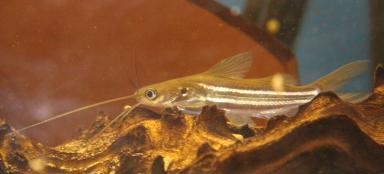
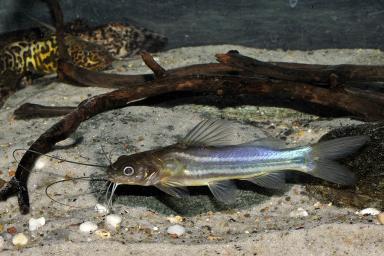
| Identification | Fishes of the genus Mystus Scopoli are small to medium-sized bagrid catfishes occurring in South Asia. Roberts (1994) recognized Mystus to have an elongate cranial fontanel reaching up to the base of the occipital process, long maxillary barbel, very long adipose fin, 11–30 gill rakers on the first gill arch and 37–46 total vertebrae, about equally divided between abdominal and caudal regions. He included only eight species under the genus. Mo (1991) characterized the genus to have a thin needle-like first infraorbital, twisted and thickened metapterygoid loosely attached to the quadrate by means of ligament or a small extent of cartilage. Jayaram & Sanyal (2003) and Ferraris (2007) respectively listed 44 and 33 species of Mystus as valid. Differs from all other species of Mystus in having eyes lateral, rather than dorsolateral, so that they are about equally visible viewed either from above or from below head (in other species eyes usually cannot be seen at all from directly below). Mouth nearly terminal, less downturned than in any other species of striped Mystus. Serrae of pectoral spine smaller and less erect than in any other striped Mystus. Adipose fin short but very high, originating far behind dorsal fin, its length about twice and its height slightly less than eye diameter. Gill rakers increase in number throughout life faster than in any other Mystus. The anal fin has slightly more rays (13-15) than other striped Mystus of Thailand (usually 12 or less), and its posterior border is distinctly falcate. Cranial fontanel extends posteriorly to about midway between level of posterior border of eye and base of supraoccipital process. Maxillary barbel extends posteriorly to beyond anal fin or to end of middle caudal fin rays. Side of body with 3 faint dark and 2 whitish stripes. |
| Sexing | Males have an elongate genital papilla in front of the anal fin. |
| General Remarks | Often found in mixed schools with M. multiradiatus which congregate around tree limbs and other solid objects, browsing the hard surfaces for zooplankton, aquatic insects, crustaceans and rotifers. Moves into flooded forests during the rainy season and returns to rivers in November and December in the lower Mekong. |
| ⇓ Habitat Information | |
| Distribution | Asia: Mekong and Chao Phraya basins. Reported from the Maeklong River. Thailand Waters, Chao Praya (click on these areas to find other species found there) Mekong (click on these areas to find other species found there) Login to view the map. |
| IUCN Red List Category | Not Evaluated , a distribution map is available on the IUCN species page. Last assessed 2026. |
| pH | 6.0 - 7.0 |
| Temperature | 22.0-27.0°C or 71.6-80.6°F (Show species within this range) |
| ⇓ Husbandry Information | |
| Feeding | Easily adapts to a wide variety of frozen and prepared food in the aquarium. May eat very small fish. User data. |
| Furniture | Provide plenty of driftwood and vegetation as hiding spaces. |
| Compatibility | Compatible with most fishes, although very small fishes will be eaten. Ideal tankmates include larger barbs and rasboras in an Asian biotope setup. This species is not overtly territorial, so more than one can be kept together. |
| Breeding | Unreported in the aquarium. |
| Breeding Reports | There is no breeding report. |
| ⇓ Further Information | |
| Literature & References | Original Description: <b> Roberts, T. R.</b> 1992 (Feb.) |
| Wishlists | There is no wish to keep this species. |
| Spotters | There is no record of this fish being seen. |
| ⇓ More Resources | |
| Forum BBCode | |
| Find CLOG | 30 mentions on the forum, starting 20th Aug 04 |
 | Look up M. mysticetus on PlanetCatfish.com |
 | Look up M. mysticetus on Fishbase |
 | Look up M. mysticetus on Encyclopedia of Life |
 | Look up M. mysticetus on Global Biodiversity Information Facility |
 | LFS label creator ARN ref:1.8.14.451 |
| Last Update | Wed Jan 01, 2025 7:54 pm (Species record created: Thu May 03, 2001 7:00 am) |
