
PAGE_HEADER
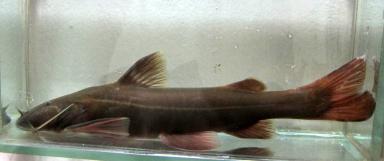 Paratype, 112mm SL
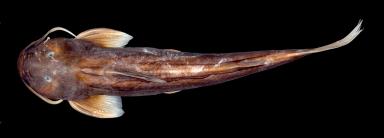 Dorsal view
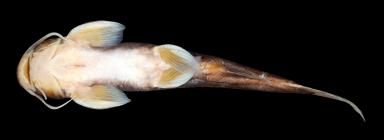 Ventral view
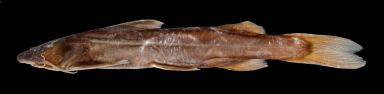
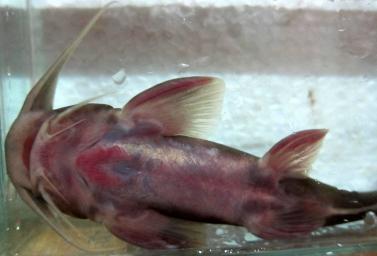 Close-up of ventral view
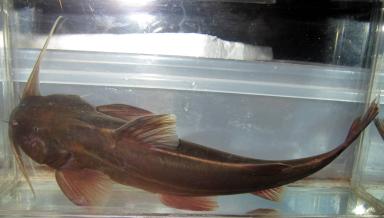 Dorsal view
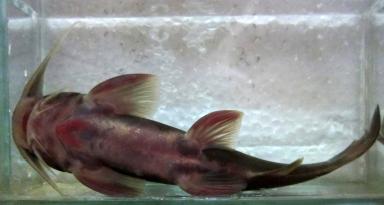 Ventral view
| ⇓ Zebra Pleco (Hypancistrus zebra) Data Sheet | |
|---|---|
| Scientific Name | Glyptothorax scrobiculus Ng & Lalramliana, 2012 |
| Common Name | |
| Type Locality | Mausam River in the vicinity of NE Khawdungsei village, 23°57'33.0"N, 93°12'34.0"E, Tuivai River drainage, Mizoram, India. |
| Synonym(s) | |
| Pronunciation | Gleep toe thor axe |
| Etymology | The generic name comes from the Greek glyptos, meaning carved, and thorax, meaning breastplate (or the part of the body covered by it), in reference to the folds of skin comprising the thoracic adhesive apparatus. The specific name comes from the Latin noun scrobiculus, meaning a little ditch, in reference to the diagnostic presence of a furrow running along the entire length of the ventral surface of the pectoral spine. A noun in apposition. |
| ⇓ Species Information | |
| Identification | Sisorid catfishes of the genus Glyptothorax Blyth are benthic inhabitants of torrential waters of rivers and streams in montane and submontane parts of tropical Asia. The members of the genus are adapted to attach themselves to rocks and boulders against strong currents by means of a thoracic adhesive apparatus comprising grooves and folded pleats of skin parallel or oblique to the longitudinal axis of the body. The genus has a wide distribution, ranging from Turkey and Syria in the west, to India and China in the east, and extending further southeastward to Indonesia. With 84 nominal species, Glyptothorax are the most speciose genus of catfishes in Asia (Eschmeyer et al., 1998, Ng, 2005); 67 species were treated as valid by Thomson & Page (2006). Glyptothorax scrobiculus differs from all congeners in having a furrow running along the entire length of the ventral surface of the pectoral spine. The furrow is thought to arise from the posterior expansion of the adhesive surface of the pectoral spine. |
| ⇓ Habitat Information | |
| Distribution | Known from the Mausam and Sur Luite rivers, both tributaries of the Tuivai River, and the Tuirial River drainage in Mizoram, northeastern India.Both the Tuivai and Tuirial rivers are part of the Barak River drainage, which is itself part of the Surma-Meghna River system. Indian waters, North Eastern India Waters, Padma, Ganges, Meghna, Surma, Barak (click on these areas to find other species found there) Login to view the map. |
| IUCN Red List Category | Not Evaluated , a distribution map is available on the IUCN species page. Last assessed 2026. |
| pH | 8.2 - 8.4 |
| Temperature | 19.0-24.0°C or 66.2-75.2°F (Show species within this range) |
| ⇓ Husbandry Information | |
| Furniture | Glyptothorax scrobiculus was collected from clear, shallow, moderately fast flowing streams with pH ranging from 8.2 to 8.4 and temperature ranging from 19 to 24 °C respectively. The streambed consisted of rocks and gravels. |
| Suggested Tankmates | Other species collected along with G.scrobiculus include Garra spp. , Balitora cf. brucei, Botia cf. almorhae, Lepidocephalichthys sp. , Schistura spp., Amblyceps laticeps and Channa sp. |
| Breeding | No member of this genus has been bred in the aquarium. |
| Breeding Reports | There is no breeding report. |
| ⇓ Further Information | |
| Literature & References | Original Description: <b> Ng, H. H. and Lalramliana</b> 2012 (June) |
| Wishlists | There is no wish to keep this species. |
| Spotters | There is no record of this fish being seen. |
| ⇓ More Resources | |
| Forum BBCode | |
| Find CLOG | No mentions on the forum |
 | Look up G. scrobiculus on PlanetCatfish.com |
 | Look up G. scrobiculus on Fishbase |
 | Look up G. scrobiculus on Encyclopedia of Life |
 | Look up G. scrobiculus on Global Biodiversity Information Facility |
 | LFS label creator ARN ref:1.20.170.4422 |
| Last Update | Wed Jan 01, 2025 8:24 pm (Species record created: Fri Jul 13, 2012 6:17 pm) |
