
PAGE_HEADER
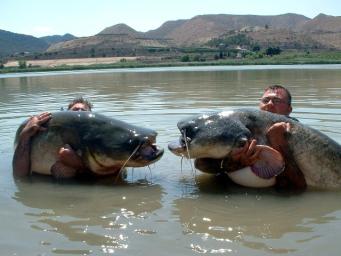
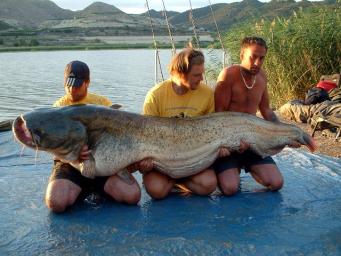 Adult - 212lb
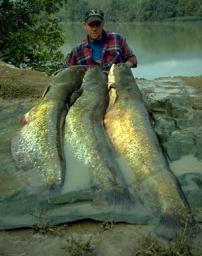 Caught in the River Ebro, Spain
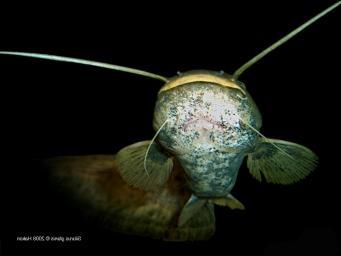
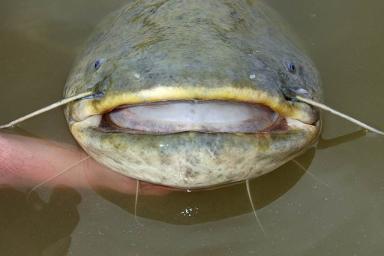
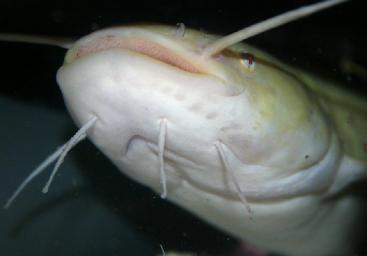 Albino - close up of mouth
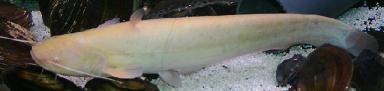 Albino Juvenile
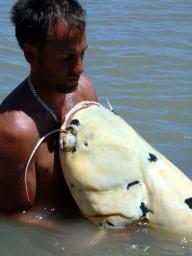 Leucistic adult
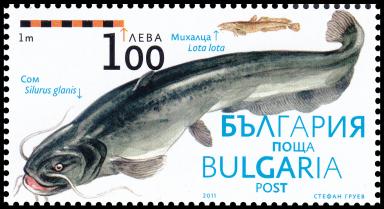 Stamp
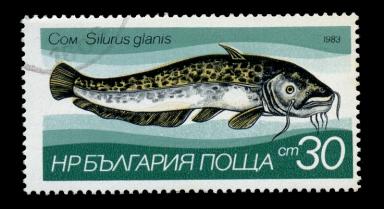 Stamp
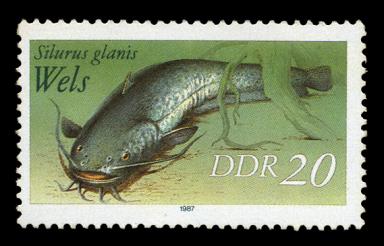 Stamp
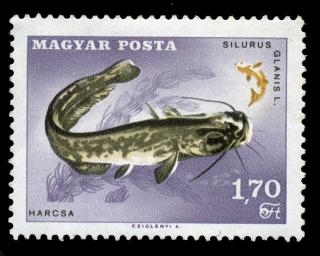 Stamp
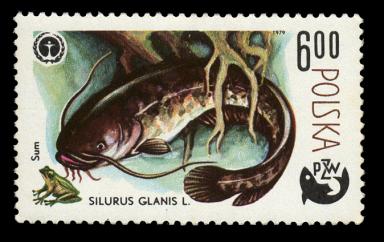 Stamp
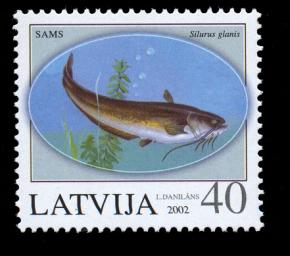 Stamp
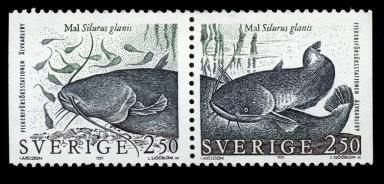 Stamp
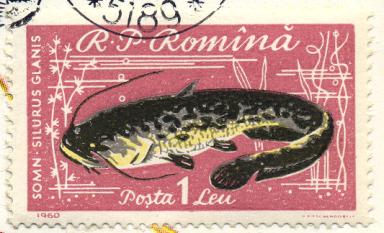 Stamp
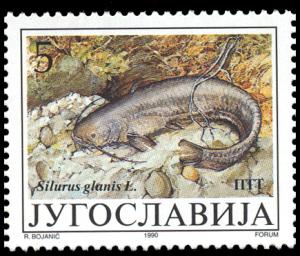 Stamp
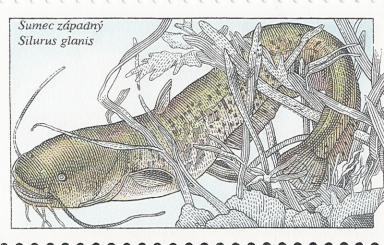 Stamp
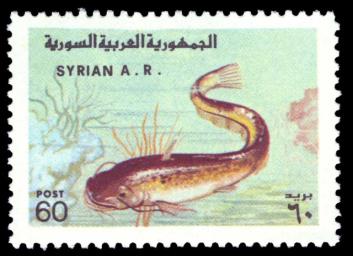 Stamp
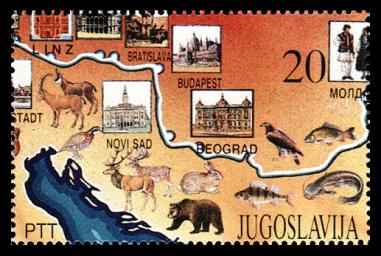 Stamp
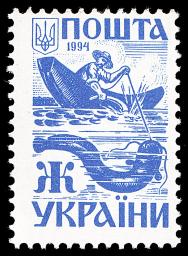 Stamp
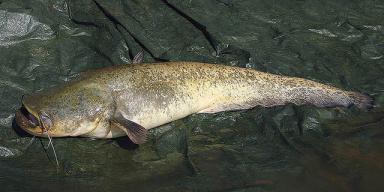
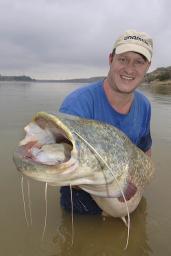
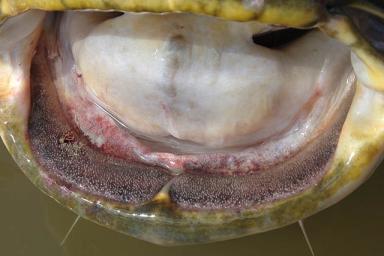
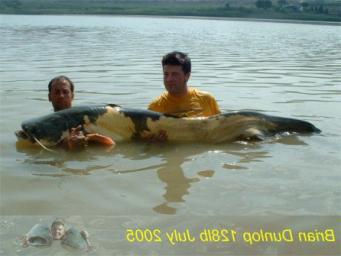 Leucistic adult
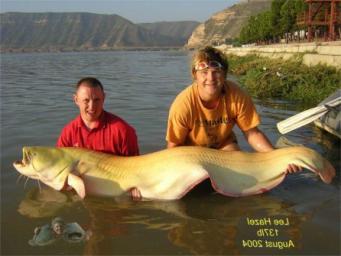 Leucistic adult
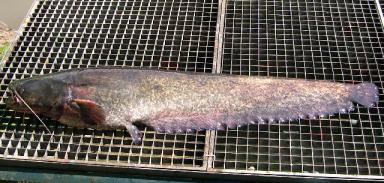
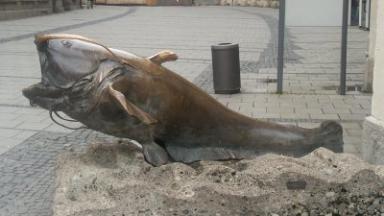 Statue found in Town Centre, Munich, Germany
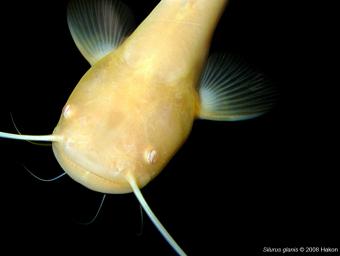 Dorsal view of head
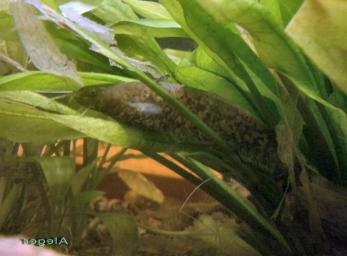 Juvenile collected in Desna river(Trib. Dniper R.)
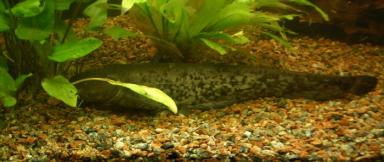 Juvenile, Desna River
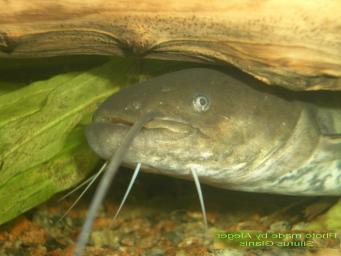 Juvenile, Desna River
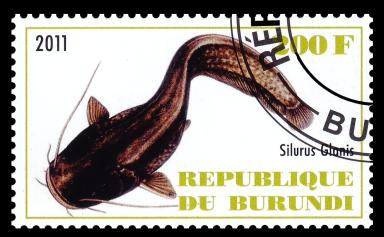
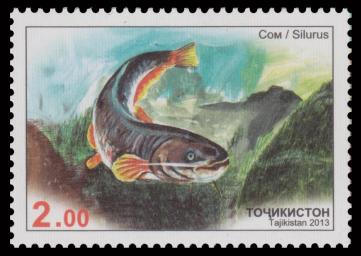 Stamp
| ⇓ Zebra Pleco (Hypancistrus zebra) Data Sheet | |
|---|---|
| Scientific Name | Silurus glanis Linnaeus, 1758 |
| Common Names | European Catfish Europæisk Malle (Danish, Denmark), Europeisk Mal (Swedish, Sweden), Sheatfish, Wels |
| Type Locality | Orient, less frequently in European lakes. |
| Synonym(s) | Siluris glanis, Silurus glanis aralensis, Silurus silurus |
| Pronunciation | See loo russ - glare neess |
| Etymology | From the Greek silouros which is the name of the fish. Again from the Greek word glanis, which is the name of the fish |
| ⇓ Species Information | |
| Size | 5000mm or 196.9" SL. Find near, nearer or same sized spp. |
| Identification | Easily distinguished among silurids by its broad head, truncate caudal fin, mottled coloration and immense size. |
| Sexing | Males are more slender and have strong serrations on the posterior edge of the pectoral spine (females lack these serrations). |
| General Remarks | The worlds largest catfish, the largest example of which, caught in the River Dnepr (flowing through the Ukraine into the Black Sea), was measured at 5m (16ft, 5in) long and wieghed 306kg (675lb). In Appendix III of the Bern Convention (protected fauna). Several countries report adverse ecological impact after introduction. |
| ⇓ Habitat Information | |
| Distribution | Europe and Asia. In Appendix III of the Bern Convention (protected fauna). Several countries report adverse ecological impact after introduction. Euphrates, Chibayish marsh (click on these areas to find other species found there) European rivers (click on these areas to find other species found there) Login to view the map. |
| IUCN Red List Category | Not Evaluated , a distribution map is available on the IUCN species page. Last assessed 2026. |
| pH | 6.0 - 8.0 |
| Temperature | 4.0-20.0°C or 39.2-68°F (Show species within this range) |
| Other Parameters | Able to tolerate brackish / salt water as it has been found in brackish water in the Black and Baltic Seas, and has spawned in the salt water of the Aral Sea. |
| ⇓ Husbandry Information | |
| Feeding | A voracious predator. Juveniles can be fed live, frozen or pelleted foods; adults can be fed live fish, frogs or baby rats. May be taught to eat strips of raw meat. User data. |
| Furniture | A tankbuster that will outgrow almost any tank. Best kept in a pond. Provide large overhanging roots or pieces of driftwood as suitable hiding places. |
| Compatibility | Given its voracious appetite, best kept alone. Any other tankmates will eventually end up as food. |
| Breeding | Breeding does not occur until the water temperature reaches at least 20˚C, which is in mid-May to June to the south of its range and July to August in the north. The male excavates a redd (pit nest) in weedy gravel or sand-bottomed shallows into which the
female deposits a clump of relatively large (3mm-diameter), yellow, sticky eggs. The number of eggs produced depends on the size of
the female and is equivalent to 25000-30000 per kilogram of her weight. After fertilising the eggs, the male guards them until they hatch - usually three to four days later at temperatures of 20-21˚C. When newly hatched, larval catfish are about 7mm long and have only one barbel. They remain in the redd, guarded by the male, until their yolk sacs have been fully absorbed. They then disperse to feed on bottom-dwelling invertebrates and become piscivorous at the end of their first year (when they reach a size of 20-25 cm). |
| Breeding Reports | There is no breeding report. |
| ⇓ Further Information | |
| Reference | Systema Naturae, Ed. X v. 1, pp 304. |
| Wishlists | There is no wish to keep this species. |
| Spotters | There is no record of this fish being seen. |
| ⇓ More Resources | |
| Forum BBCode | |
| Find CLOG | 32 mentions on the forum, starting 30th Dec 02 |
 | Look up S. glanis on PlanetCatfish.com |
 | Look up S. glanis on Fishbase |
 | Look up S. glanis on Encyclopedia of Life |
 | Look up S. glanis on Global Biodiversity Information Facility |
 | LFS label creator ARN ref:1.7.35.338 |
| Last Update | Thu Jan 02, 2025 9:37 am (Species record created: Sat Apr 21, 2001 7:00 am) |
