
PAGE_HEADER
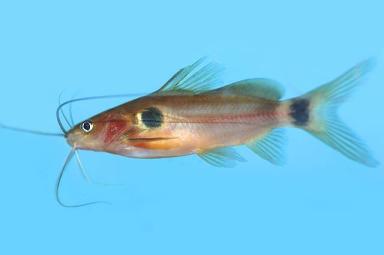
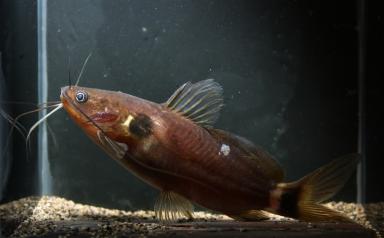 Female
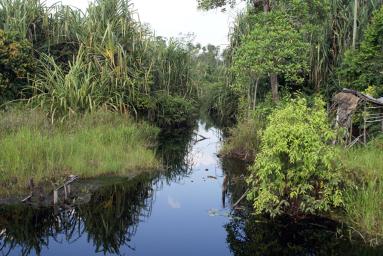 Habitat
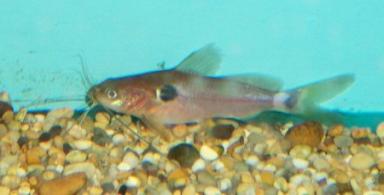
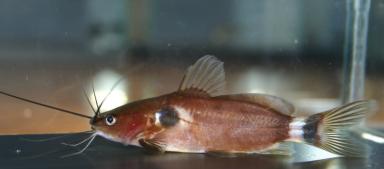
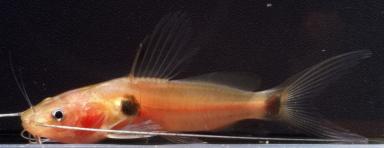
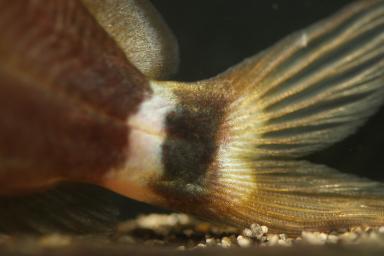 Close-up of caudal peduncle
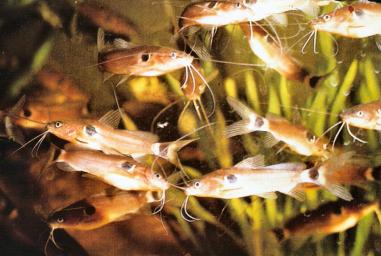
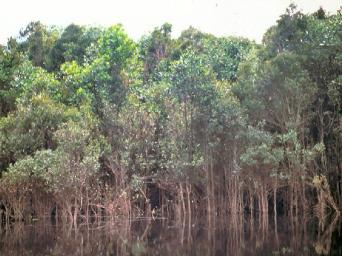 Habitat
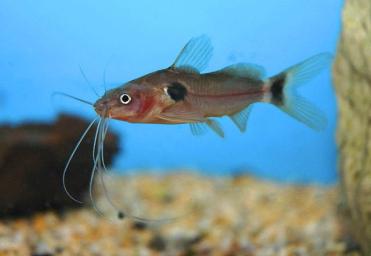


| ⇓ Zebra Pleco (Hypancistrus zebra) Data Sheet | |
|---|---|
| Scientific Name | Mystus bimaculatus (Volz, 1904) |
| Common Name | Two Spot Catfish |
| Type Locality | Sengi Si Russu and Kwantang River, near Djapura (Indragari), Sumatra, Indonesia. |
| Synonym(s) | Macrones bimaculatus |
| Pronunciation | miss tuss - by mack ewe LATT uss |
| Etymology | The generic name is probably derived from the Latin mystax, meaning moustache, in reference to the long barbels. It was first used by Scopoli in 1777 making it a very old genus that has included many catfishes from throughout the world at one time or another. bi = two, maculatus = spotted in reference to the dark shoulder spot and the dark marking on the caudal peduncle. There are 3 other speciesAstyanax bimaculatus Ompok bimaculatus Plesiopuntius bimaculatus with this name. |
| ⇓ Species Information | |
| Size | 67mm or 2.6" SL. Find near, nearer or same sized spp. |
| Identification | Fishes of the genus Mystus Scopoli are small to medium-sized bagrid catfishes occurring in South Asia. Roberts (1994) recognized Mystus to have an elongate cranial fontanel reaching up to the base of the occipital process, long maxillary barbel, very long adipose fin, 11–30 gill rakers on the first gill arch and 37–46 total vertebrae, about equally divided between abdominal and caudal regions. He included only eight species under the genus. Mo (1991) characterized the genus to have a thin needle-like first infraorbital, twisted and thickened metapterygoid loosely attached to the quadrate by means of ligament or a small extent of cartilage. Jayaram & Sanyal (2003) and Ferraris (2007) respectively listed 44 and 33 species of Mystus as valid. Easily identified by its overall red-brown body and two dark markings on the shoulder and caudal peduncle. These markings are surrounded by lighter colouration. |
| Sexing | Males possess a genital papilla just for of the anal fin. The genital papilla look like an extra unattached fin ray. Amongst groups of healthy mature specimens the females are more robust, especially when gravid. |
| General Remarks | Known only from peat swamps in Sumatra, this specialist natural habitat is facing serious pressures from man. |
| ⇓ Habitat Information | |
| Distribution | Asia: Sumatra, Indonesia. Pacific, Greater Sunda Island Rivers, Sumatra Waters (click on these areas to find other species found there) Login to view the map. |
| IUCN Red List Category | Not Evaluated , a distribution map is available on the IUCN species page. Last assessed 2026. |
| pH | 4.0 - 5.5 |
| Temperature | 23.0-32.0°C or 73.4-89.6°F (Show species within this range) |
| Other Parameters | To reflect the natural habitat, the tank should imitate a blackwater environment with soft, warm, and acidic water. That said, these very adaptable catfish will thrive even in medium hard water with a near neutral pH. |
| ⇓ Husbandry Information | |
| Feeding | Luckily, they are happy to eat most aquarium foods. Dry foods 4-5 days a week with frozen or live foods 2-3 times per week is fine for normal maintenance. Reverse this ratio when attempting captive reproduction. User data. |
| Furniture | For a true biotope, the substrate should consist of about 1/2 inch of peat. Place numerous pieces of driftwood about the tank to create hiding places and use lots of floating plants. These fish are also very happy in heavily planted tanks. The most important furniture is driftwood, rocks, or other structures that provide caves for the fish to hide in. |
| Compatibility | These wonderful fish get along with most tankmates. When properly fed, they very rarely attempt to eat even the fry of other fishes. Ideal tankmates would be Pearl Gouramis, Krytopterus catfish, and blackwater Rasbora spp. |
| Suggested Tankmates | Ideal tankmates would be Pearl Gouramis, Glass (Krytopterus catfish), and blackwater Rasbora spp. |
| Breeding | So far only successful with hormone injections. These fish are commercially produced in the far East and Russia. Breeding these fish would be a very worthwhile attempt for an advanced hobbyist. Maintain the fish alone in the biotope set-up described above. When the females are gravid, begin daily large water changes with distilled or R.O. water that is slightly cooler than the temperature of the aquarium. The eggs should be scattered in the peat substrate where they will be protected from the hungry parents. |
| Breeding Reports | There is no breeding report. |
| ⇓ Further Information | |
| Reference | Revue Suisse de Zoologie v. 12 (no. 2), pp 466. |
| Wishlists | There is no wish to keep this species. |
| Spotters | There is no record of this fish being seen. |
| ⇓ More Resources | |
| Forum BBCode | |
| Find CLOG | 30 mentions on the forum, starting 25th Feb 05 |
 | Look up M. bimaculatus on PlanetCatfish.com |
 | Look up M. bimaculatus on Fishbase |
 | Look up M. bimaculatus on Encyclopedia of Life |
 | Look up M. bimaculatus on Global Biodiversity Information Facility |
 | LFS label creator ARN ref:1.8.14.332 |
| Last Update | Thu Jan 02, 2025 9:37 am (Species record created: Tue Apr 17, 2001 7:00 am) |
