
PAGE_HEADER
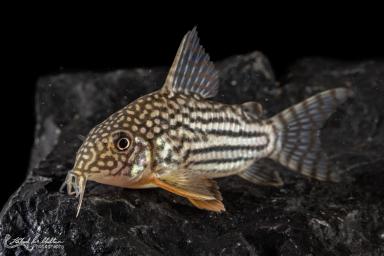
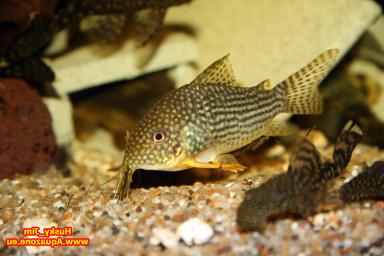
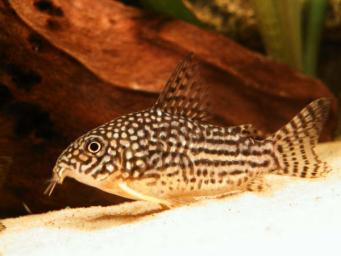
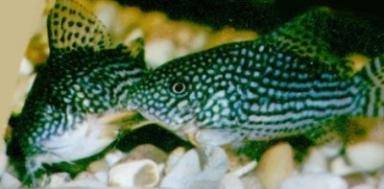 Pair spawning
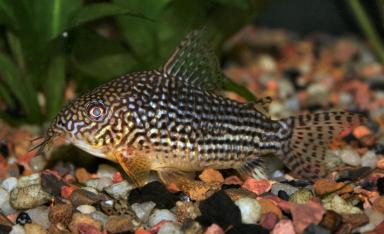
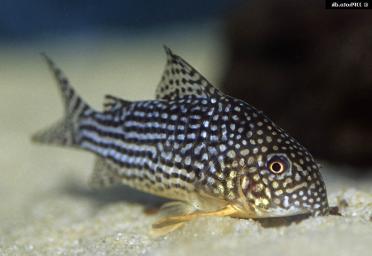
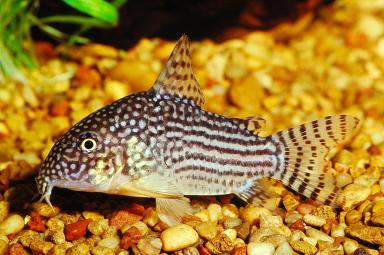
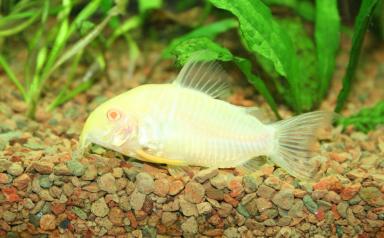
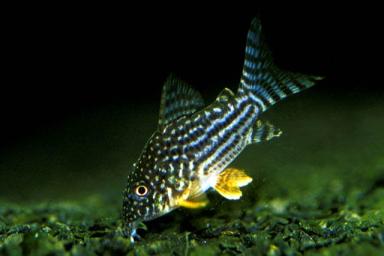
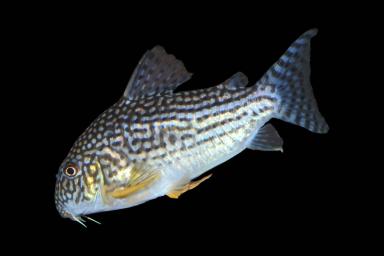
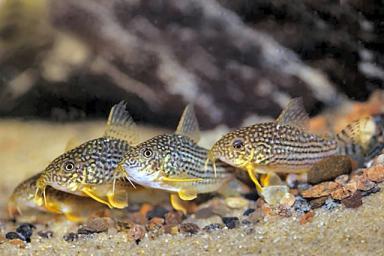
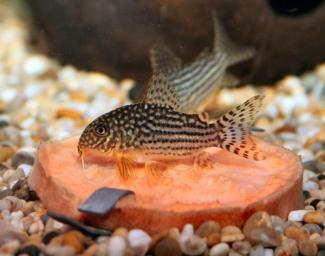
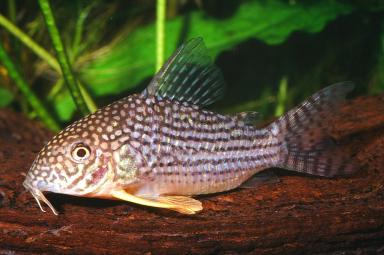
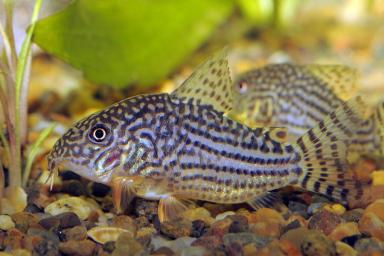
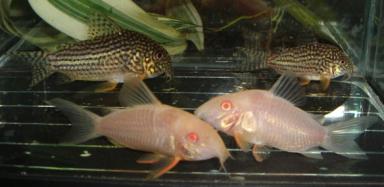 Albino and normal forms
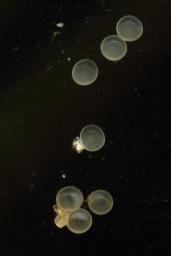 Eggs
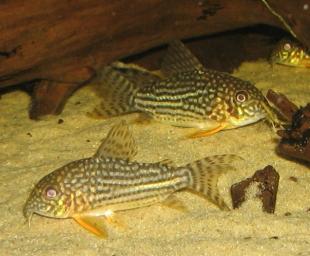
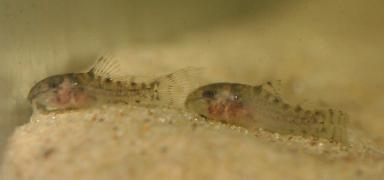 Three week old fry
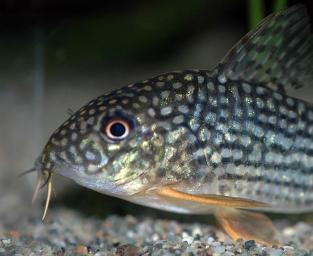
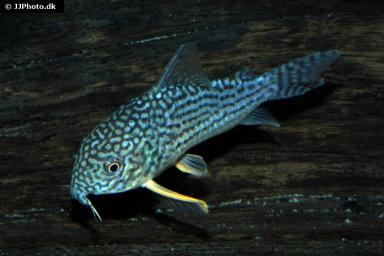
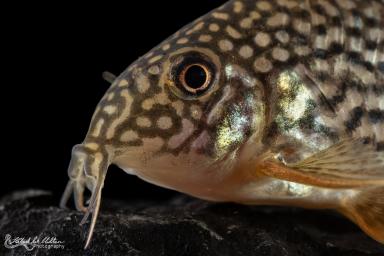 Close-up of head
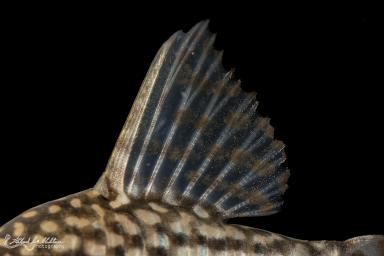 Close-up of dorsal fin
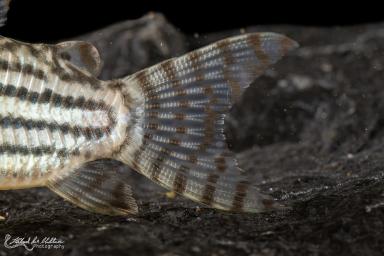 Close-up of caudal fin
| ⇓ Zebra Pleco (Hypancistrus zebra) Data Sheet | |
|---|---|
| Scientific Name | Hoplisoma sterbai (Knaack, 1962) |
| Common Names | Sterba's Cory Sterba's Pansermalle (Danish, Denmark), Sterba's Panzerwels (German, Germany) |
| Type Locality | Rio Guaporé, Brazil. |
| Synonym(s) | |
| Pronunciation | hop lee so mah - ster bye |
| Etymology | The genus name is latin for wavy, referring to “dark purplish spots tending to run together, forming undulating longitudinal bands” - a common if not uniform colouration pattern found in this genus. Specifically named in honour of Dr. Günther Sterba. |
| ⇓ Species Information | |
| Size | 68mm or 2.7" SL. Find near, nearer or same sized spp. |
| Identification | It is hard to misidentify this species but it can be confused with Corydoras haraldschultzi, although the latter is a long-nosed species where C. sterbai is the dome-headed form - the easiest way to tell them apart is that the Sterba's Cory has white spots on its head from eyes down to snout. C. haraldschultzi does not. Corydoras sterbai has is commercially bred in albino form. |
| Sexing | Females grow larger and are more full-bodied, this is best observed from above the fish. Males will typically have more pointed as opposed to more rounded fin tips as they mature. Males are smaller and slimmer. Females grow larger and are much wider; most easily observed from above. |
| General Remarks | In future, this species is likely to turn out to be new, and C. sterbai be a lineage 8 species rarely seen in the trade. |
| ⇓ Habitat Information | |
| Distribution | South America: central Brazil and Bolivia. Amazon, Middle Amazon (Solimoes), Madeira, Mamoré, Guaporé (Iténez) (click on these areas to find other species found there) Login to view the map. |
| IUCN Red List Category | Not Evaluated , a distribution map is available on the IUCN species page. Last assessed 2026. |
| pH | 6.0 - 7.6 |
| Temperature | 24.0-28.0°C or 75.2-82.4°F (Show species within this range) |
| Other Parameters | One species of Corydoras that does not seem to mind higher temperatures. |
| ⇓ Husbandry Information | |
| Feeding | Readily accepts a wide variety of frozen and prepared foods in the aquarium. User data. |
| Furniture | Shade provided by overhanging rock work, arching bogwood, tall or floating plants are all that is required. Ideally substrate should be sand, but rounded gravel will suffice. |
| Compatibility | Peaceful. Tank raised fish are ideal first catfish for a beginner's community aquarium. Wild caught fish will tend to be more expensive and somewhat less hardy. |
| Suggested Tankmates | Keep in a shoal of at least 6 individuals ideally with similarly sized tetras and dwarf cichlids. A good species for the discus aquarium. |
| Breeding | Spawned by Eric Bodrock in January 2000 who provided these notes. Breeders kept together in a group of 10 fish, sex ratio about even. They are a larger-bodied cory and active, so a 20-gallon tank (or larger) was used. The pH can range from 6.0–6.4 and TDS from 125–180 ppm. He had them spawn in water at 74°F (23°C), but better results were achieved at 82°F (27.5°C). Eggs are large, around 2mm, and can number 80 or more. They are often found on the glass sides or on rigid plant leaves such as Anubias. Hatch rate generally high. Tank-bred specimens that are frequently found in the shops appear relatively easy to breed, where wild-caught specimens are reported to be a bit more difficult. |
| Breeding Reports | There is no breeding report. |
| ⇓ Further Information | |
| Reference | Senckenbergiana Biologica v. 43 (no. 2), pp 131, Pl. 12 (figs. 2a-c). |
| Wishlists | There is no wish to keep this species. |
| Spotters | There is no record of this fish being seen. |
| ⇓ More Resources | |
| Forum BBCode | |
| Find CLOG | 1 mention on the forum, starting 3rd Feb 26 |
 | Look up H. sterbai on PlanetCatfish.com |
 | Look up H. sterbai on Fishbase |
 | Look up H. sterbai on Encyclopedia of Life |
 | Look up H. sterbai on Global Biodiversity Information Facility |
 | LFS label creator ARN ref:1.1.1580.316 |
| Last Update | Tue Sep 15, 2026 4:16 pm (Species record created: Fri May 04, 2001 7:00 am) |
