
PAGE_HEADER
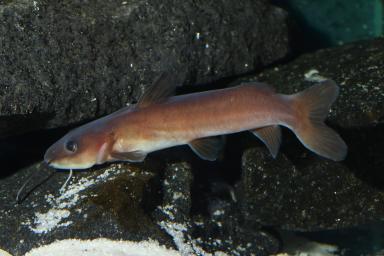
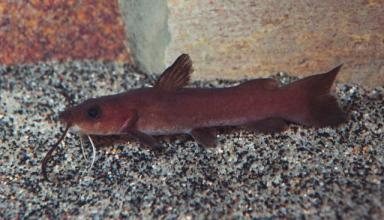
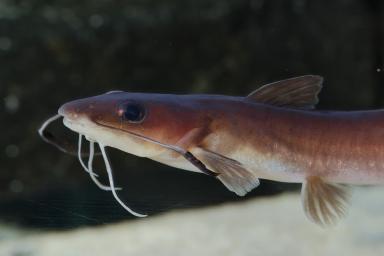
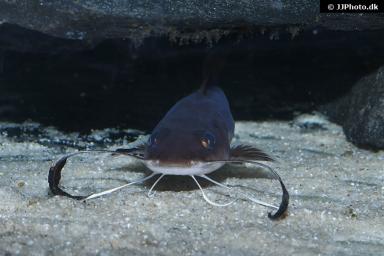
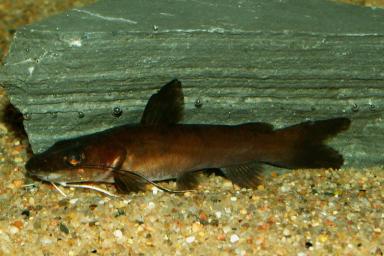
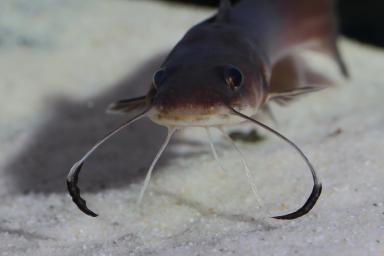 Head-on view
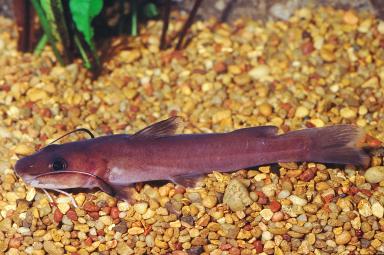
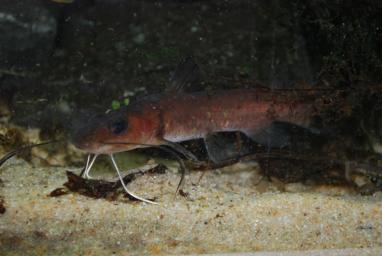
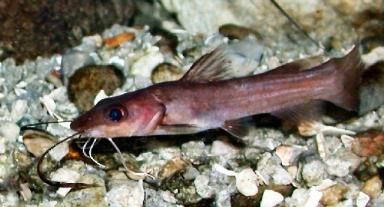
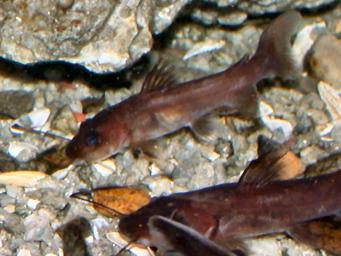
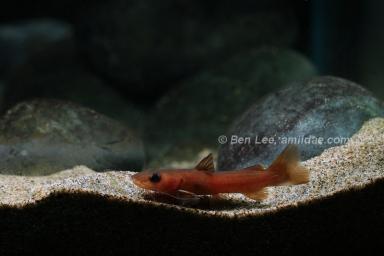
 Fry
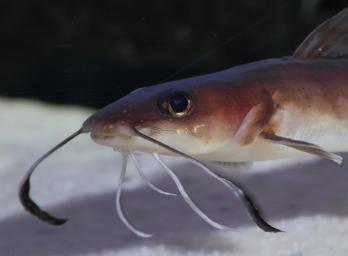
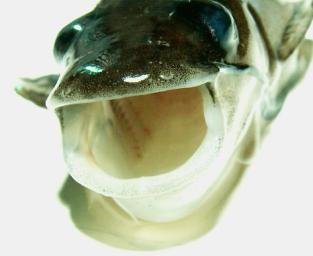 Close-up of mouth
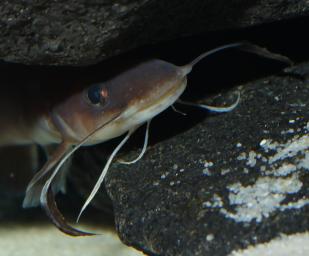
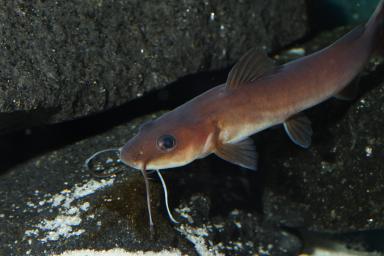
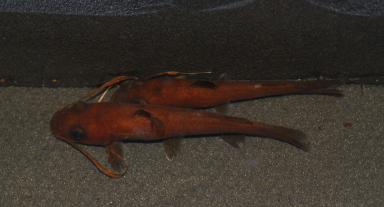 Dorsal view showing barbels
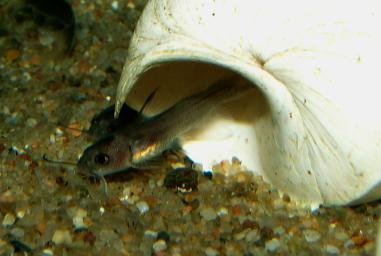
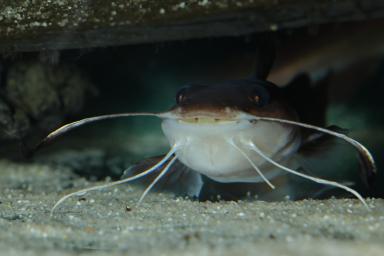 Mouthbrooding one day old eggs
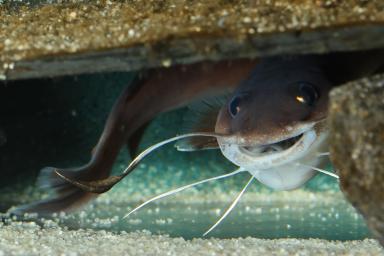 Mouthbrooding, day 17
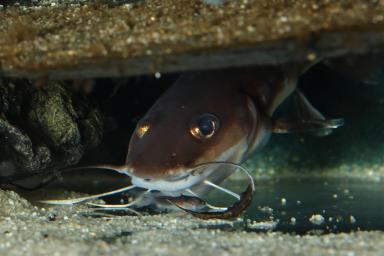 Mouthbrooding, day 22
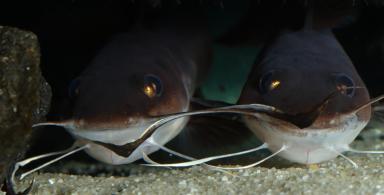 Mouthbrooding, day 28
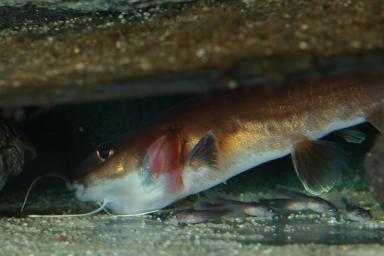 Mouthbrooding and juveniles
| ⇓ Zebra Pleco (Hypancistrus zebra) Data Sheet | |
|---|---|
| Scientific Name | Phyllonemus typus Boulenger, 1906 |
| Common Name | Spatula Barbel Catfish |
| Type Locality | Niamkolo, Zambia, Lake Tanganyika. |
| Synonym(s) | |
| Pronunciation | fie low NEE muss - tie puss |
| Etymology | The generic name comes from the Greek phyllos, meaning leaf and nema,
meaning thread, in reference to the distinctive barbel shape of the type species Phyllonemus typus. The specific epithet means form in Latin. There are 6 other speciesGymnallabes typus Helicophagus typus Ketengus typus Paralaubuca typus Rhincodon typus Rhinogobio typus with this name. |
| ⇓ Species Information | |
| Size | 88mm or 3.5" SL. Find near, nearer or same sized spp. |
| Identification | An upper body colour of brown-maroon with a cream coloured belly. Easily distinguished from the rarer P. filinemus by the small spatula-shaped endings on their maxillary barbels. |
| Sexing | The male is larger and more strongly built than the female. The female may also be plumper when viewed from above. |
| General Remarks | Other literature sources of note are: Ochi, H., A. Rossiter and Y. Yanagisawa, 2000 The first record of a biparental mouthbrooding catfish. J. Fish Biol. 57(6):1601-1604. Bailey, R. M., and D. Stewart, 1984 Bagrid Catfishes from Lake Tanganyika, with a Key and Descriptions of New Taxa. UMMZ, Ann Arbor. Eccles, D.H., 1992 FAO species identification sheets for fishery purposes. Field guide to the freshwater fishes of Tanzania. FAO, Rome. |
| ⇓ Habitat Information | |
| Distribution | Africa: Lake Tanganyika. African Waters, Western Rift Valley Lakes, Tanganyika (click on these areas to find other species found there) Login to view the map. |
| IUCN Red List Category | Not Evaluated , a distribution map is available on the IUCN species page. Last assessed 2026. |
| pH | 7.6 - 9.0 |
| Temperature | 23.0-28.0°C or 73.4-82.4°F (Show species within this range) |
| Other Parameters | A pH in between 7.8 and 8.2 is best suited to aquarium husbandry. |
| ⇓ Husbandry Information | |
| Feeding | Will readily take most prepared foods. Its diet should be supplemented with live foods from time to time. In the wild, its diet has been shown to consist of very small fish and larval insects. User data. |
| Furniture | Prefers rock work over driftwood or plants. Will make its home in small crevices. |
| Compatibility | A very peaceful fish which may be out competed for food and picked on if kept with much larger, more aggressive fish. A model citizen except for its large mouth which means it can and will eat smaller fishes. Should be kept in a group, since it is a fairly social fish and will be emboldened by the presence of conspecifics. |
| Breeding | According to Ochi et al, 2000, P. typus is a biparental mouth brooder. Male and female form a strong pair bond before mating and caring for young, with the male and/or female incubating and hatching the eggs in their mouth. |
| Breeding Reports | There is no breeding report. |
| ⇓ Further Information | |
| Reference | Transactions of the Zoological Society of London v. 17 (pt 6, no. 1), pp 552, Pl. 32 (fig. 3). |
| Wishlists | There is no wish to keep this species. |
| Spotters | There is no record of this fish being seen. |
| ⇓ More Resources | |
| Forum BBCode | |
| Find CLOG | 23 mentions on the forum, starting 12th Apr 06 |
 | Look up P. typus on PlanetCatfish.com |
 | Look up P. typus on Fishbase |
 | Look up P. typus on Encyclopedia of Life |
 | Look up P. typus on Global Biodiversity Information Facility |
 | LFS label creator ARN ref:1.2.108.306 |
| Last Update | Thu Jan 02, 2025 9:36 am (Species record created: Sat Oct 12, 2002 7:00 am) |
