
PAGE_HEADER
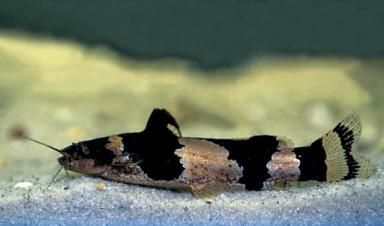
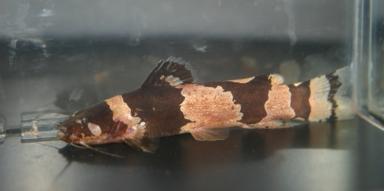
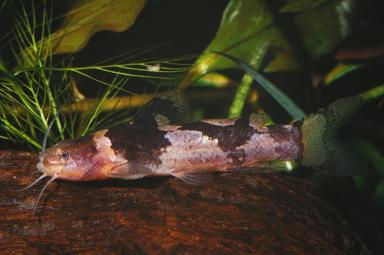
 Video
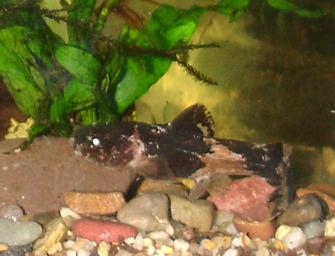
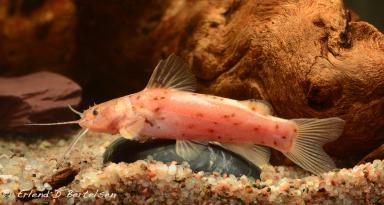 Rio Acacia, Colombia
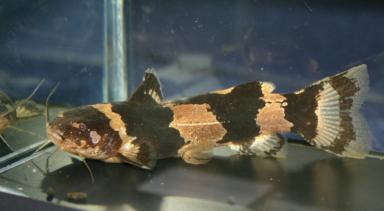
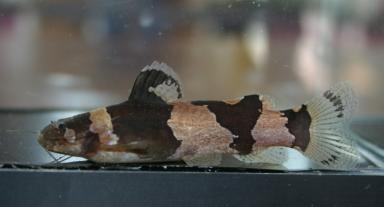
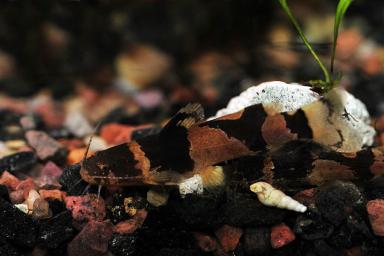
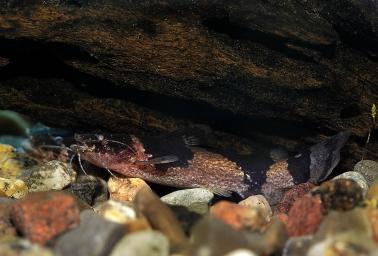
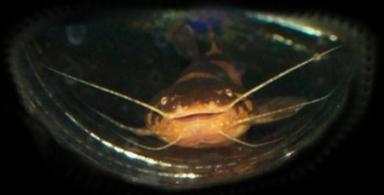
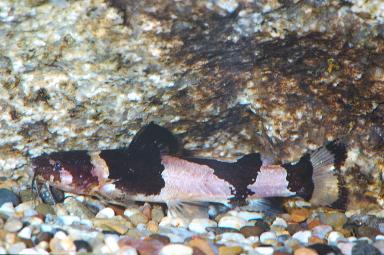
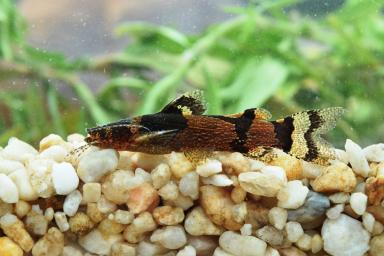 Rio Casanare
 Pectoral fin spine, dorsal view
 Albino
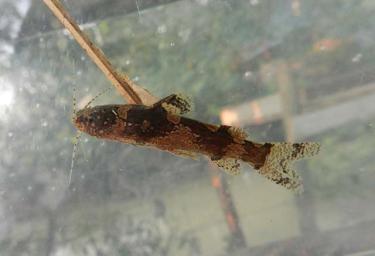 Cano Guanapalo, Colombia
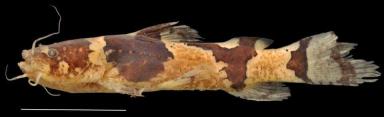 VEN10-55, Rio Orinoco at Merey, ~100km N of San Fernando de Atabapo
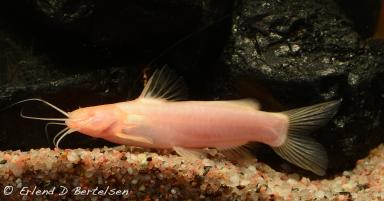 Albino. Rio Acacia, Colombia
 Pectoral fin spine, dorsal view
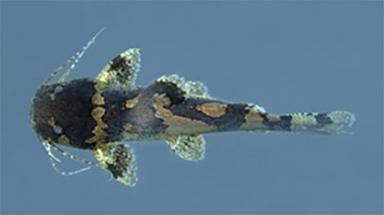 Rio Caura. Photo, B. Chernoff
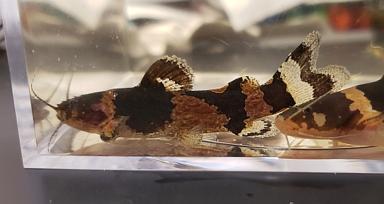
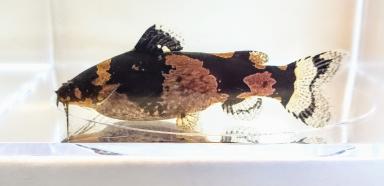
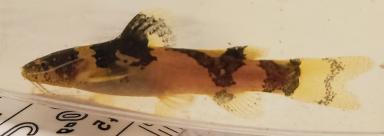
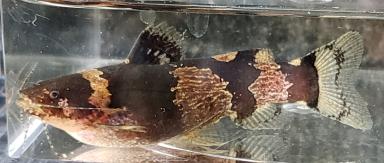
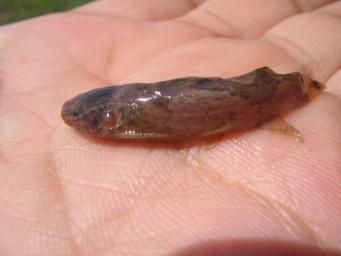 Puerto Lopez, Pachaquiaro, Colombia
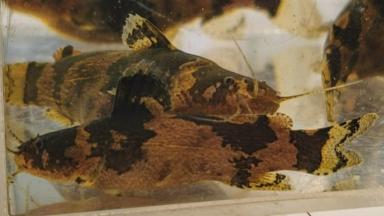 Male
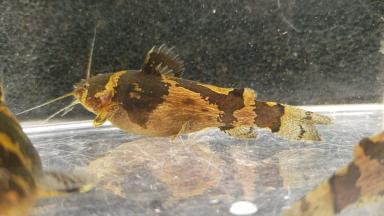 Female
| ⇓ Zebra Pleco (Hypancistrus zebra) Data Sheet | |
|---|---|
| Scientific Name | Microglanis aff. iheringi |
| Common Names | South American Bumblebee Catfish Bambi Cat (Spanish, Peru), Kleiner Marmor-antennenwels, Kleiner Harlekinwels (German, Germany) |
| Synonym(s) | |
| Pronunciation | aye herr ing ee |
| Etymology | Micro - small, glanis - catfish - in reference to the rather small forms of catfish that this genus contains. |
| Variants | Variant 1, Variant 2, Variant 3, Albino |
| ⇓ Species Information | |
| Size | 70mm or 2.8" SL. Find near, nearer or same sized spp. |
| Identification | The genus Microglanis was described by Eigenmann
(1912) to include small pimelodids with the head as wide as long, the skull covered by skin only; the occipital crest small; frontal fontanel not extending much if any behind the eye, and a minute occipital fontanel sometimes present; eye without a free orbital margin; dorsal and pectoral spines well developed; and premaxillary patches of teeth without backward projecting angles. The South American bumblebee catfish is so called because of its yellowish and black banding but to call it simply the bumblebee catfish would be misleading as the larger Asian Bagrid Pseudomystus siamensis is commonly referred to as THE bumblebee catfish. As a quirk of how the export markets change over the years you are now much more likely to encounter the South American for sale. M. aff. iheringi have a yellow or yellow-pink base colour with a U-or V-shaped solid dark black or brown saddle beneath the dorsal fin. The base colour may be clean (i.e., almost a pure colour, not mottled or streaked) or streaked/mottled with a brown wood-grain marking over the base colour. Some types also have a small pale spot in the centre of the black/brown subdorsal saddle. The caudal fin varies from emarginate to slightly forked, with the lower lobe of the caudal fin being slightly larger and with more soft rays than the upper lobe. Coloration on the tail is highly variable, ranging from a solid black/brown vertical band to just two small broken dark bands on the separated upper and lower caudal fin lobes. |
| Sexing | Well-conditioned females are conspicuously wider in the abdomen than similarly sized males. Not externally obvious. Mature females are noticeably deeper and broader in the body when viewed from above, particularly when carrying eggs, while males remain slimmer and are usually a little smaller. |
| General Remarks | Real M. iheringi from the Turmero basin in Venezuela are essentially non-existent in the aquarium hobby. To our knowledge, all fish sold as M. iheringi in the hobby are M. aff. iheringi, collected along the Orinoco basin, mostly in Eastern Colombia, rather than from Northern Venezuela. The Orinoco fish represent at least three different species of Microglanis, all similar to M. iheringi in colour pattern but each distinct in its own way. These species vary in size from 5cm to over 7cm maximum SL. |
| ⇓ Habitat Information | |
| Distribution | South America: Orinoco river basin, including areas in Venezuela and Columbia. Orinoco, Lower Orinoco, Caura (click on these areas to find other species found there) Orinoco, Middle Orinoco, Meta, Metica, Guayuriba (click on these areas to find other species found there) Orinoco, Middle Orinoco, Meta (click on these areas to find other species found there) Orinoco, Middle Orinoco, Meta, Ocoa (click on these areas to find other species found there) Orinoco (click on these areas to find other species found there) Orinoco, Middle Orinoco, Tomo (click on these areas to find other species found there) Login to view the map. |
| IUCN Red List Category | Not Evaluated |
| pH | 6.0 - 7.5 |
| Temperature | 22.0-26.0°C or 71.6-78.8°F (Show species within this range) |
| Other Parameters | Soft to moderately hard, slightly acidic to neutral water suits this fish best, but it is undemanding provided extremes are avoided and the water is clean and well oxygenated. In the Orinoco basin it is found in clear, gently flowing streams over leaf litter and sand; a moderate current and regular partial water changes are appreciated in the aquarium. |
| ⇓ Husbandry Information | |
| Feeding | Omnivorous. This fish is not a fussy eater. Brineshrimp appears to be a special favourite. User data. |
| Furniture | Dense leafy vegetation such as provided by large clumps of Java fern or Amazon swords. Narrow cracks or holes in between rocks or wood are also used. |
| Compatibility | Peaceful towards anything it cannot swallow and not territorial towards its own kind, so a small group can be kept together. Nocturnal and predatory by nature, however, and small fishes and shrimp kept in the same tank will steadily disappear after dark. |
| Suggested Tankmates | An excellent community fish for medium sized characins, larger tetras, dwarf cichlids and other catfishes of similar size. Avoid very small fishes such as neons or Boraras, and expect any fry present in the aquarium to be taken. |
| Breeding | Egg scattering without any parental care. See Shane's World article. |
| Breeding Reports | There is no breeding report. |
| ⇓ Further Information | |
| Reference | . |
| Wishlists | There is no wish to keep this species. |
| Spotters | There is no record of this fish being seen. |
| ⇓ More Resources | |
| Forum BBCode | |
| Find CLOG | 12 mentions on the forum, starting 27th Oct 20 |
 | Look up M. aff. iheringi on PlanetCatfish.com |
 | LFS label creator ARN ref:1.31.106.303 |
| Last Update | Tue Sep 15, 2026 4:33 pm (Species record created: Sun Apr 22, 2001 7:00 am) |
