
PAGE_HEADER
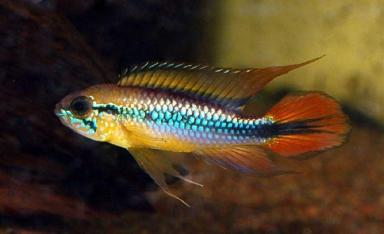
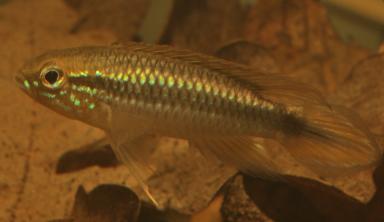 Wild form
| ⇓ Zebra Pleco (Hypancistrus zebra) Data Sheet | |
|---|---|
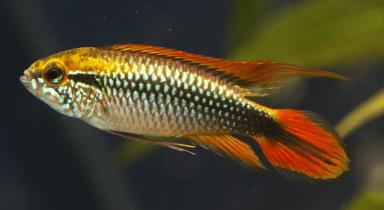
| Scientific Name | Apistogramma agassizii (Steindachner, 1875) |
| Common Names | Agassiz's Dwarf Cichlid Agassiz Zwergbuntbarsch (German, Germany) |
| Type Locality | Curupira, Codajas, Rio Poti de São Joao, Lago Maximo, and Lago Manacapuru, Brazil. |
| Synonym(s) | Apistogramma parva, Biotodoma agassizii, Geophagus agassizii |
| Pronunciation | ah-PISS-toe-grah-mah |
| Etymology (source: ETYFish.org) | The genus name is a combination of the Greek apisto, meaning 'meaning uncertain, inconstant, unstable, faithless', and gramme, meaning 'line', in reference to the variably-developed lateral line of these species. In honour of zoologist-geologist Louis Agassiz (1807-1873), at the time the leading authority on Brazilian fishes, who led the Thayer Expedition (1865-1866) to Brazil, which provided Steindachner with many fishes to study, including type of this one There are 4 other speciesBrochis(sc3) agassizii Cathorops agassizii Leporinus agassizii Rioraja agassizii with this name. |
| ⇓ Species Information | |
| Size | 42mm or 1.7" SL. Find near, nearer or same sized spp. |
| ⇓ Habitat Information | |
| Distribution | South America: Amazon River basin, along Amazon-Solimões River from Peru through Brazil to the Capim River basin. Amazon, Lower Amazon, Guamá, Capim (click on these areas to find other species found there) Amazon, Middle Amazon (Solimoes) (click on these areas to find other species found there) Amazon, Lower Amazon, Tocantins, Lower Tocantins, Acará Imported (click on these areas to find other species found there) Amazon, Lower Amazon, Guamá, Capim Imported (click on these areas to find other species found there) Amazon, Middle Amazon (Solimoes), Madeira Imported (click on these areas to find other species found there) Login to view the map. |
| IUCN Red List Category | Least Concern , a distribution map is available on the IUCN species page. Last assessed 2020. |
| ⇓ Husbandry Information | |
| Feeding | Apistogramma should be fed mainly on foods that reach the bottom third of the aquarium. Prepared foods include flakes and granules that sink. Live or frozen live foods such as bloodworm or brineshrimp are recommended for bringing pairs into breeding condition. User data. |
| Breeding | If there is not a bonded pair, setting up a breeding tank with one male and several females should encourage breeding. Water in the breeding tank should be slightly acidic (6-6.5 pH) and soft, around 5 dh. A specific breeding surface is necessary, often an upturned, small, plant pot or similar will suffice. |
| Breeding Reports | There is no breeding report. |
| ⇓ Further Information | |
| Literature & References | Original Description: <b> Steindachner, F.</b> 1875 <a href="http://www.biodiversitylibrary.org/page/8776963" target=_blank>See ref. at BHL</a> |
| Wishlists | There is no wish to keep this species. |
| Spotters | There is no record of this fish being seen. |
| ⇓ More Resources | |
| Forum BBCode | |
| Find CLOG | 10 mentions on the forum, starting 5th Jan 12 |
 | Look up A. agassizii on PlanetCatfish.com |
 | Look up A. agassizii on Fishbase |
 | Look up A. agassizii on Encyclopedia of Life |
 | Look up A. agassizii on Global Biodiversity Information Facility |
 | LFS label creator ARN ref:3.42.413.2981 |
| Last Update | Wed Jan 01, 2025 8:36 pm (Species record created: Wed Feb 09, 2011 11:07 am) |
