
PAGE_HEADER
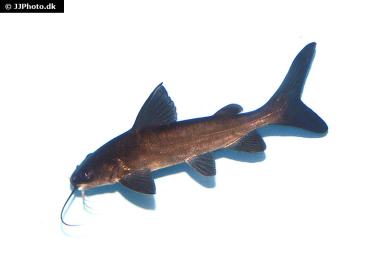
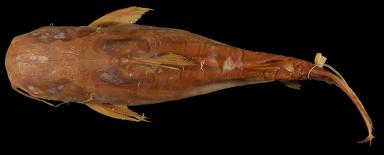 Dorsal view
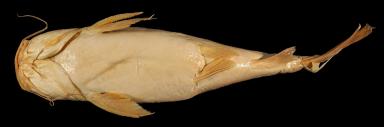 Ventral view
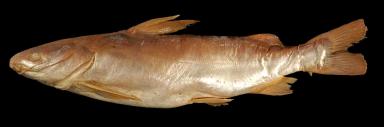 Lateral view of preserved specimen
| ⇓ Zebra Pleco (Hypancistrus zebra) Data Sheet | |
|---|---|
| Scientific Name | Neoarius graeffei (Kner & Steindachner, 1867) |
| Common Names | Australian Shark Catfish Blue Salmon-catfish, Blå Havmalle (Danish, Denmark), Blue Catfish, Lesser Salmon Catfish |
| Type Locality | Samoa [doubtful]. |
| Synonym(s) | Ariopsis graeffei, Arius australis, Arius australis, Arius curtisii, Arius curtisii, Arius graeffei, Hexanematichthys australis |
| Pronunciation | Nee oh ar ee uss. - GREY fie. |
| Etymology | Neo, new (newly discovered) and arius from the Greek arios, meaning warlike or bellicose; in reference to the well-developed fin spines. The species is named after E. Gräffe. |
| ⇓ Species Information | |
| Size | 600mm or 23.6" SL. Find near, nearer or same sized spp. |
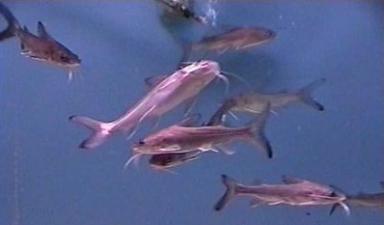
| Identification | Similar to A. berneyi, but eye is smaller and dorsal fin slightly shorter. Outer palatal teeth patches larger than inner patches (equal in A. berneyi). Dusky grey overall (often with bluish tinge) and white underneath. |
| Sexing | Females have longer, more rounded pelvic fins than males. |
| General Remarks | Naturally piebald and albino specimens have been observed. |
| ⇓ Habitat Information | |
| Distribution | Western Pacific: northern Australia and southern New Guinea. Pacific, South Pacific, New Guinea Pacific area (click on these areas to find other species found there) Pacific, South Pacific, New Guinea Pacific area, New Guinea Waters (click on these areas to find other species found there) Pacific, South Pacific, North Australian Pacific Coast (click on these areas to find other species found there) Australia waters, Northern Australia Waters (click on these areas to find other species found there) Login to view the map. |
| IUCN Red List Category | Least Concern , a distribution map is available on the IUCN species page. Last assessed 2019. |
| pH | 6.4 - 8.0 |
| Temperature | 17.0-27.0°C or 62.6-80.6°F (Show species within this range) |
| ⇓ Husbandry Information | |
| Feeding | Accepts a wide variety of live and prepared foods. User data. |
| Furniture | Provide driftwood and rocks as hiding places. |
| Compatibility | An active, shoaling species that can be kept with fish of equivalent size or larger. |
| Breeding | Spawns in the wild during spring or early summer at 26°C. An oral incubator, males carry up to 120 eggs for 6-8 weeks. The eggs and developing larvae collected from males can be incubated in an egg cone. |
| Breeding Reports | There is no breeding report. |
| ⇓ Further Information | |
| Reference | Sitzungsberichte der Kaiserlichen Akademie der Wissenschaften. Mathematisch-Naturwissenschaftliche Classe v. 54 (pt 3), pp 383 [28], Pl. 4 (fig. 12). |
| Wishlists | There is no wish to keep this species. |
| Spotters | There is no record of this fish being seen. |
| ⇓ More Resources | |
| Forum BBCode | |
| Find CLOG | 9 mentions on the forum, starting 30th Dec 03 |
 | Look up N. graeffei on PlanetCatfish.com |
 | Look up N. graeffei on Fishbase |
 | Look up N. graeffei on Encyclopedia of Life |
 | Look up N. graeffei on Global Biodiversity Information Facility |
 | LFS label creator ARN ref:1.9.474.2960 |
| Last Update | Wed Sep 02, 2026 8:39 pm (Species record created: Sat Apr 16, 2005 7:00 am) |
