
PAGE_HEADER


 Video


 Mottled form


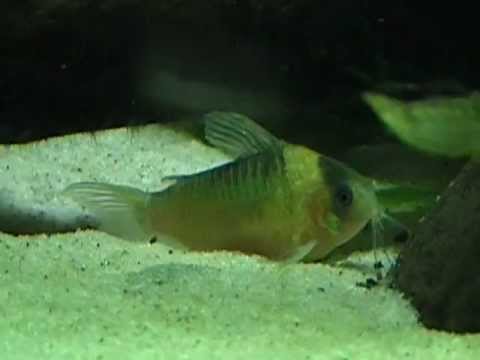 Video


 Close-up of dorsal fin
 Close-up of pectoral fin
| ⇓ Zebra Pleco (Hypancistrus zebra) Data Sheet | |
|---|---|
| Scientific Name | Gastrodermus nijsseni (Sands, 1989) |
| Common Names | C111, Nijssen's Cory Guldhovedpansermalle (Danish, Denmark) |
| Type Locality | Tributary of the Rio Negro, Brazil. |
| Synonym(s) | Corydoras elegans nijsseni |
| Pronunciation | gas trow derr muss - nih SENN eye |
| Etymology | Named for Dr Han Nijssen. There are 2 other speciesApistogramma nijsseni Metaloricaria nijsseni with this name. |
| ⇓ Species Information | |
| Size | 30mm or 1.2" SL. Find near, nearer or same sized spp. |
| Identification | Like all the other Rio Negro Corys, the black dorsal stripe can vary in size and intensity. Reminds one somewhat of C. elegans in terms of body shape. |
| Sexing | Females grow larger and are more full-bodied, this is best observed from above the fish. Males will typically have more pointed as opposed to more rounded fin tips as they mature. Males are markedly smaller in total length and in body mass. Males also generally have more intense colours with a darker saddle marking. Females can often show smaller fins than males. |
| ⇓ Habitat Information | |
| Distribution | South America: Negro River basin. Amazon, Middle Amazon (Solimoes), Negro (click on these areas to find other species found there) Login to view the map. |
| IUCN Red List Category | Not Evaluated , a distribution map is available on the IUCN species page. Last assessed 2026. |
| Temperature | 22.0-26.0°C or 71.6-78.8°F (Show species within this range) |
| ⇓ Husbandry Information | |
| Feeding | Will accept most brands of flake and pelleted food of a suitable size, preferably fast sinking. They also relish finely chopped earthworm, whiteworms, grindal and micro worms. Most frozen foods are eagerly accepted. User data. |
| Furniture | Prefers a soft, shallow, sandy bottom with bogwood and plants or rocks. Caves are occasionally used to retire. |
| Compatibility | Very peaceful and active in a community tank. |
| Suggested Tankmates | All smaller community fish. More advanced aquarists will seek this species out for a Rio Negro biotope tank. |
| Breeding | Best attempted in a 5 gallon (imperial) aquarium with bare bottom and a half clay flower pot. Maintain at 24°C. Feed the fish well for a few days on live food and then perform an 80% water change with water at 18°C while also adding vigorous water movement by airstone. Spawns in typical Corydoras fashion and seems best with one female to two males but a single pair has no problems breeding. Eggs are laid in small clumps of ten or more on the sides of the aquarium, sometimes on the pot and other furniture if used. Fry hatch in 3 - 4 days and are feeding on live brine shrimp and microworms by day 6 - 7 depending on temperature. The young will attain 2 - 3cm long in 8 - 10 weeks. |
| Breeding Reports | There is no breeding report. |
| ⇓ Further Information | |
| Reference | Practical Fishkeeping, pp 45, Fig. |
| Wishlists | There is no wish to keep this species. |
| Spotters | There is no record of this fish being seen. |
| ⇓ More Resources | |
| Forum BBCode | |
| Find CLOG | 1 mention on the forum, starting 25th Jan 26 |
 | Look up G. nijsseni on PlanetCatfish.com |
 | Look up G. nijsseni on Fishbase |
 | Look up G. nijsseni on Encyclopedia of Life |
 | Look up G. nijsseni on Global Biodiversity Information Facility |
 | LFS label creator ARN ref:1.1.1581.259 |
| Last Update | Wed Apr 30, 2025 6:48 pm (Species record created: Mon Apr 30, 2001 7:00 am) |
