
PAGE_HEADER
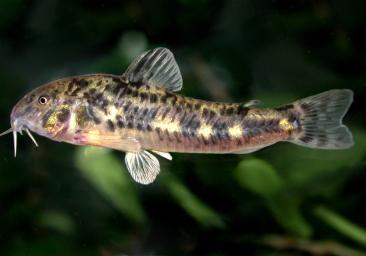
| ⇓ Zebra Pleco (Hypancistrus zebra) Data Sheet | |
|---|---|
| Scientific Name | Hoplisoma micracanthum Regan, 1912 |
| Common Names | Andes Cory Andes-pansermalle (Danish, Denmark) |
| Type Locality | Salta [Lesser, Bermejo River basin], 24°46'S, 65°28'W, Argentina [probably 24°40'39.50"S, 65°28'32.64"W]. |
| Synonym(s) | Corydoras micracanthus, Hoplisoma micracanthum, Urkumayu micracanthum |
| Pronunciation | hop lee so mah |
| Etymology | The genus name is latin for wavy, referring to “dark purplish spots tending to run together, forming undulating longitudinal bands” - a common if not uniform colouration pattern found in this genus. |
| ⇓ Species Information | |
| Size | 40mm or 1.6" SL. Find near, nearer or same sized spp. |
| Sexing | Females grow larger and are more full-bodied, this is best observed from above the fish. Males will typically have more pointed as opposed to more rounded fin tips as they mature. |
| ⇓ Habitat Information | |
| Distribution | South America: western tributaries of Paraná River in Salta, Argentina. La Plata, Paraná, Middle Paraná, Bermejo, Upper Bermejo, Itau (click on these areas to find other species found there) La Plata, Paraná, Middle Paraná, Bermejo, Upper Bermejo (click on these areas to find other species found there) Login to view the map. |
| IUCN Red List Category | Not Evaluated , a distribution map is available on the IUCN species page. Last assessed 2026. |
| ⇓ Husbandry Information | |
| Feeding | Will readily accepted all prepared foods that reach the bottom of the aquarium such as tablets, granules and larger flakes. Live (or frozen) foods such as bloodworm, white worm, grindal worm (Enchytraeus), Daphnia and Tubifex are readily accepted and good for conditioning groups of fishes for spawning. User data. |
| Furniture | Ideally, and close to mandatory, substrate should be sand, but rounded gravel is an imperfect alternative. Avoid keeping over rough edged (chipped) gravel or sharp sand. This will increase the risk of damage to the fishes barbels when it tries to dig. Substrate should be bordered with driftwood and aquatic plants leaving an open area for them to search for food and swim. The shade provided by overhanging rock work, arching bogwood, tall or floating plants are all that is required to settle a group of these fishes. |
| Compatibility | A peaceful, shoaling, community fish. |
| Breeding Reports | There is no breeding report. |
| ⇓ Further Information | |
| Reference | Annals and Magazine of Natural History (Series 8) v. 10 (no. 56), pp 211. |
| Wishlists | There is no wish to keep this species. |
| Spotters | There is no record of this fish being seen. |
| ⇓ More Resources | |
| Forum BBCode | |
| Find CLOG | 2 mentions on the forum, starting 15th Jun 18 |
 | Look up H. micracanthum on PlanetCatfish.com |
 | Look up H. micracanthum on Fishbase |
 | Look up H. micracanthum on Encyclopedia of Life |
 | Look up H. micracanthum on Global Biodiversity Information Facility |
 | LFS label creator ARN ref:1.1.1580.2493 |
| Last Update | Sat Jun 28, 2025 8:21 am (Species record created: Sun Jun 27, 2010 11:26 am) |
