
PAGE_HEADER

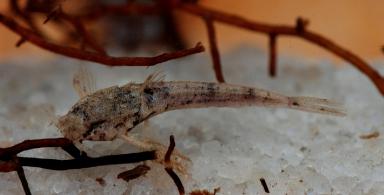
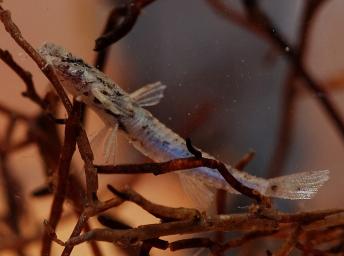
| ⇓ Zebra Pleco (Hypancistrus zebra) Data Sheet | |
|---|---|
| Scientific Name | Scoloplax baskini Rocha, de Oliveira & Rapp Py-Daniel, 2008 |
| Common Name | |
| Type Locality | Nova Aripuanã, rio Aripuanã, igarapé Palhalzinho, 5°59'32.3''S, 60°12'35''W, Amazonas State, Brazil. |
| Synonym(s) | |
| Pronunciation | SKOW low plax |
| Etymology | Scoloplax: From the Greek skolos, meaning thorn and plax, meaning plate; in reference to the moveable dermal bone on top of snout (rostral plate) that is studded with large integumentary teeth. Species name in honour of Jonathan Baskin for his significant contributions to Neotropical ichthyology including the description of the genus Scoloplax. |
| ⇓ Species Information | |
| Size | 16mm or 0.6" SL. Find near, nearer or same sized spp. |
| Identification | Species of the neotropical family Scoloplacidae are distinguished from other Siluriformes by the presence of a conspicuous shield-shaped rostral plate bearing numerous large and recurved odontodes. Scoloplacidae is a monogeneric family endemic to South America and known from the Amazon, Paraguay, and Parana basins. The worlds smallest known catfish are from this genus, the smallest is most likely S. dolicholophia. From the original description:Body overall brownish, more pigmented laterally with wide longitudinal dark brown stripe along lower region of trunk from pectoral to caudal fin. Mid-ventral plate series less pigmented. Dorsal part of body pale except for three narrow dark saddles. First saddle faint, at dorsal fin origin; other two saddles darker and evenly spaced between dorsal and caudal fins. Ventral portion of body pale, creamcolored, sometimes with dark pigment concentrated along lateral edges and more diffuse pigment across abdomen. Dorsal fin darkly pigmented along base and hyaline distally. Pectoral fin largely hyaline except for dark spots clustered in spear-like submarginal band. Pelvic fin largely hyaline except for faint dark submarginal band. Anal fin with two thin dark transverse bands, one near base and the other near mid-length. Base of caudal fin with dark brown spot extending anteriorly onto caudal peduncle. Remaining caudal fin hyaline except for dark pigment forming blotchy subterminal distal band. |
| Sexing | Larger male specimens with large, fleshy tissue at ventral opening. Females without tissue sack. |
| ⇓ Habitat Information | |
| Distribution | South America: Brazil. Rio Aripuanã, a right-bank tributary of the middle rio Madeira. Amazon, Middle Amazon (Solimoes), Madeira, Aripuanã (click on these areas to find other species found there) Login to view the map. |
| IUCN Red List Category | Not Evaluated , a distribution map is available on the IUCN species page. Last assessed 2026. |
| ⇓ Husbandry Information | |
| Furniture | In the wild found among leaf litter. |
| Breeding | No member of this genus has been bred in the aquarium. |
| Breeding Reports | There is no breeding report. |
| ⇓ Further Information | |
| Literature & References | Original Description: <b> Rocha, M. S., R. R. de Oliveira and L. H. Rapp Py-Daniel</b> 2008 <a href="http://dx.doi.org/10.1590/S1679-62252008000300005" target=_blank>See ref. online</a> |
| Wishlists | There is no wish to keep this species. |
| Spotters | There is no record of this fish being seen. |
| ⇓ More Resources | |
| Forum BBCode | |
| Find CLOG | 1 mention on the forum, starting 15th Sep 09 |
 | Look up S. baskini on PlanetCatfish.com |
 | Look up S. baskini on Fishbase |
 | Look up S. baskini on Encyclopedia of Life |
 | Look up S. baskini on Global Biodiversity Information Facility |
 | LFS label creator ARN ref:1.25.127.2159 |
| Last Update | Wed Jan 01, 2025 8:23 pm (Species record created: Fri Dec 19, 2008 3:24 pm) |
