
PAGE_HEADER
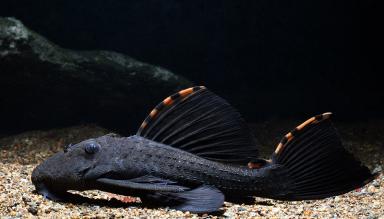
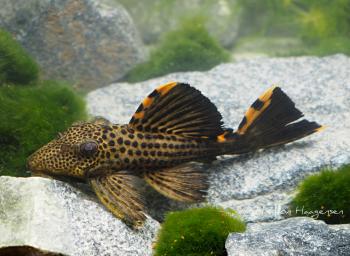
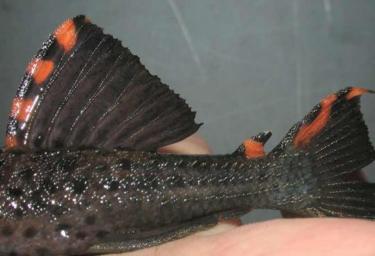
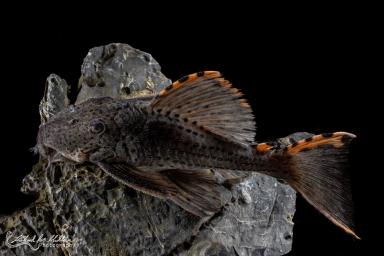
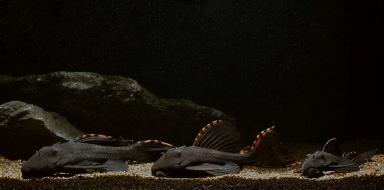 Trio of Triactis!
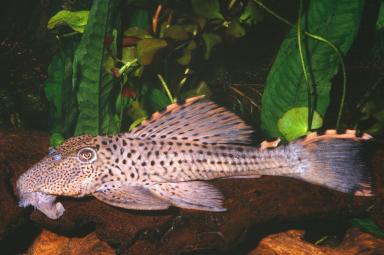
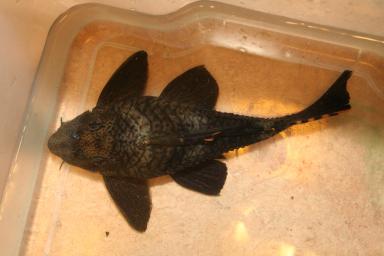 Gravid female

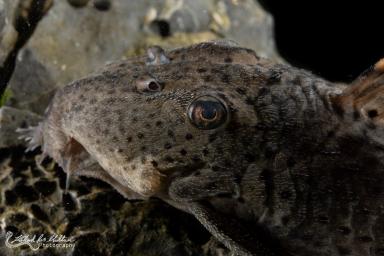 Closee-up of head
 Close-up of mouth
 Close-up of dorsal fin
 Ventral view

 Close-up of caudal fin

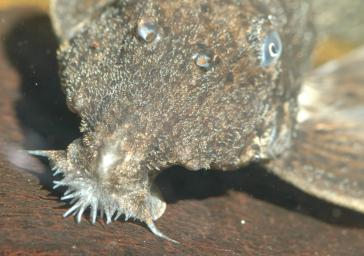 Close-up of mouth
 Seven day old fry
 Nine day old fry
 Thirty five day old juveniles
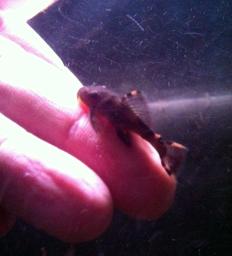 F1 Juvenile
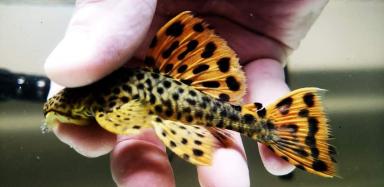 "Dragon fin" variety
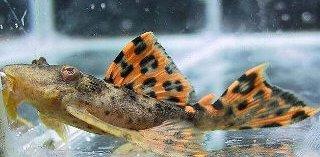 "Tiger Fin" variety
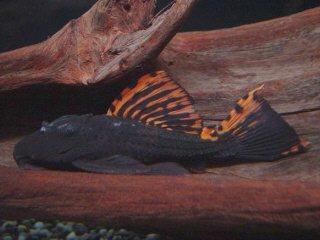 "Tiger Fin" variety
 Female
 Male in his cave
 Male
| ⇓ Zebra Pleco (Hypancistrus zebra) Data Sheet | |
|---|---|
| Scientific Name | Leporacanthicus triactis Isbrücker, Nijssen & Nico, 1992 |
| Common Names | L091, Three Beacon Pleco Orangestiplet Sugemalle (Danish, Denmark), Redfin Blackspot (German, Germany) |
| Type Locality | Caño Mavaquita, Upper Orinoco, Amazonas, Venezuela, about 2°12'30"N, 65°05'30"W. |
| Synonym(s) | |
| Pronunciation | lepor ah KAN thi cuss - try ACT iss |
| Etymology | Latin, lepus, leporis = rabbit + Greek, akantha = thorn. |
| ⇓ Species Information | |
| Size | 247mm or 9.7" SL. Find near, nearer or same sized spp. |
| Identification | All Leporacanthicus spp. have a small backwards facing slightly proud blunt thorn-like plate on top of their heads. Depending on its age, sex, mood or surroundings the fish can vary from brown or grey to charcoal black. It has three vivid orange to yellow blotches; one each on all three of the non-paired fins. |
| Sexing | Adult males have a much longer and broader head with small odontodes on the sides of head, more odontodes on pectoral fin spine and on the whole body, a bigger dorsal fin and normally a prettier coloration. |
| ⇓ Habitat Information | |
| Distribution | South America: Upper Orinoco River basin in Colombia and Venezuela. Orinoco, Upper Orinoco (click on these areas to find other species found there) Login to view the map. |
| IUCN Red List Category | Least Concern , a distribution map is available on the IUCN species page. Last assessed 2020. |
| pH | 6.0 - 7.6 |
| Temperature | 24.0-27.0°C or 75.2-80.6°F (Show species within this range) |
| ⇓ Husbandry Information | |
| Feeding | Not a true vegetarian so a wide variety of foods, including algae wafers, cucumber or courgette (zucchini), frozen bloodworm, prawns, shrimps and tablet food. Shelled crustaceans or mollusks appear favourite foods but should be fed sparingly or used for conditioning. User data. |
| Furniture | Prefers bogwood and darker rocks. |
| Compatibility | Gets on with small lively catfish but avoid too many other larger bottom dwellers (unless space permits) due to the territorial disputes. |
| Suggested Tankmates | Most small to medium community fish. Tetras and South American cichlids are ideal, unless you really go for it when providing a strong water current. |
| Breeding | See catfish of the month article (link below). |
| Breeding Reports | There is no breeding report. |
| ⇓ Further Information | |
| Literature & References | Original Description: <b> Isbrücker, I. J. H., H. Nijssen and L. G. Nico</b> 1992 (23 Dec.) <a href="https://www.datz.de/images/stories/Erstbeschreibungen/Leporacanthicus%20triactis-1993-1-Teil1.pdf" target=_blank>Download ref. <img src="images/pdficon_small.gif" border="0" alt="" /></a> |
| Wishlists | There is no wish to keep this species. |
| Spotters | There is no record of this fish being seen. |
| ⇓ More Resources | |
| Forum BBCode | |
| Find CLOG | 49 mentions on the forum, starting 6th Dec 04 |
 | Look up L. triactis on PlanetCatfish.com |
 | Look up L. triactis on Fishbase |
 | Look up L. triactis on Encyclopedia of Life |
 | Look up L. triactis on Global Biodiversity Information Facility |
 | LFS label creator ARN ref:1.4.64.200 |
| Last Update | Wed Jan 01, 2025 8:01 pm (Species record created: Wed Apr 25, 2001 7:00 am) |
