
PAGE_HEADER
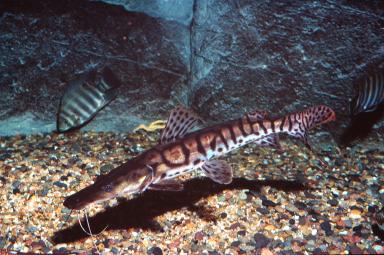
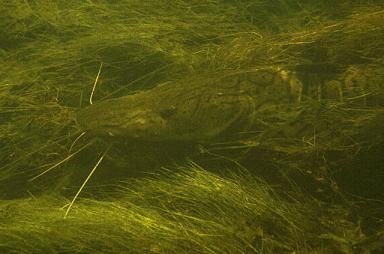
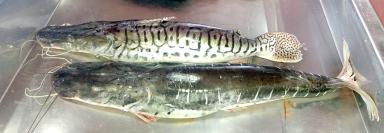
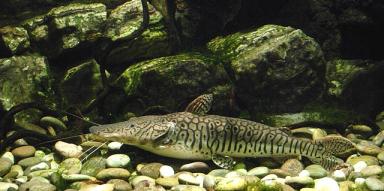 Adult
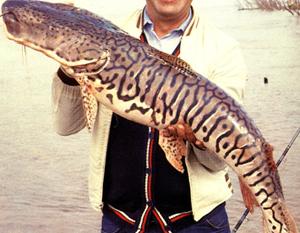 Adult
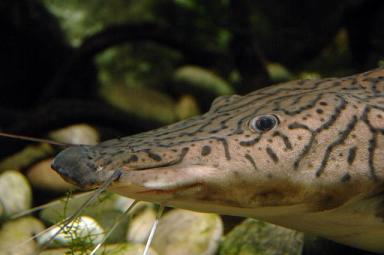 Close-up of head
 Young boy holding adult fish
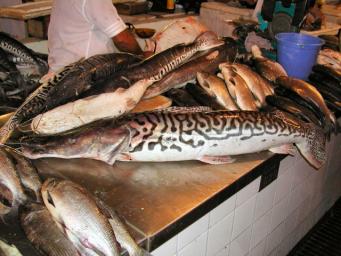 Taken at a fish market in Manaus, Brazil
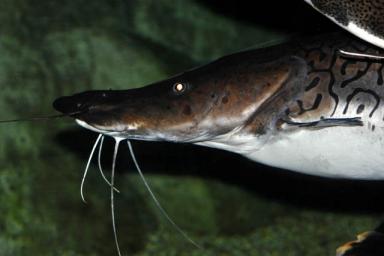 Close-up of head
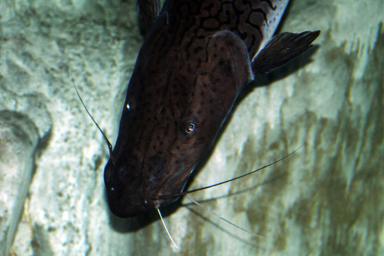 Dorsal view of head
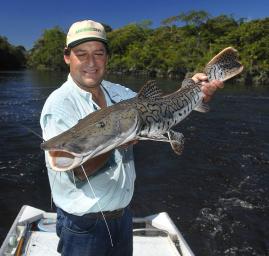
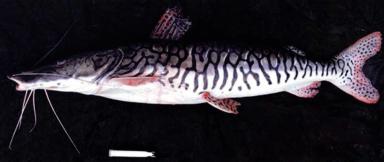
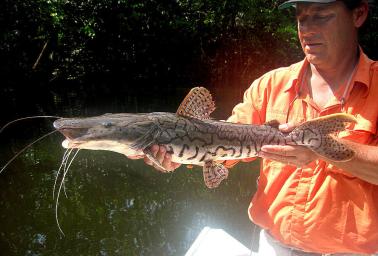 Rio Sucundurí
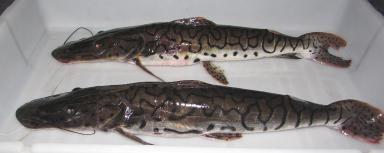 Rio Nhamundá, Brazil
 Manaus
| ⇓ Zebra Pleco (Hypancistrus zebra) Data Sheet | |
|---|---|
| Scientific Name | Pseudoplatystoma reticulatum Eigenmann & Eigenmann, 1889 |
| Common Name | Reticulated Shovelnose |
| Type Locality | Rio Negro, Amazonas, Brazil. |
| Synonym(s) | Pseudoplatystoma fasciatum reticulatum |
| Pronunciation | SUE doh plah tee stow mah |
| Etymology | (Greek)Pseudos=False +(Greek)platys=flat +(Greek)stoma=mouth. There is 1 other speciesGlyptosternon reticulatum with this name. |
| ⇓ Species Information | |
| Size | 800mm or 31.5" SL. Find near, nearer or same sized spp. |
| General Remarks | See also Zootaxa 1512. |
| ⇓ Habitat Information | |
| Distribution | Central Amazon basin and Paraná River: Argentina, Bolivia, Brazil, Paraguay and Uruguay. Amazon, Middle Amazon (Solimoes) (click on these areas to find other species found there) Amazon, Lower Amazon, Nhamundá (click on these areas to find other species found there) La Plata, Paraná (click on these areas to find other species found there) Amazon, Middle Amazon (Solimoes), Madeira, Canumã, Sucundurí (click on these areas to find other species found there) La Plata, Paraná, Paraguay, Upper Paraguay, Miranda Imported (click on these areas to find other species found there) Login to view the map. |
| IUCN Red List Category | Least Concern , a distribution map is available on the IUCN species page. Last assessed 2020. |
| ⇓ Husbandry Information | |
| Feeding | Carnivore feeding on a very mixed and varied diet including earthworms, whole prawns, mussels, fish fillets, floating sticks/pellets and catfish pellets. User data. |
| Furniture | Large, spacious tank with open space for night time cruising. A large shady bogwood root or pipe that the catfish can retreat to during the day is also required. Ensure the heater is in the open and not in a place where the catfish may try and hide. When larger a hide is not necessary. |
| Compatibility | Ideally suited to life with other large fish. These catfish are predatory and will eat smaller fish if hungry. Claimed by some to behave aggressively/territorially towards other catfish. |
| Suggested Tankmates | Other large catfish such as Oxydoras, Pterodoras and Megalodoras. Other fish should always be over half of its body length. |
| Breeding | Unreported in the aquarium. |
| Breeding Reports | There is no breeding report. |
| ⇓ Further Information | |
| Reference | Proceedings of the California Academy of Sciences (Series 2) v. 2, pp 30. |
| Wishlists | There is no wish to keep this species. |
| Spotters | There is no record of this fish being seen. |
| ⇓ More Resources | |
| Forum BBCode | |
| Find CLOG | 5 mentions on the forum, starting 25th Jul 10 |
 | Look up P. reticulatum on PlanetCatfish.com |
 | Look up P. reticulatum on Fishbase |
 | Look up P. reticulatum on Encyclopedia of Life |
 | Look up P. reticulatum on Global Biodiversity Information Facility |
 | LFS label creator ARN ref:1.15.116.1943 |
| Last Update | Wed Jan 01, 2025 8:21 pm (Species record created: Sun Apr 22, 2001 7:00 am) |
