
PAGE_HEADER

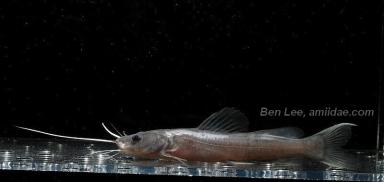
 Juvenile
 Juvenile


 Mekong
 Srinakarin Reservoir, Thailand


 Juvenile


 Juvenile

| ⇓ Zebra Pleco (Hypancistrus zebra) Data Sheet | |
|---|---|
| Scientific Name | Hemibagrus wyckioides (Fang & Chaux, 1949) |
| Common Names | Asian Red Tailed Catfish Artc, Asian Redfin Catfish, Common Baung, Pla Kayeng Thong (Thai, Thailand), Rødhalet Pigmalle (Danish, Denmark), Trey Khya (Khmer, Cambodia) |
| Type Locality | Cambodia. |
| Synonym(s) | Macrones wyckioides, Mystus aubentoni, Mystus wyckioides, Mystus wyckoides |
| Pronunciation | HEM ee BAG russ - wik oi dees |
| Etymology | From the Greek hemi- meaning half and bagrus, the catfish genus. |
| ⇓ Species Information | |
| Size | 1300mm or 51.2" SL. Find near, nearer or same sized spp. |
| Identification | Members of the genus Hemibagrus are bagrid catfishes that can attain standard lengths of up to 800 mm and are found in large rivers throughout the Indian subcontinent,Southeast and East Asia. Members of this genus have depressed heads,rugose head shields not covered by skin,a slender occipital process and moderately long adipose fins. Caudal fin whole or partially red-coloured. Hemibagrus aubentoni (Desoutter, 1975) is a junior synonym according to Ng and Rainbooth, 1999. This is the largest bagrid catfish in central Indochina reaching 950mm and 70-80 kg. |
| Sexing | Males possess a genital papilla just fore of the anal-fin. |
| ⇓ Habitat Information | |
| Distribution | Asia: Mekong basin. Reported from Chao Phraya, Maeklong and Peninsular Thailand river systems. Thailand Waters, Chao Praya (click on these areas to find other species found there) Mekong (click on these areas to find other species found there) Login to view the map. |
| IUCN Red List Category | Least Concern , a distribution map is available on the IUCN species page. Last assessed 2011. |
| pH | 6.0 - 7.6 |
| Temperature | 19.0-29.0°C or 66.2-84.2°F (Show species within this range) |
| Other Parameters | Water should be neutral and soft, although this fish is very adaptable. A good current is appreciated. Water changes should be large and frequent. |
| ⇓ Husbandry Information | |
| Feeding | Will eat anything and everything. In nature the diet consists of fish, shrimp, and crab. Like all large predatory catfishes, it should only be fed every two to four days once it reaches 12 inches in length. User data. |
| Furniture | Normally found over rocky substrates at irregular depths. Large driftwood and rocks should be used to make a cave for the fish to hide in. All filters, heaters, etc should be behind a protective barrier as this fish can, and will, bite through a heater. This is a fish for someone with a very large tank that wants a true ''pet'' fish. |
| Compatibility | Not compatible with other fishes due to its nasty disposition. Many claim that H. wyckioides is the most aggressive freshwater fish in the world. Given this fish's ability to bite, it is not even safe with tank mates too large to swallow since it will simply take bites out them. |
| Breeding | Unknown. Roberts (1993) claims that H. wyckioides does not migrate to spawn, but reproduces locally. It enters the flooded forest in the wet season (July-October). |
| Breeding Reports | There is no breeding report. |
| ⇓ Further Information | |
| Reference | Bulletin du Muséum National d'Histoire Naturelle (Série 2) v. 21 (no. 2), pp 199, Fig. 3 |
| Wishlists | There is no wish to keep this species. |
| Spotters | There is no record of this fish being seen. |
| ⇓ More Resources | |
| Forum BBCode | |
| Find CLOG | 63 mentions on the forum, starting 16th Mar 04 |
 | Look up H. wyckioides on PlanetCatfish.com |
 | Look up H. wyckioides on Fishbase |
 | Look up H. wyckioides on Encyclopedia of Life |
 | Look up H. wyckioides on Global Biodiversity Information Facility |
 | LFS label creator ARN ref:1.8.13.19 |
| Last Update | Thu Jan 02, 2025 9:36 am (Species record created: Tue Apr 17, 2001 7:00 am) |
