
PAGE_HEADER
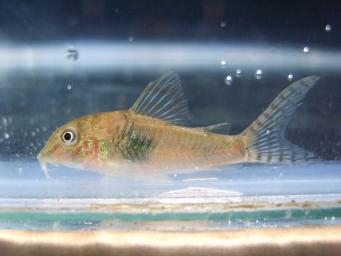
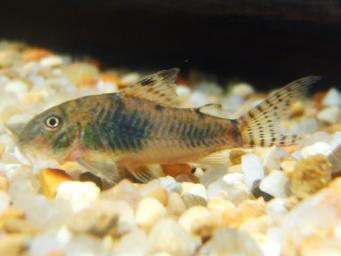
| ⇓ Zebra Pleco (Hypancistrus zebra) Data Sheet | |
|---|---|
| Scientific Name | Corydoras negro Knaack, 2004 |
| Common Names | Rio Negro Cory Negro-pansermalle (Danish, Denmark) |
| Type Locality | Río Negro (main stream), ''Restgewässer'', río Blanco system, Raum Urubicha, Provincia Nuflo de Chavez, Departamento Santa Cruz, Bolivia, 15°31.502'S, 62°56.208'W. |
| Synonym(s) | |
| Pronunciation | kor ee doh rass. |
| Etymology | Cory = helmet, doras = skin. In this case it was incorrectly used to mean armour (cuirasse) instead of skin in allusion to the dual rows of plates that run along the flanks of this genus. Named for the Rio Negro in Bolivia where this species was found. |
| ⇓ Species Information | |
| Size | 51mm or 2" SL. Find near, nearer or same sized spp. |
| Identification | Corydoras are identified by their twin rows of armour plates along the flanks and by having fewer than 10 dorsal fin rays. They are most commonly confused with the other genera in the sub-family, namely Brochis, Scleromystax and Aspidoras. |
| Sexing | Females grow larger and are more full-bodied, this is best observed from above the fish. Males will typically have more pointed as opposed to more rounded fin tips as they mature. |
| ⇓ Habitat Information | |
| Distribution | South America: Bolivia. Amazon, Middle Amazon (Solimoes), Madeira, Mamoré, Guaporé (Iténez), Blanco (click on these areas to find other species found there) Amazon, Middle Amazon (Solimoes), Madeira, Mamoré, Guaporé (Iténez), Blanco, Negro (Bolivia) (click on these areas to find other species found there) Login to view the map. |
| IUCN Red List Category | Data Deficient , a distribution map is available on the IUCN species page. Last assessed 2014. |
| ⇓ Husbandry Information | |
| Feeding | Will readily accepted all prepared foods that reach the bottom of the aquarium such as tablets, granules and larger flakes. Live (or frozen) foods such as bloodworm, white worm, grindal worm (Enchytraeus), Daphnia and Tubifex are readily accepted and good for conditioning groups of fishes for spawning. User data. |
| Furniture | Ideally substrate should be sand, but rounded gravel is an imperfect alternative. Avoid keeping over rough edged (chipped) gravel, this will increase this risk of damage the fishes barbels when it tries to dig. Substrate should be bordered with driftwood and aquatic plants leaving an open area for them to search for food and swim. The shade provided by overhanging rock work, arching bogwood, tall or floating plants are all that is required to settle these fishes. |
| Compatibility | A peaceful, shoaling, community fish. |
| Breeding | Spawned by Eric Bodrock in January 2009 who provided these notes. Parents were tank-raised fish, three males and three females. Spawning took place in a 30-gallon tank with other fish present, all catfish types. A pH of 6.6, TDS of 264 ppm and temperature of 78°F (25.5°C) were maintained steady. About 120 or more tiny eggs were deposited in Java moss. Fry grow quickly; juveniles slow down. |
| Breeding Reports | There is no breeding report. |
| ⇓ Further Information | |
| Reference | Zoologische Abhandlungen; Staatliches Museum für Tierkunde in Dresden v. 54, pp81 Figs. 22-29. |
| Wishlists | There is no wish to keep this species. |
| Spotters | There is no record of this fish being seen. |
| ⇓ More Resources | |
| Forum BBCode | |
| Find CLOG | No mentions on the forum |
 | Look up C. negro on PlanetCatfish.com |
 | Look up C. negro on Fishbase |
 | Look up C. negro on Encyclopedia of Life |
 | Look up C. negro on Global Biodiversity Information Facility |
 | LFS label creator ARN ref:1.1.686.1896 |
| Last Update | Thu Sep 10, 2026 5:44 pm (Species record created: Sun Jul 23, 2006 7:00 am) |
