
PAGE_HEADER

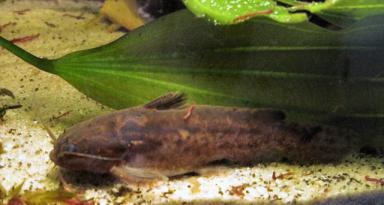
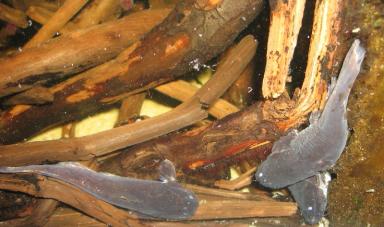
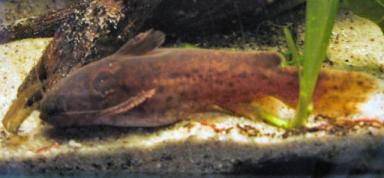
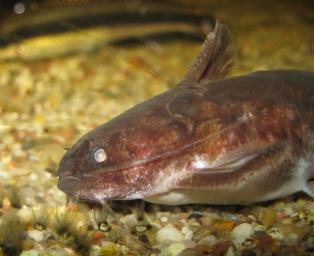 Close-up of head
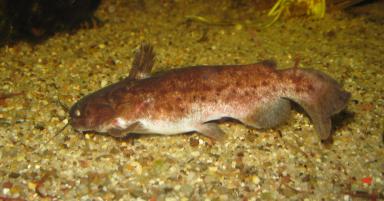
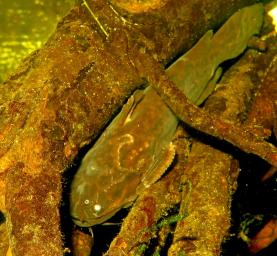
| ⇓ Zebra Pleco (Hypancistrus zebra) Data Sheet | |
|---|---|
| Scientific Name | Spinipterus acsi Akama & Ferraris, 2011 |
| Common Name | |
| Type Locality | Caño "Santa Rita" (right bank tributary of river Nanay), 3.32 mi north-west of centre of Iquitos, 3°45'23"S, 73°17'28"W, Maynas Province, Depto. Loreto, Peru. |
| Synonym(s) | |
| Pronunciation | spi NIP terr uss. |
| ⇓ Species Information | |
| Size | 80mm or 3.1" SL. Find near, nearer or same sized spp. |
| Identification | Some of the unique features which distinguish Spinipterus from other auchenipterids are: pectoral and dorsal-fin spines with four prominent rows of serrations; lateral margin of the skull roofing bones ornamented with a single row of spines; and adducted dorsal fin rests into a mid-dorsal groove. Spinipterus also differs from most other auchenipterid genera by having lower counts for some fin rays. At a first glance this species looks like a miniature Trachycorystes. The colour (reddish brown) is rather unusual for an Auchenipterid. |
| Sexing | As with all Auchenipteridae, mature males exhibit a modified anal fin which is used for internal fertilisation. |
| General Remarks | A very shy species that needs extra attention, especially in the beginning. One must see to it that it feeds well, otherwise it just starves. Feeding should take place after lights out. Doesn't like the company of larger fish. Once settled it looses its shyness and gets more and more visible. Contrary to most other auchenipterids, this species will not let go once its hiding place is above and/or out of the water, so see to it that it doesn't suffocate by accident. |
| ⇓ Habitat Information | |
| Distribution | Upper Amazon Amazon, Juruá (click on these areas to find other species found there) Amazon, Upper Amazon, Nanay (click on these areas to find other species found there) Login to view the map. |
| IUCN Red List Category | Data Deficient , a distribution map is available on the IUCN species page. Last assessed 2020. |
| pH | 6.4 - 7.0 |
| Temperature | 22.0-30.0°C or 71.6-86°F (Show species within this range) |
| ⇓ Husbandry Information | |
| Feeding | When new in a tank, it can only - and with great difficulty - be lured out of its hiding place with frozen foods, especially mosquito larvae. Will not take flakes or pellets in the beginning; it actually takes a lot of time before they get used to these kinds of dry food. User data. |
| Furniture | Lots of driftwood. |
| Compatibility | Smaller or equally sized fishes, which shouldn't be aggressive. Dither fish may prove very useful to make this species less shy. |
| Suggested Tankmates | Other small Auchenipteridae and/or Callichthyidae (Corydoras, Dianema) combined with a school of Characins and/or Cyprinids. |
| Breeding | Unreported in the aquarium. |
| Breeding Reports | There is no breeding report. |
| ⇓ Further Information | |
| Literature & References | Original Description: <b> Akama, A. and C. J. Ferraris, Jr.</b> 2011 (11 Aug.) |
| Wishlists | There is no wish to keep this species. |
| Spotters | There is no record of this fish being seen. |
| ⇓ More Resources | |
| Forum BBCode | |
| Find CLOG | 8 mentions on the forum, starting 1st Oct 06 |
 | Look up S. acsi on PlanetCatfish.com |
 | Look up S. acsi on Fishbase |
 | Look up S. acsi on Encyclopedia of Life |
 | Look up S. acsi on Global Biodiversity Information Facility |
 | LFS label creator ARN ref:1.22.619.1885 |
| Last Update | Wed Jan 01, 2025 7:53 pm (Species record created: Fri Jul 14, 2006 7:00 am) |
