
PAGE_HEADER
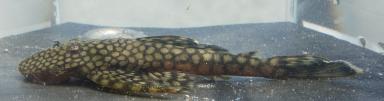 L385
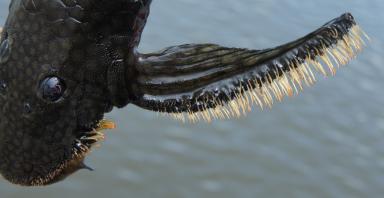 L385, Close-up of pectoral fin
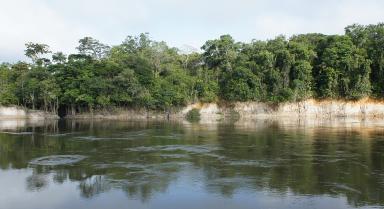 Habitat: Rio Nhamundá, Brazil
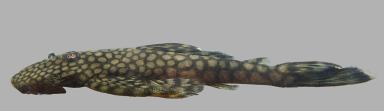 L385, Rio Nhamundá, Brazil
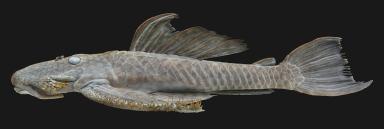 L385
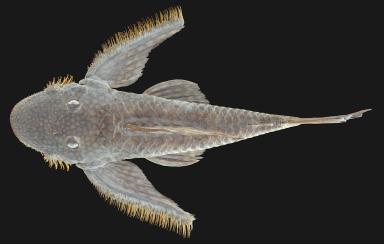 L385, Dorsal view
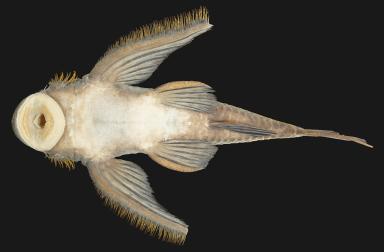 L385, ventral view
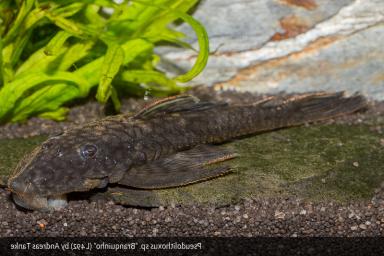 L492
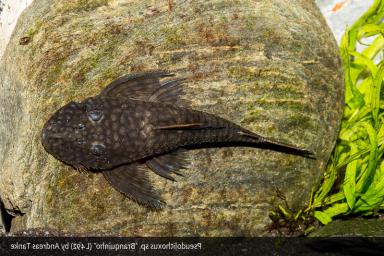 L492, Dorsal view
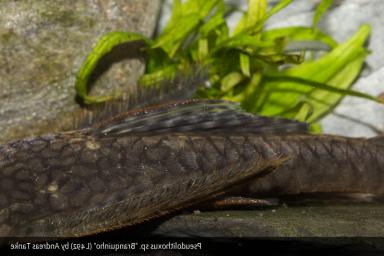 L492
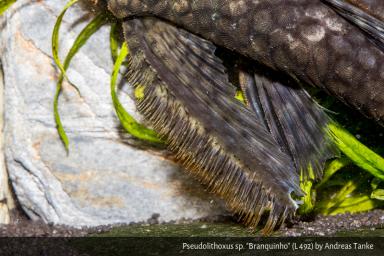 L492, Pectoral spine
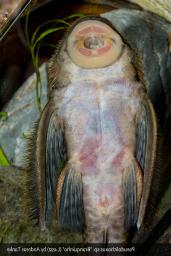 L492, Ventral view
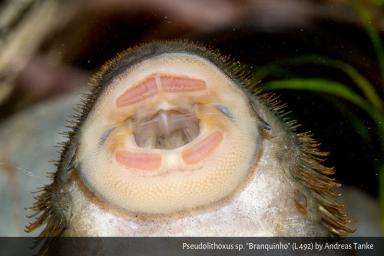 L492, Male, close-up of mouth
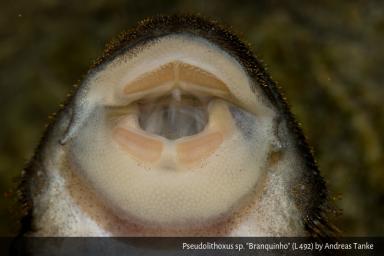 L492, Female, close-up of mouth
| ⇓ Zebra Pleco (Hypancistrus zebra) Data Sheet | |
|---|---|
| Scientific Name | Pseudolithoxus kinja Bifi, de Oliveira, Rapp Py-Daniel & Collins, 2018 |
| Common Names | L385, Green Flyer Pleco L492, Grøn Flyversugemalle (Danish, Denmark) |
| Type Locality | Rio Uatumã, Santa Luzia de Jacarequara, São Sebastião do Uatumã, Amazonas, Brazil, 02°26'46.7"S, 58°16'31.9"W. |
| Synonym(s) | |
| Pronunciation | sue doh lith ox uss. |
| Etymology | Greek, pseudes = false + Greek, lithos = stone + Greek, oxys = sharp. ‘Kinja’, meaning the ‘true people’, is how the Waimiri-Atroari indigenous people refer to themselves. The Kinja people inhabit areas surrounding the rio Uatuma and part of the rio Negro in the states of Amazonas and Roraima, Brazil. |
| ⇓ Species Information | |
| Size | 171mm or 6.7" SL. Find near, nearer or same sized spp. |
| Identification | Pseudolithoxus kinja is diagnosed from all congeners by having a colour pattern of large pale spots on a dark background (vs. pale bands on a dark background in P. kelsorum and P. tigris; small pale dots on a dark background in P. anthrax and P. nicoi; dark spots on a lighter background in P. dumus). Furthermore, P. kinja can be diagnosed from P. anthrax and P. nicoi by having dark bands on the caudal fin (vs. absence). |
| Sexing | Young specimens and fully reproductive males have a urogenital papilla which is well-developed as a small elongate tube located immediately behind the anal opening. This small tube is almost perpendicular to the main plane of the body, facing ventrally with a tiny opening at the tip. The condition in females is similar to that found in other hypostomines. In mature males with developed testes, the third branched pelvic-fin ray becomes elongated, and the whole fin becomes lanceolate. In the anal fin of mature males, the second simple ray becomes almost twice the length of the first short ray, and the first, second, and third branched rays also become elongate (the third the longest); owing to this fin-ray elongation in mature males, the whole anal fin becomes larger and has a strongly curved posterior border rather than the regular straight border usually seen in females or non-reproductive males. |
| General Remarks | L385 was first reported from the rio Trombetas. L492 was first reported from the rio Jauaperi. |
| ⇓ Habitat Information | |
| Distribution | Rio Uatuma, rio Nhamunda and rio Guariba (rio Madeira-Aripuana drainage). Amazon, Middle Amazon (Solimoes), Madeira, Aripuanã, Guariba (click on these areas to find other species found there) Amazon, Middle Amazon (Solimoes), Negro, Lower Negro, Jauaperi (click on these areas to find other species found there) Amazon, Lower Amazon, Nhamundá (click on these areas to find other species found there) Amazon, Lower Amazon, Trombetas (click on these areas to find other species found there) Amazon, Lower Amazon, Uatumã (click on these areas to find other species found there) Login to view the map. |
| IUCN Red List Category | Not Evaluated |
| Other Parameters | In the wild, water temperature and conductivity were 28.3C and 6 mS/cm at one collection site. The river was a clearwater river with strong current. |
| ⇓ Husbandry Information | |
| Furniture | This species is found in shallow, fast-flowing water over a substrate of eroded bedrock, living amongst narrow cracks between rocks. The species was not found associated with woody-debris sites, or rocky sites lacking any appreciable water current. |
| Suggested Tankmates | In nature, this fish is found living with Leporinus, Symphysodon, Cichla, Pimelodella, Tatia, Dekeyseria, Peckoltia, and Lasiancistrus. |
| Breeding | Unreported in the aquarium. |
| Breeding Reports | There is no breeding report. |
| ⇓ Further Information | |
| Literature & References | Original Description: <b> Collins, R. A., A. G. Bifi, R. R. de Oliveira, E. D. Ribeiro, N. K. Lujan, L. H. Rapp Py-Daniel and T. Hrbek</b> 2018 (23 May) <a href="https://doi.org/10.1080/14772000.2018.1468362" target=_blank>See ref. online</a> |
| Wishlists | There is no wish to keep this species. |
| Spotters | There is no record of this fish being seen. |
| ⇓ More Resources | |
| Forum BBCode | |
| Find CLOG | 4 mentions on the forum, starting 22nd Apr 14 |
 | Look up P. kinja on PlanetCatfish.com |
 | Look up P. kinja on Fishbase |
 | Look up P. kinja on Encyclopedia of Life |
 | Look up P. kinja on Global Biodiversity Information Facility |
 | LFS label creator ARN ref:1.4.218.1723 |
| Last Update | Wed Jan 01, 2025 8:12 pm (Species record created: Tue Dec 19, 2006 12:16 pm) |
