
PAGE_HEADER
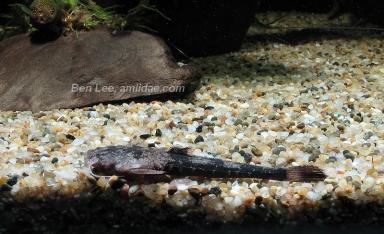
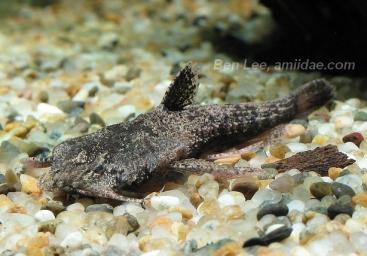
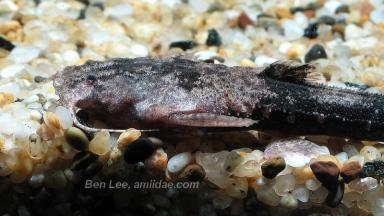
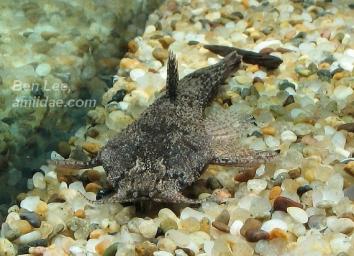
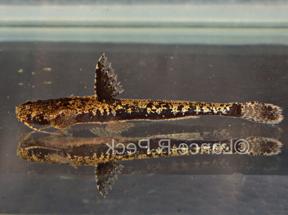
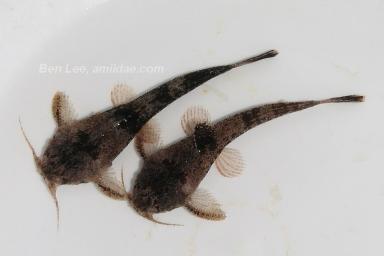
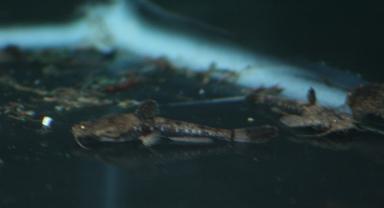
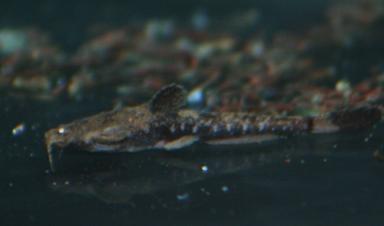
| ⇓ Zebra Pleco (Hypancistrus zebra) Data Sheet | |
|---|---|
| Scientific Name | Pseudobunocephalus quadriradiatus (Mees, 1989) |
| Common Name | |
| Type Locality | Río Samiria, Chinguito [=Cocha Shinguita or Shirguita], Peru. |
| Synonym(s) | Bunocephalus quadriradiatus, Dysichthys quadriradiatus |
| Pronunciation | sue doh boon oh SEFF ah luss. |
| Etymology | The generic name is a combination of the Greek word pseudes, meaning false or deceptive, plus the aspredinid genus Bunocephalus. It alludes to the fact that members of this genus have previously been mistaken for juveniles of various species of Bunocephalus. |
| ⇓ Species Information | |
| Size | 32mm or 1.3" SL. Find near, nearer or same sized spp. |
| Identification | Relatively small (less than 80 mm SL) banjo catfishes distinguished from other aspredinids by having the following unique characters: the dentary teeth are restricted to broad tooth patch near symphysis of lower jaw (vs. more broadly distributed along the length of the dentary); the metapterygoid lacks a bony connection with the quadrate; the posterior end of autopalatine is distinctly forked and bears two separate terminal cartilages; the absence of the fourth pharyngobranchial; the absence of gill rakers on all branchial arches; and the lack of bifid hemal spines on vertebrae that articulate with anal-fin pterygiophores. Other characters not unique to this genus, but still useful for distinguishing it from other aspredinid genera include: the anterior limits of upper and lower jaws are approximately equal (also in Acanthobunocephalus); the lateral line is truncated at approximately the level of the dorsal-fin origin (also in Acanthobunocephalus); the dorsal- and ventral-most principal caudal rays much shorter in length than other principal caudal rays (also in Acanthobunocephalus); the dorsal- and anal-fin membranes are not adnate with body (also in Acanthobunocephalus); the interhyal is absent (also in Hoplomyzon); and the abdominal and precaudal centra lack bony horizontal lamina (also in Dupouyichthys, Ernstichthys, Hoplomyzon and Micromyzon). Reported to grow to 120 mm TL. |
| ⇓ Habitat Information | |
| Distribution | South America: upper Amazon River basin. Amazon, Upper Amazon (click on these areas to find other species found there) Login to view the map. |
| IUCN Red List Category | Data Deficient , a distribution map is available on the IUCN species page. Last assessed 2014. |
| pH | 6.0 - 7.2 |
| Temperature | 20.0-25.0°C or 68-77°F (Show species within this range) |
| Other Parameters | dH 18. |
| ⇓ Husbandry Information | |
| Breeding | Unreported in the aquarium. |
| Breeding Reports | There is no breeding report. |
| ⇓ Further Information | |
| Reference | Proceedings of the Koninklijke Nederlandse Akademie van Wetenschappen (Series C, Biological and Medical Sciences) v. 92 (no. 2), pp 244, Fig. 23. |
| Wishlists | There is no wish to keep this species. |
| Spotters | There is no record of this fish being seen. |
| ⇓ More Resources | |
| Forum BBCode | |
| Find CLOG | 6 mentions on the forum, starting 12th Nov 09 |
 | Look up P. quadriradiatus on PlanetCatfish.com |
 | Look up P. quadriradiatus on Fishbase |
 | Look up P. quadriradiatus on Encyclopedia of Life |
 | Look up P. quadriradiatus on Global Biodiversity Information Facility |
 | LFS label creator ARN ref:1.10.384.1584 |
| Last Update | Thu Jan 02, 2025 9:39 am (Species record created: Fri Jul 01, 2005 7:00 am) |
