
PAGE_HEADER
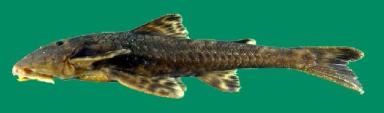
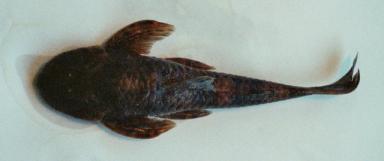
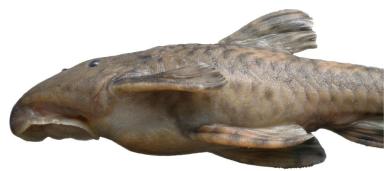 Female
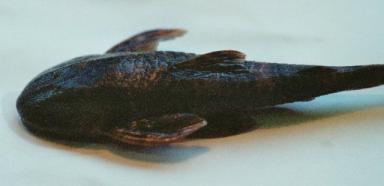
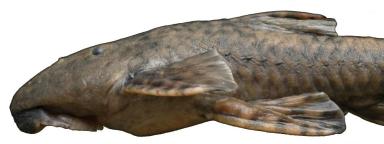 Male
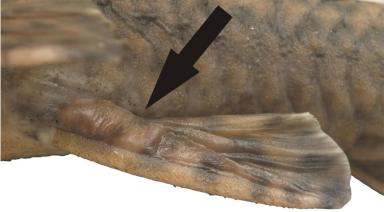 Male, close-up of epidermal growth on pelvic fin
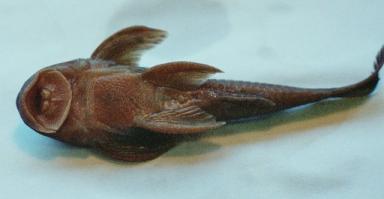
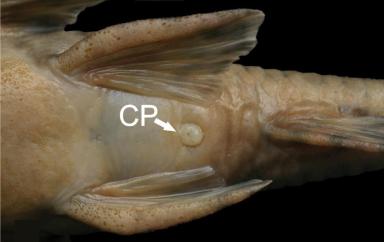 Female, close-up of single anal/urogenital pore
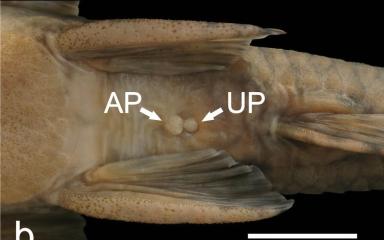 Male, close-up of separate anal & urogenital pores
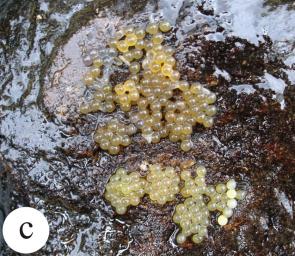 Eggs of different developmental ages under stone
| ⇓ Zebra Pleco (Hypancistrus zebra) Data Sheet | |
|---|---|
| Scientific Name | Neoplecostomus microps (Steindachner, 1877) |
| Common Names | LDA034, Microps-neoplecostomus (German, Germany) Small Eyed Lobe Pleco, Småøjet Kvastsugemalle (Danish, Denmark) |
| Type Locality | Rio de Janeiro (possibly Rio Parahyba), Brazil. |
| Synonym(s) | |
| Etymology | Genus: Greek, neos = new + Greek, plekos,-eos = twisted This specific epithet refers to its small(micro=small) eyes(-ops=eyes). There are 6 other speciesAkysis microps Chaetostoma microps Chiloglanis microps Pareiodon microps Pterosturisoma microps Tachysurus microps with this name. |
| ⇓ Species Information | |
| Size | 102mm or 4" SL. Find near, nearer or same sized spp. |
| Sexing | Male N. microps show an epidermal growth along the pelvic-fin spine, forming a flap that projects toward the side of the body; this flap was observed in juvenile males 32 mm SL and larger. No females showed this epidermal expansion. Another difference observed between the sexes was in the genital area. In females, the anal and urogenital pores were very close, with the middle of the papillae merged, giving the appearance of a single opening. The males showed a separation between the anal and urogenital pores, featuring two distinct and defined openings. Males are generally larger than females. In a survey of sexually mature wild adults, the smallest female and smallest male found were 58.0 mm and 64.0mm, respectively. |
| ⇓ Habitat Information | |
| Distribution | South America: Paraíba do Sul River basin. Rio de Janeiro State Rivers, Macaé (click on these areas to find other species found there) Rio de Janeiro State Rivers, Paraíba do Sul (click on these areas to find other species found there) Login to view the map. |
| IUCN Red List Category | Least Concern , a distribution map is available on the IUCN species page. Last assessed 2021. |
| Temperature | 11.5-25.5°C or 52.7-77.9°F (Show species within this range) |
| Other Parameters | From Brito et al. (2016, Biota Neotrop. vol.16, no.2): At the capture sites, water temperature ranged from 11.6 - 25.3°C, electrical conductivity from 12.2 - 73.2 µS/cm and dissolved oxygen from 7.45 - 10.78 mg/L. |
| ⇓ Husbandry Information | |
| Furniture | In nature, adults and subadults are found in rapids flowing over stones on sandy or muddy substrates. Juveniles below 32mm SL are found almost exclusively in planted stream margins (in nature, mostly Zingiberaceae) with slower currents. |
| Breeding | From Brito et al. (2016, Biota Neotrop. vol.16, no.2): In nature, spawns were found in two sites in the Macaé River basin in November and January, during the rainy season, exclusively in rapid stretches. Of the total of eight spawns found, six were in the upper Macaé River and two in the Boa Esperança River, a left tributary of the middle Macaé River. The characteristics of the sites were similar, with the fast-flowing portion associated with stones and boulders (i.e., headwaters). Eggs were found attached to the undersides of stones, in cavities formed in the river bottom. Brito et al. (2016) suggest that adults choose stones as spawning sites based upon the presence of cavities or gaps (formed between the stone and riverbed) appropriate for the surface, size and position relative to the current. Adults seem to prefer large, flat stones over smaller rounder stones. The number of eggs per stone ranged from 62 to 375. Eggs in different stages of development were found on the same stone. The egg colours ranged from yellow-gold, in eggs full of yolk in early development, to brown, in eggs with pigmented embryos in an advanced stage of development. |
| Breeding Reports | There is no breeding report. |
| ⇓ Further Information | |
| Reference | Sitzungsberichte der Kaiserlichen Akademie der Wissenschaften. Mathematisch-Naturwissenschaftliche Classe v. 74 (1. Abth.), pp 688 [130], Pl. 13. |
| Wishlists | There is no wish to keep this species. |
| Spotters | There is no record of this fish being seen. |
| ⇓ More Resources | |
| Forum BBCode | |
| Find CLOG | 5 mentions on the forum, starting 13th Jun 11 |
 | Look up N. microps on PlanetCatfish.com |
 | Look up N. microps on Fishbase |
 | Look up N. microps on Encyclopedia of Life |
 | Look up N. microps on Global Biodiversity Information Facility |
 | LFS label creator ARN ref:1.4.316.1336 |
| Last Update | Thu Jan 02, 2025 9:37 am (Species record created: Wed Aug 11, 2004 7:00 am) |
